
TPO Roofing in San Diego: The Smart Choice for Flat Roofs
If you own a commercial building, a downtown loft, an ADU, or a mid-century home with a flat or low-slope roof in San Diego, TPO is usually the smartest membrane you can put up there. It is a heat-welded, single-ply thermoplastic that stays watertight without tar or torches, reflects our relentless UV instead of cooking under it, and satisfies California's cool-roof code in Climate Zone 7 — all with a service life most flat-roof owners can count on for decades. Below is how it works, why it lasts, and where it beats the alternatives.
We are Peak Builders & Roofers of San Diego (CSLB #1008986), and we have been putting roofs on this county since 1999 — more than 5,000 of them, from Coronado bungalows to Kearny Mesa warehouses. Flat roofs are their own discipline, so this is written from what we actually find on San Diego decks, not from a spec sheet.
What TPO Actually Is
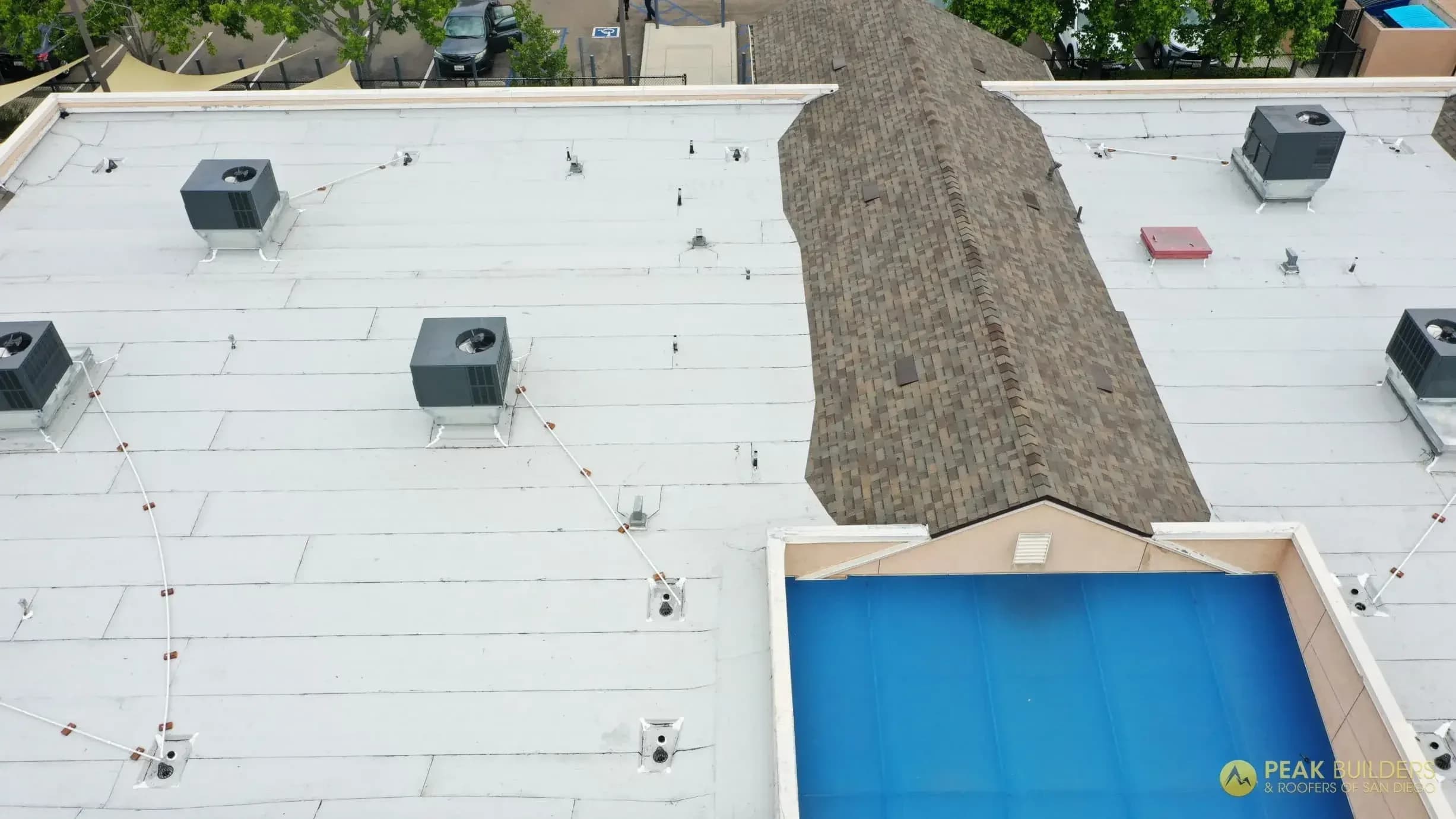
TPO stands for thermoplastic polyolefin. In plain terms it is a flexible plastic sheet, usually white, rolled out over your flat deck and fused at every overlap with a hot-air welder running around 900°F. That heat-weld is the whole game: when it is done right, the seam is molecularly fused and ends up stronger than the field of the membrane itself. The roof will wear out in the middle of a sheet long before a properly welded seam lets go. That is why TPO has displaced the old built-up "tar and gravel" systems and the glued black-rubber EPDM membranes that used to define flat roofing in Southern California.
TPO ships in three thicknesses — 45, 60, and 80 mil. Thickness is puncture resistance and warranty length, not waterproofing. On a residential ADU or garage with no foot traffic, 45 or 60 mil is appropriate. On a commercial roof that carries HVAC units, service techs, and the occasional dropped wrench, we spec 60 or 80 mil so the membrane survives the abuse it is going to take.
Why TPO Fits San Diego's Climate
San Diego is a UV-and-heat town far more than a rain town, and that profile is exactly where TPO shines.
The membrane's white surface reflects solar radiation instead of absorbing it. A dark or gravel roof in Kearny Mesa or Chula Vista can hit 160–175°F on an August afternoon; the white TPO next door runs 40–60 degrees cooler. That difference eases the air-conditioning load and slows the thermal aging of everything underneath the deck. Owners who switch from black EPDM or an old built-up roof routinely tell us their top-floor units finally hold temperature.
It also handles our actual rain pattern, which is roughly 10 inches a year jammed into a few November-through-March atmospheric-river storms. Those storms dump fast and pond on under-sloped decks. Glued and tar-lap seams are where ponded water finds its way in over time; a continuous heat-weld does not separate the way adhesive does, so TPO tolerates the standing water and the wind-driven downpour far better.
Then there is the coast. From Point Loma out to La Jolla, Del Mar, and Coronado, salt-laden marine air corrodes metal fast, and TPO roofs are full of metal details — edge termination, scuppers, penetration flashings, drain bowls. Galvanized steel rusts through in this air. On coastal jobs we spec stainless or aluminum flashing and termination metal, never galvanized, so the membrane outlives its own trim instead of failing at a rusted edge. The TPO sheet itself is chemically indifferent to salt, which is one more reason it is the default near the water.
TPO for ADUs and Modern Homes
San Diego's ADU boom has put flat and low-slope roofs on thousands of lots that used to carry only pitched, tiled houses. Shingles and tile do not belong under 2:12, so TPO has quietly become the standard ADU roof across the county. A detached unit roof tends to be small but penetration-heavy — a kitchen vent, a bath fan, a plumbing stack, a mini-split line set, sometimes a skylight — and every one of those is a potential leak. On these jobs the value is entirely in the flashing detail work, not the field sheet. A penetration boot that is welded sloppily will weep within a season, which is why we treat ADU TPO as precision work, not a quick cap.
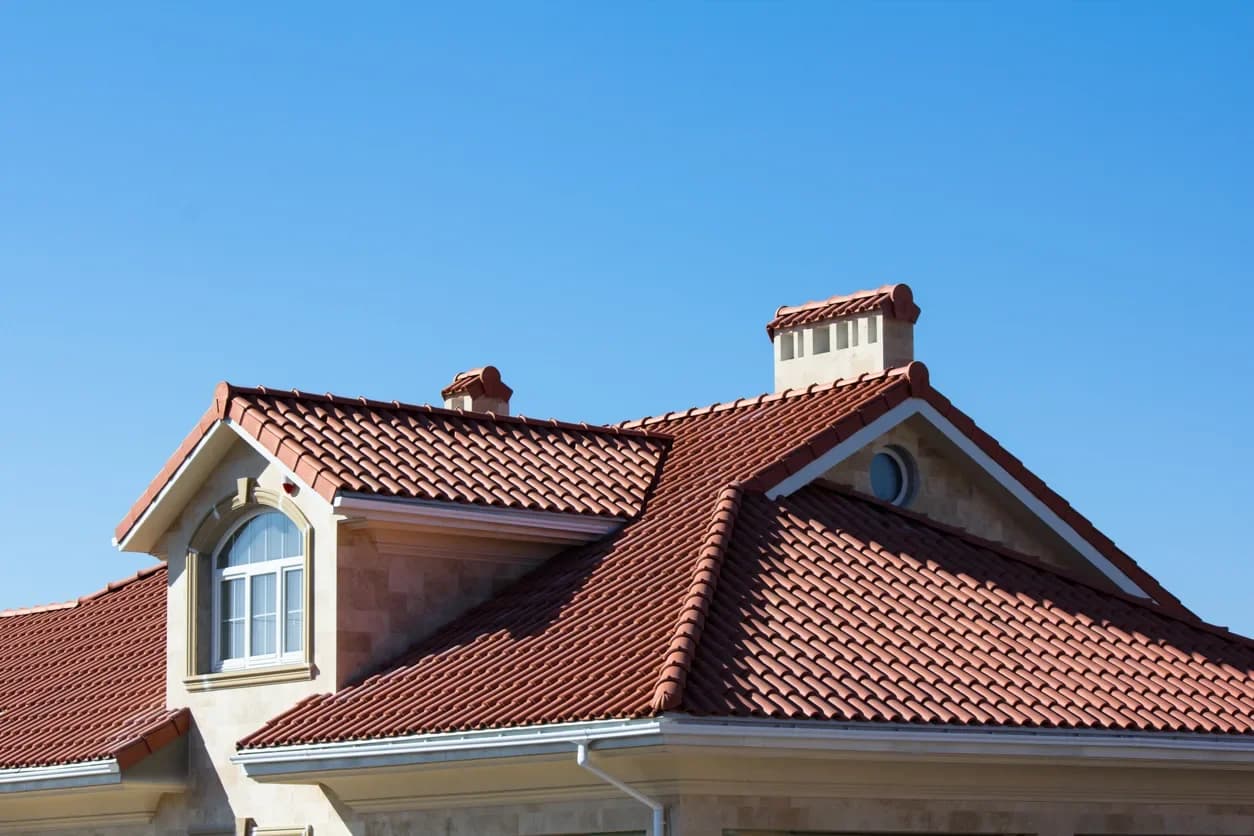
The same logic covers mid-century post-and-beam homes around Clairemont and the College area, and flat-roofed additions grafted onto older stucco houses. Where a low-slope section meets a pitched tile roof or a metal section, the transition flashing is the whole job — and worth getting a roof inspection on if yours is older than 20 years. Speaking of which: San Diego's Spanish and Mediterranean stock fails in a way people misread. The clay tile lasts 50-plus years and looks perfect, but the felt underlayment beneath it dries out and fails at 20–25. The tiles look fine while the roof leaks. The flat sections of those same homes are usually on their original membrane and overdue.
Commercial TPO in San Diego
For retail, office, industrial, and multifamily owners, TPO's case is mostly practical. A trained crew lays 3,000–5,000 square feet a day, so the building stays operational and the disruption window stays short. Mechanically fastened TPO adds only about half a pound to three-quarters of a pound per square foot, so most older San Diego buildings accept it without a structural review that a heavier system would trigger. Repairs are simple — a damaged area gets cut out and a new patch welded in without disturbing the surrounding roof — and inspections are quick. For larger portfolios and tenant-occupied buildings, our commercial roofing crews handle the staging and phasing so business keeps running.
It also keeps you legal. California Title 24 already requires cool roofs for most low-slope commercial work in Climate Zone 7, and the 2025 standards (effective January 1, 2026) tightened the envelope further, newly extending cool-roof requirements to steep-slope residential re-roofs. White TPO meets the low-slope reflectance and emittance thresholds straight off the roll, with no field coating to apply or maintain. If your building sits in a Wildland-Urban Interface or Santa Ana fire-exposure zone, we build the assembly to a Class A fire rating and pair it with ember-resistant venting so a storm- or fire-damaged roof gets rebuilt to current code, not just patched back to where it was.
What Decides Your TPO Scope in San Diego
A flat-roof estimate is driven by what we find on your deck, not by a sticker number — so the smart questions are about thickness, condition, and details, all of which decide how long the roof lasts:
- Membrane thickness and warranty tier — 45, 60, or 80 mil. Heavier mil buys puncture resistance and a longer manufacturer warranty, which is why traffic-heavy commercial roofs step up to 60 or 80 mil.
- Deck condition — how much rotten deck or wet insulation turns up once the old roof is off. Sound substrate gets the warranty clock started honestly; soft or saturated deck has to be replaced first or the new membrane fails early.
- Recover board — added over certain substrates to protect the membrane and even out the surface.
- Penetration and curb count — every vent, stack, drain, and HVAC curb is a flashing detail, and flashing is where flat roofs leak.
- Coastal flashing upgrades — stainless or aluminum termination metal near the water so the trim outlives the salt air instead of rusting through.
- Roof access and staging — an open suburban perimeter in Poway stages easily; a tight downtown lot may need a crane.
If your low-slope problem is localized, a targeted roof repair may buy years; if the membrane is past its life, a full roof replacement restores the full 20-to-30-year service life. New TPO is also the right moment to correct drainage and tie in proper gutters and scuppers, since standing water is the number-one killer of flat roofs. For a scope built to your exact deck, request a free quote or call (619) 330-8185.
How Long It Lasts — and Why Installation Decides That
A properly installed 60 mil TPO roof from a tier-one manufacturer should give you 20–30 years in San Diego, with manufacturer warranties running 15–25 years depending on thickness and tier. But the warranty is only as good as the welds. Cold seams, sloppy terminations, and ponding from bad slope will kill a premium membrane early, while a modest membrane installed with verified welds and clean detailing lasts its full life. Flat roofing is the one category where installation quality outweighs material grade — which is the whole reason to hire a crew that weld-tests every day. Peak Builders carries CSLB #1008986, GAF Master Elite and Owens Corning Platinum Preferred credentials, and a 4.9-star rating across 230-plus San Diego reviews with a BBB A+; we run start-of-day test welds with probe and pull checks on every TPO job before the production seams go down. See our full roofing services for how flat-roof work fits the rest.
Frequently Asked Questions
Is TPO better than EPDM for a San Diego flat roof?
For our climate, generally yes. EPDM is black rubber that absorbs heat and degrades faster under San Diego's year-round UV, and its seams are glued rather than welded. TPO reflects sunlight, meets Title 24 cool-roof rules without a coating, and its heat-welded seams resist the ponding our atmospheric-river storms create. EPDM still has niche uses, but for most San Diego decks TPO is the stronger long-term value.
Can TPO go over my existing flat roof, or does it all have to come off?
Sometimes one recover layer is allowed by code, but we usually tear off. San Diego flat roofs frequently hide wet insulation and soft deck under the old membrane, and welding new TPO over trapped moisture guarantees blisters and early failure. A tear-off lets us see the deck, fix the slope and drainage, and start the warranty clock honestly. We make that call after a roof inspection, not before.
Does TPO meet California Title 24 cool-roof requirements?
Yes. Standard white TPO meets the low-slope solar-reflectance and thermal-emittance thresholds for Climate Zone 7 straight off the roll. This matters more than ever: the 2025 Title 24 standards, effective January 1, 2026, extended cool-roof requirements to steep-slope residential re-roofs as well, so cool-roof compliance is now part of most San Diego re-roofing permits.
What goes into a TPO roof for a San Diego ADU?
A detached ADU roof (typically around 500 square feet) is small but penetration-heavy — a kitchen vent, bath fan, plumbing stack, mini-split line set, sometimes a skylight — so the scope is all in welding each of those flashings watertight, not in the field sheet. Penetration count, deck condition, and coastal flashing upgrades all factor in, and good detailing is what carries the roof to its full 20-to-30-year life. Call (619) 330-8185 for a firm, no-charge measurement and a free quote.
Do you handle the permit and coastal review near the water?
Yes. Re-roofs pull a permit through the City or County of San Diego, and projects in the coastal overlay near Coronado, La Jolla, or Del Mar can involve California Coastal Commission review. We manage the permitting and build coastal jobs with stainless or aluminum flashing to survive the salt air. Contact us and we will walk you through what your address requires.