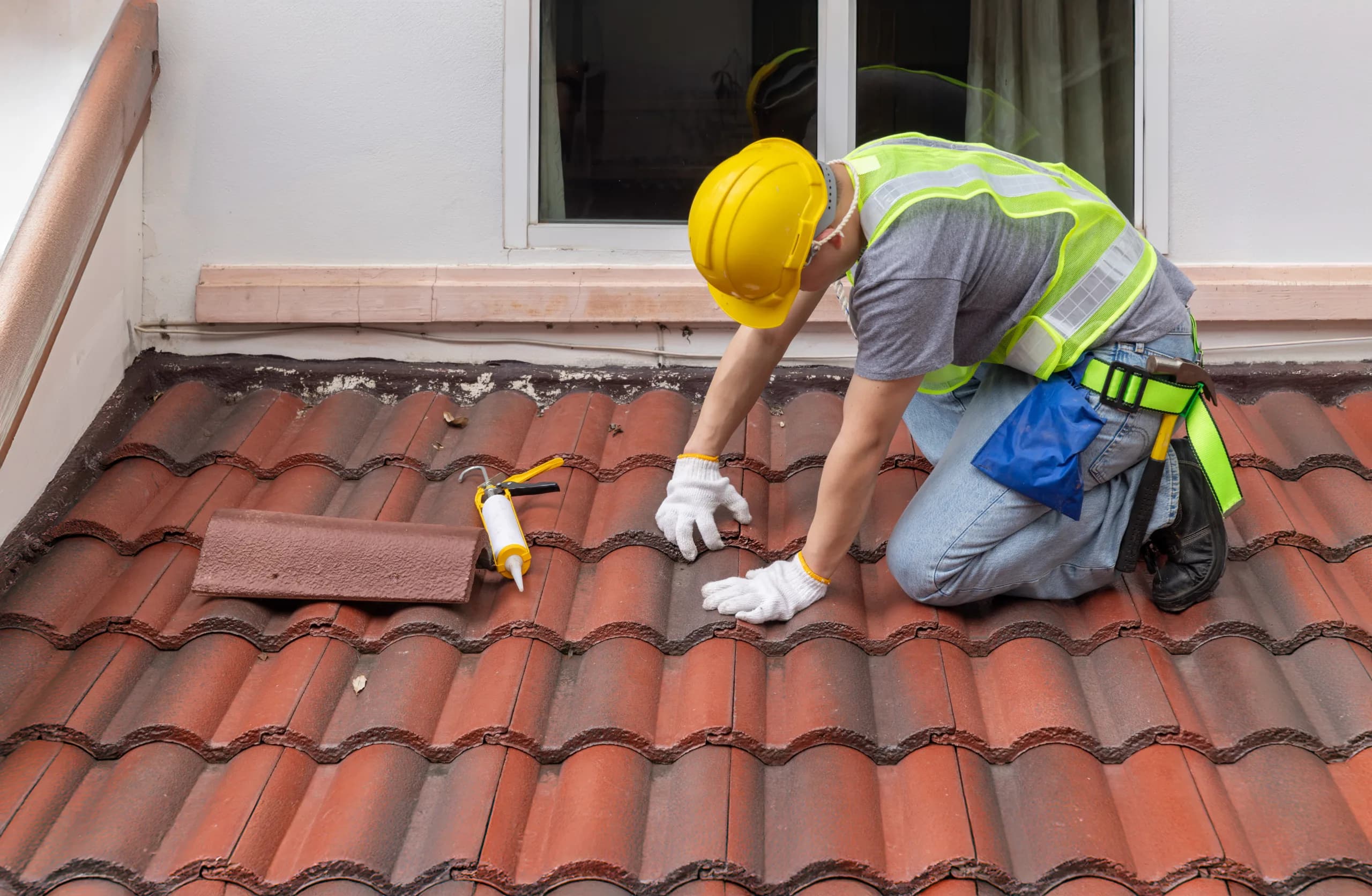

Torch Down Roofing in San Diego: Expert Flat Roof Solutions
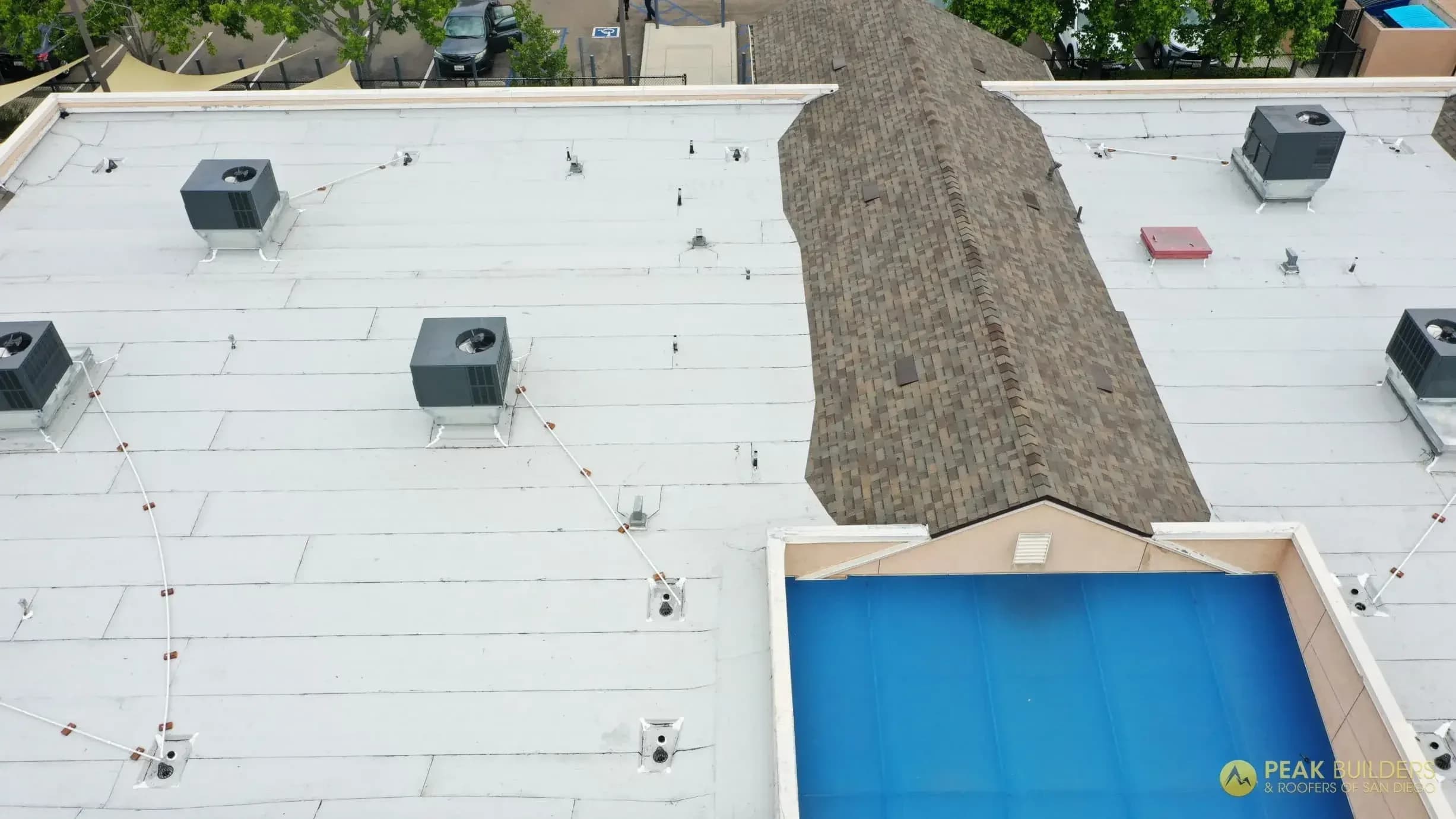
Torch-down roofing — the trade name for multi-ply modified bitumen — is the workhorse flat-roof system across San Diego, and when it's installed correctly by a roofer who knows how to read a flame, it keeps a low-slope roof watertight for 15 to 25 years. It's the asphalt-based membrane you see on mid-century post-and-beam homes in Clairemont, on flat additions and second-story decks bolted onto 1920s bungalows in Kensington and South Park, and on the low-rise commercial buildings up and down El Cajon Boulevard. If your flat roof is blistering, ponding, or leaking, this guide covers how torch-down works, how long it lasts in San Diego, and when to repair versus replace.
What torch-down roofing actually is
Torch-down is a sheet membrane built from asphalt reinforced with a polyester or fiberglass mat and "modified" with one of two polymers. APP (atactic polypropylene) makes a stiffer, more UV- and heat-tolerant sheet; SBS (styrene-butadiene-styrene) makes a rubberized, more elastic sheet that tolerates movement and temperature swing. The name comes from the install method: a roofer runs a propane torch across the underside of the roll as it's unrolled, melting the asphalt to a liquid sheen and welding it to the layer below. Done right, that heat weld fuses the plies into one seamless membrane — far more reliable than the cold adhesives or self-stick sheets sold for DIY patching.
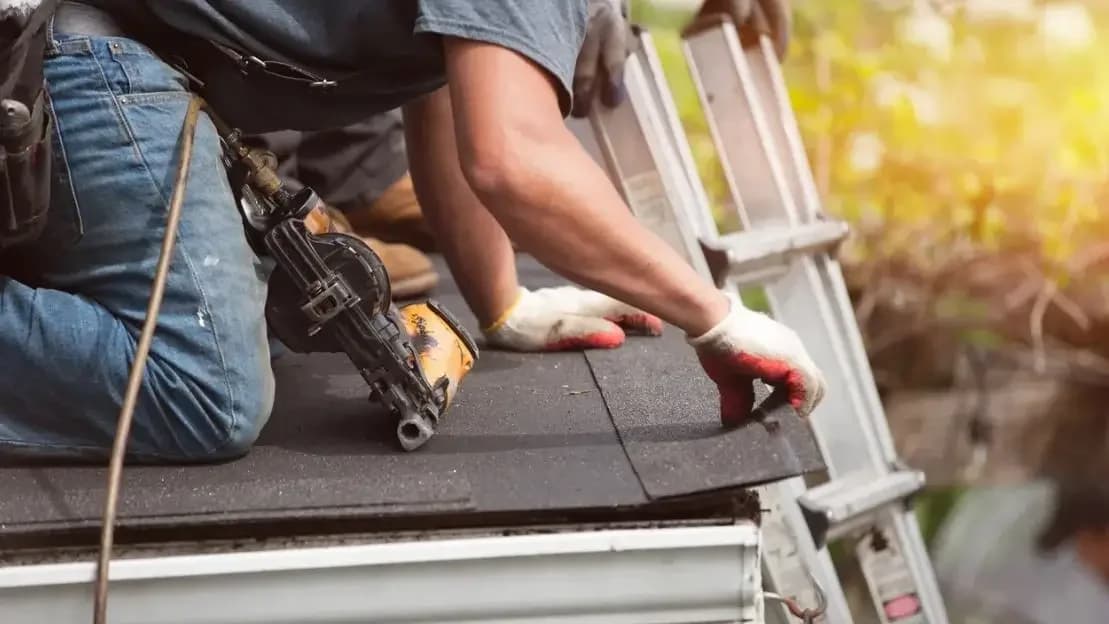
A complete system is layered, and the redundancy is the point. A base sheet is mechanically fastened to the deck; on a three-ply assembly, an interply sheet adds a second waterproofing layer. The top layer is the cap sheet — surfaced with mineral granules that shield the asphalt from San Diego's relentless UV the same way granules on an asphalt shingle protect it. Lose those granules and the black asphalt underneath bakes, dries, and cracks, which is why granule loss is one of the first things we look for.
Why torch-down suits San Diego's low-slope roofs
A flat roof in San Diego lives a different life than one in Seattle. Our enemy isn't volume of rain — it's UV, ponding, and the occasional atmospheric-river deluge that finds every weak seam at once. Torch-down handles that profile well: the granulated cap reflects a meaningful share of solar radiation, and APP-modified sheets in particular hold up to the year-round high-UV load on a roof that gets sun from every angle with no slope to shed it.
Geography inside the county matters more than people expect. On north-facing flat sections and shaded coastal roofs in Point Loma, Ocean Beach, and La Jolla, the marine layer keeps the membrane damp into late morning, and we routinely find mold and algae staining plus slow-draining ponds. Within a mile of the water — Coronado, Del Mar, the Point Loma peninsula — salt-air corrosion eats galvanized flashing and fasteners within years, so we spec stainless or aluminum flashing, edge metal, and drains, never galvanized. Get the metal wrong on the coast and the flashing rusts through and lets water in at the very joints meant to be the strongest.
There's a fire dimension too. Class A fire-rated torch-down assemblies are widely available and are what we install in the wildland-urban interface zones on San Diego's eastern and northern edges — Scripps Ranch, Poway, Rancho Santa Fe, Escondido — where Santa Ana wind and ember events make Class A assemblies and ember-resistant vents non-negotiable.
Cool-roof rules just changed — and they reach more roofs now
If you're re-roofing in 2026, Title 24 is part of the conversation. San Diego sits in California Climate Zone 7, which has long carried cool-roof requirements for low-slope roofs, and torch-down cap sheets come in reflective, code-compliant granule colors. What's new: the 2025 Energy Code, effective January 1, 2026, extends cool-roof rules to certain steep-slope residential re-roofs for the first time. The low-slope rules already covered flat torch-down, but if your project pairs a flat section with a sloped roof replacement — or a tile re-roof — over the main house, the reflectance specs now reach more of the structure. We size the cap sheet to hit the numbers and pull the permit accordingly.
How long it lasts — and how it fails
A correctly installed San Diego torch-down roof runs 15 to 20 years, and a three-ply system with reflective cap and clean drainage can reach 25 with maintenance. The failures are predictable, and catching them early is the difference between a contained seam repair and a full tear-off:
- Blistering — air or moisture pockets lifting the membrane, usually poor adhesion at install.
- Open seams or laps — welded overlaps separating, the single most common leak source.
- Granule loss — bare black asphalt showing through, accelerating UV breakdown.
- Ponding — water that doesn't clear within 48 hours, signaling a drainage or slope problem.
- Alligatoring — surface cracking into a reptile-skin pattern as the asphalt dries out.
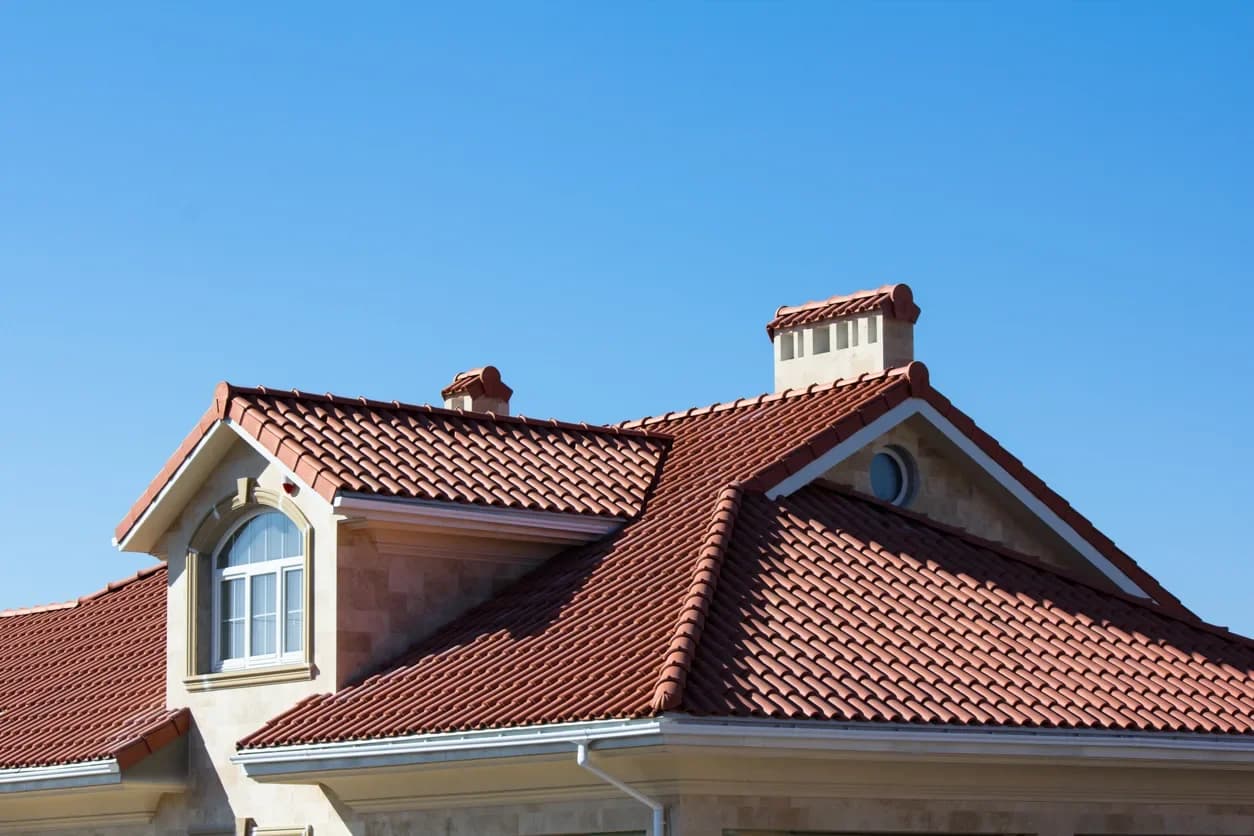
A caution specific to San Diego's housing stock: a huge share of our roofs are tile, and owners are often told a leak is a "tile problem." It usually isn't — clay and concrete tile last 50-plus years, but the underlayment beneath fails at 20 to 25, so the tiles look perfect while the roof leaks. The same logic applies to flat roofs: don't judge a torch-down roof by the surface from the ground; the seams, flashings, and dryness of the deck below tell the real story, which is what a proper roof inspection is for.
Repair or replace?
Repair makes sense when the damage is localized — one seam, one penetration, a single blister — the roof is under about 12 years old, and the sheets below are still dry and bonded. A clean torch-welded patch of matching cap sheet, cut back to sound membrane on all sides, integrates seamlessly and outlasts the surrounding roof. That's everyday roof repair work, and after a winter storm it often falls under storm-damage restoration.
Replacement is the honest answer when the roof is 15-plus years old, blistering or delamination is widespread, the same section has been patched repeatedly, or moisture has migrated under the membrane into the deck. Before we scope a tear-off, we do a moisture survey — probing or infrared — because trapped water rots the deck whether or not it's leaking into the rooms below yet. Recovering a wet roof just buries the problem under new membrane.
What shapes a torch-down project in San Diego
Every flat roof is different, and a handful of conditions decide whether a job is a contained repair or a full system replacement. The honest scope comes from the roof's age, the condition of the deck below, drainage, and access — not from a guess off the ground:
| Scope | When it applies |
|---|---|
| Small repair (seam or penetration) | A single failed seam or roof penetration on an otherwise sound, well-bonded membrane |
| Section repair (100–200 sq ft) | Localized blistering or granule loss confined to one area, with the deck still dry |
| Full replacement, ~500 sq ft | A small flat section past 15 years with widespread seam failure or trapped moisture |
| Full replacement, ~1,000 sq ft | A typical mid-century flat roof at the end of its service life or repeatedly patched |
| Full replacement, ~2,000 sq ft | A large flat or low-rise commercial roof with delamination across the field |
What pushes a job toward the full-replacement end of that range: rooftop-deck access and hoisting in dense neighborhoods, deck repair once the old membrane is off, tapered insulation to re-slope a chronic pond, coastal stainless flashing, and Coastal Commission or City permit complexity near the water. The alternatives matter when weighing your options — TPO and single-ply flat systems and standing-seam metal can stretch the service life further, and on a commercial roof they often make sense. We also flag drainage at quote time, since a reroof is the right moment to correct scupper and downspout flow into your gutters. For a clear scope on your specific roof, request a free quote or call (619) 330-8185.
Why torch-down is specialist work
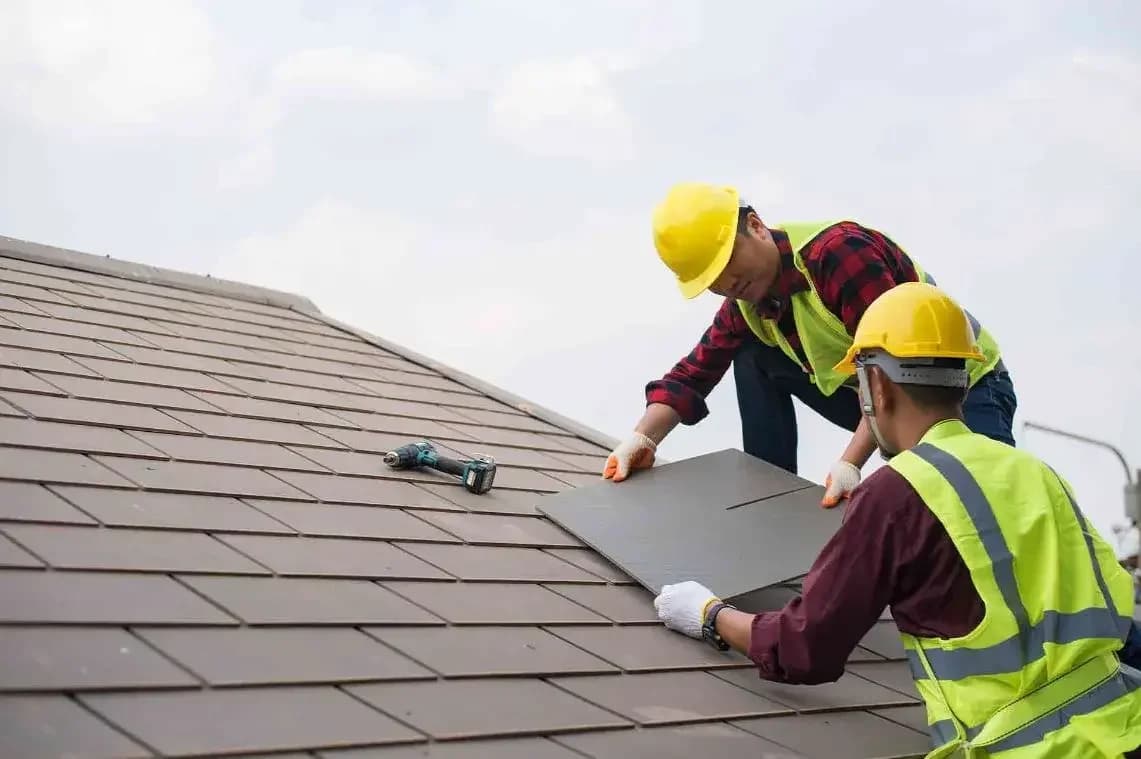
Open flame on a roof is exactly as serious as it sounds. Under-heat the sheet and the seam never truly welds — it looks fine on day one and opens in the first hard rain. Over-heat it and you scorch the membrane, burning off the asphalt that does the waterproofing. A seasoned roofer reads the molten "flow line" of bitumen ahead of the roll to confirm the weld without cooking the sheet, keeps an extinguisher and water on hand, and watches substrate temperature. This is not handyman work, and it's worth verifying any contractor holds a valid C-39 roofing license and carries liability and workers' comp before they bring a torch onto your home.
Peak Builders & Roofers of San Diego has worked flat and steep roofs across the county since 1999 — more than 5,000 San Diego roofs, CSLB license #1008986, a 4.9-star rating across 230-plus reviews, and an A+ BBB rating. We're GAF Master Elite and Owens Corning Platinum Preferred — on the steep-slope side that means systems like GAF Timberline HDZ and Owens Corning Duration, and on flat roofs the manufacturer backing and welded-seam discipline these systems demand. We serve La Jolla, Carlsbad, Encinitas, Del Mar, Coronado, Chula Vista, Poway, Point Loma, Escondido, El Cajon, Oceanside, Rancho Santa Fe, Scripps Ranch, and Santee.
If your flat roof is ponding, blistering, or leaking, call (619) 330-8185 or request a free flat-roof assessment — and see our full range of San Diego roofing services.
Frequently Asked Questions
How long does a torch-down roof last in San Diego?
A properly installed torch-down (modified bitumen) roof lasts 15 to 20 years here, and a three-ply system with a reflective cap and good drainage can reach 25. UV is the main aging factor in our climate, so keeping the granulated surface intact and clearing ponds and drains extends that life. Annual inspection catches small seam and flashing failures before they soak the deck.
Is torch-down better than TPO for a flat roof?
Each has a place. Torch-down's multi-ply redundancy and proven track record make it a durable, dependable choice for residential flat sections and decks. TPO and other single-ply membranes reflect more heat and often last longer, which is why they dominate larger commercial roofs. We recommend based on roof size, slope, access, and condition — request a free quote and we'll spec the right system for your roof.
Why does my flat roof pond water, and is that a problem?
Ponding — water still standing 48 hours after rain — comes from inadequate slope, clogged drains or scuppers, or a sagging deck. It's a problem: standing water accelerates membrane breakdown and magnifies any seam weakness. The durable fix during a reroof is tapered insulation that rebuilds positive slope toward the drains.
Do I need a permit for torch-down roofing in San Diego?
Yes — re-roofing requires a permit from the City of San Diego or the County, and projects near the water can also fall under California Coastal Commission review. Title 24 cool-roof requirements apply in Climate Zone 7, and the 2025 Energy Code (effective January 1, 2026) extends those rules to more residential re-roofs. We pull the permits and spec a compliant reflective cap sheet as part of the job.
Can a torch-down roof be repaired, or does it need full replacement?
If the damage is localized, the roof is under about 12 years old, and the layers below are dry, a torch-welded patch of matching cap sheet is a lasting repair. Replacement is warranted when the roof is 15-plus years old, blistering or seam failure is widespread, or a moisture survey shows water has reached the deck. We probe or infrared-scan before recommending a tear-off, so you're not replacing a roof that only needed a repair.