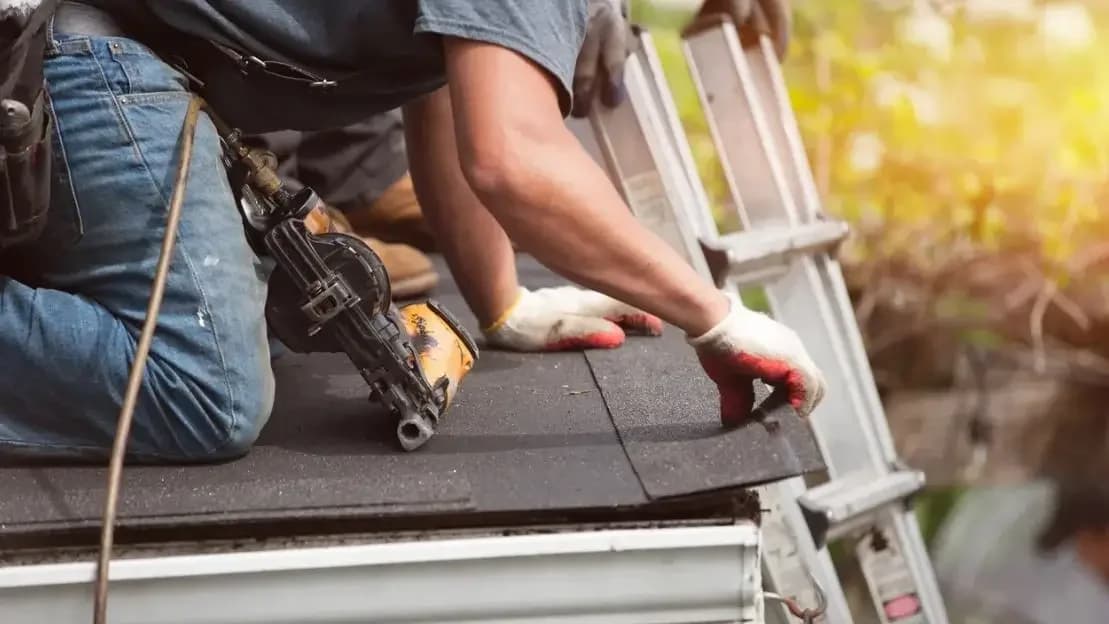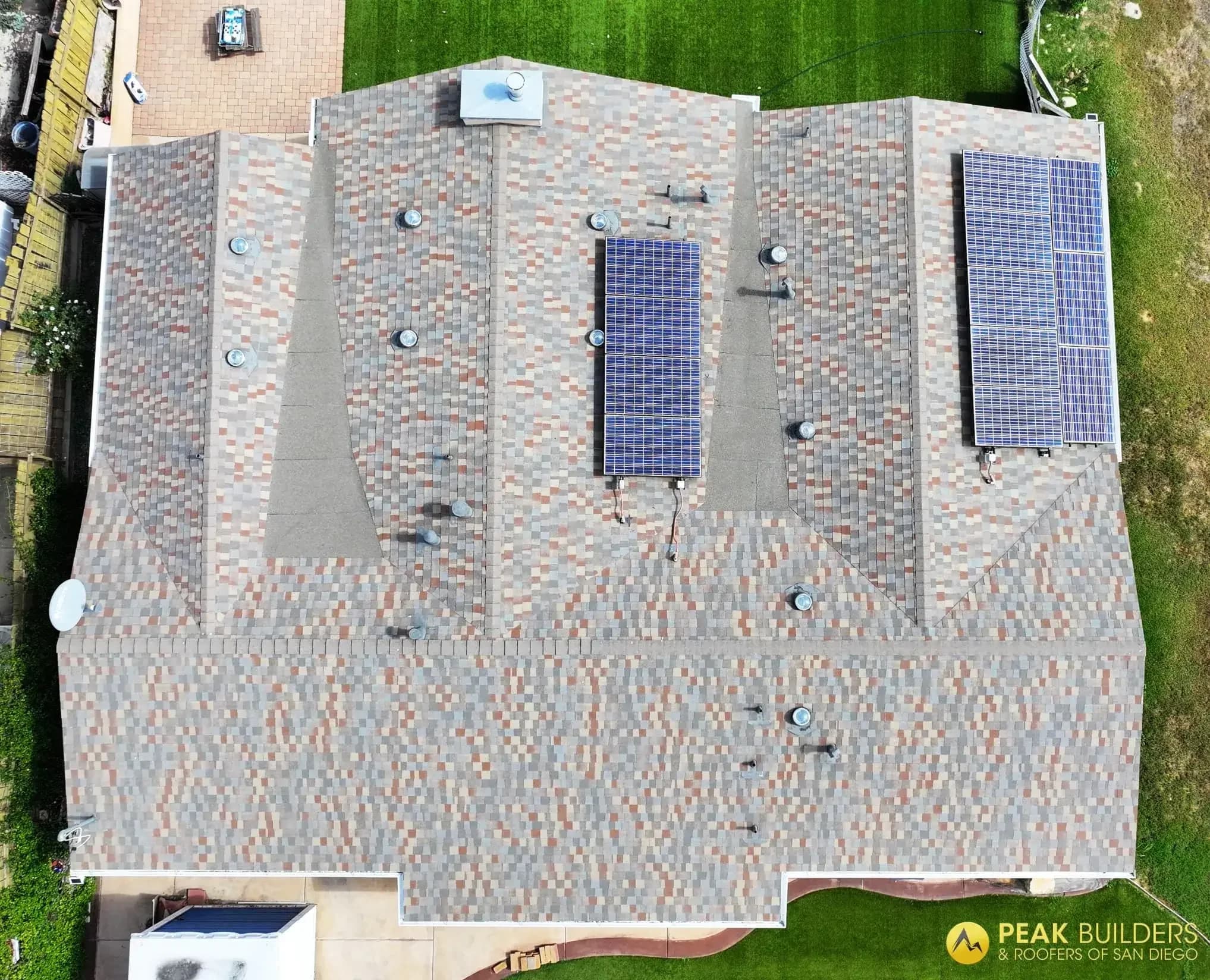
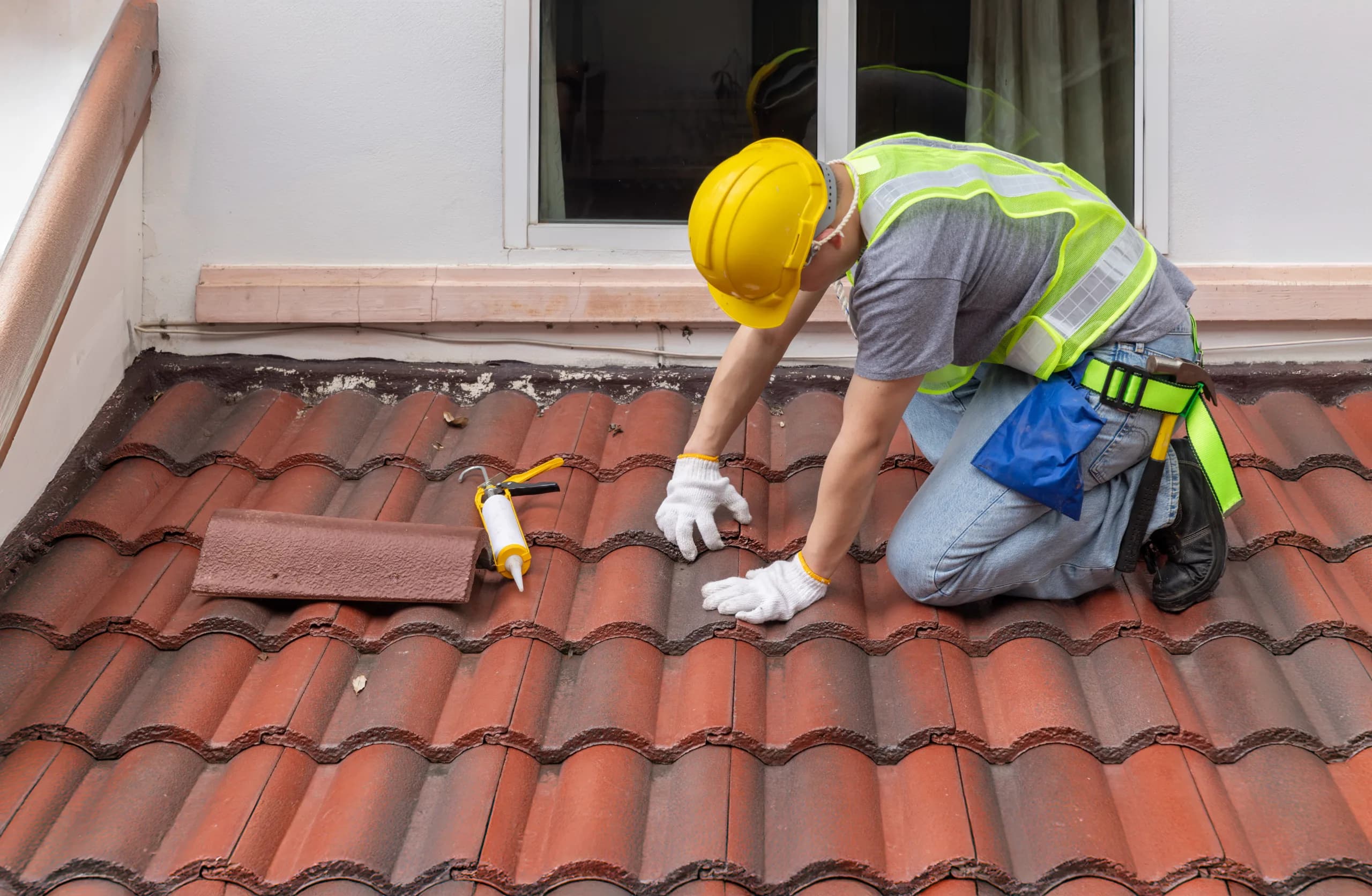
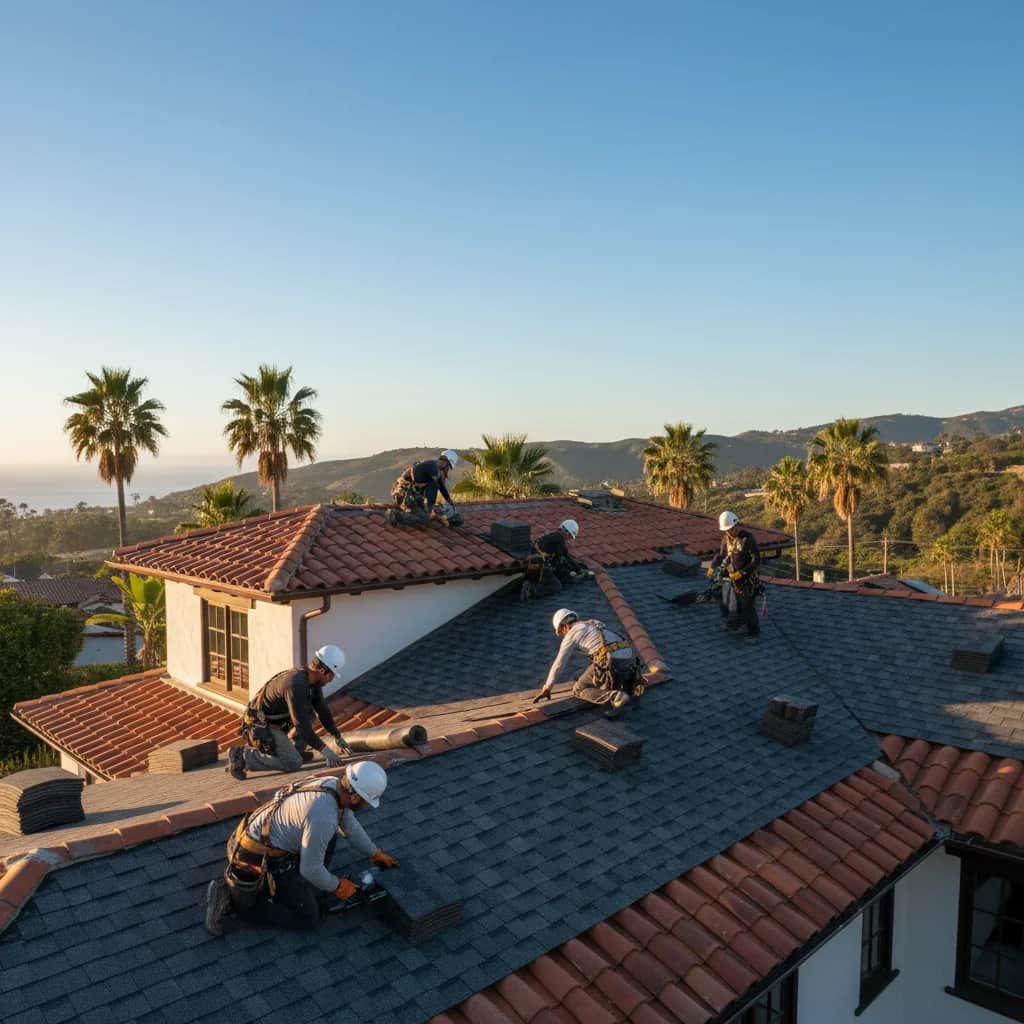






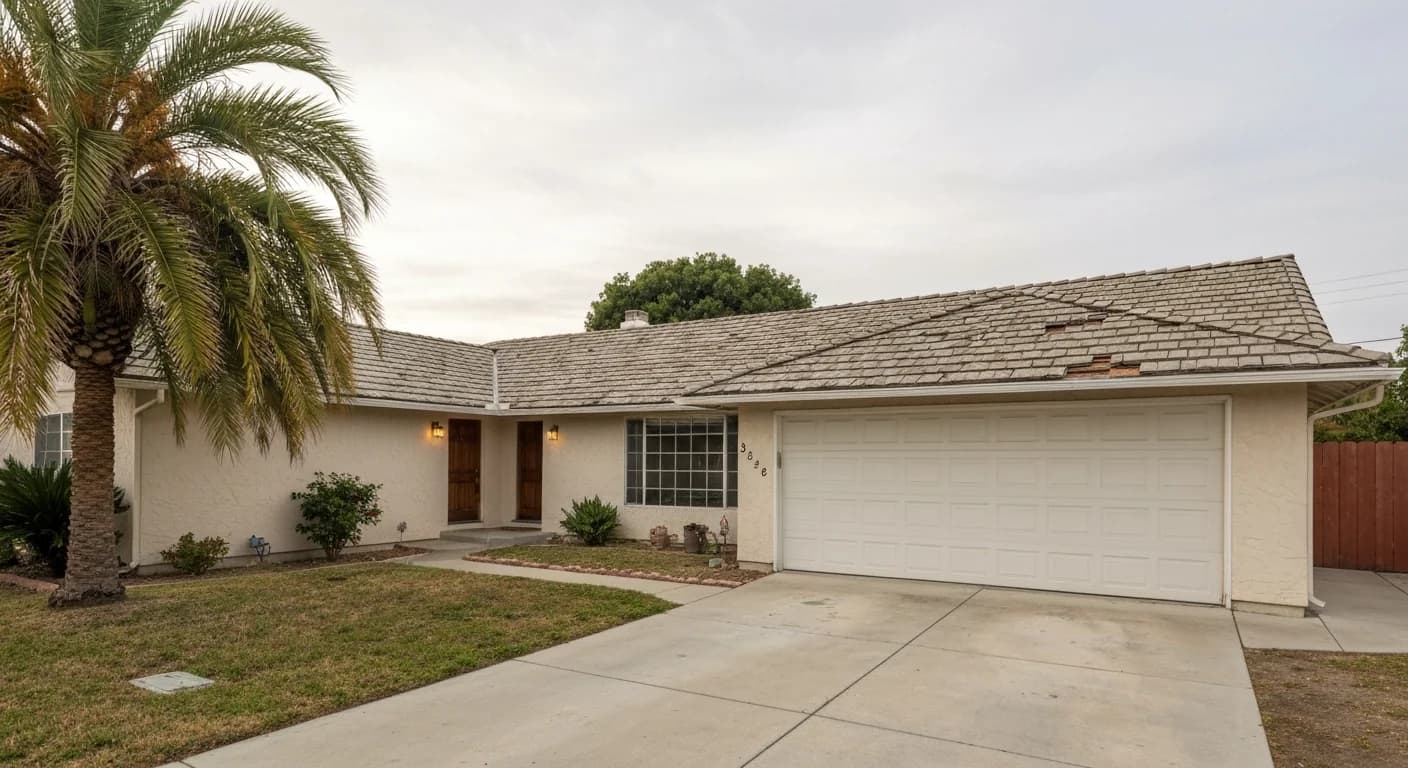
A roof replacement in San Diego means tearing your existing roof down to the wood deck and rebuilding the entire system — underlayment, flashing, ventilation, and your chosen surface — not just laying new shingles over tired ones. If your asphalt shingles are curling and shedding granules into the gutters, if you have water stains on a bedroom ceiling, or if your tile roof is twenty-plus years old and you have never re-felted it, you are likely at the end of the underlayment's life and a full re-roof is the fix. For most San Diego homes, expect a roof replacement to take two to seven working days depending on size, pitch, and material: a single-story asphalt-shingle home often finishes in two to four days, while a two-story tile lift-and-relay can run a week or more. You will get a written, itemized scope before anyone climbs a ladder, a permit pulled in your name, daily cleanup, and a magnetic nail sweep at the end. Peak Builders & Roofers has installed more than 5,000 San Diego roofs since 1999 and holds CSLB License #1008986.
Why San Diego Roofs Wear Out the Way They Do
Our climate is gentle on people and hard on roofs. The marine layer keeps coastal neighborhoods damp in the mornings, then burns off into intense, year-round UV that bakes asphalt shingles brittle from the top down. Along the coast — La Jolla, Del Mar, Encinitas, Point Loma, Coronado — salt-laden air corrodes nails, flashing, vents, and any uncoated metal faster than inland air does. Inland and East County homes in El Cajon, Santee, Poway, and Escondido trade salt for heat and fire exposure, with Santa Ana wind events that drive embers and lift loose tiles. Then once or twice a winter, an atmospheric-river storm dumps more rain in three days than we see in months, and that is when a worn or improperly flashed roof finally leaks.
The practical takeaway: most San Diego roofs do not fail because the surface material wore out. They fail because the underlayment — the waterproof membrane underneath — and the flashing aged out while the visible tile or shingle still looked fine. That is the problem a real roof replacement solves, and it is why doing it correctly the first time matters more here than the brochure photos suggest.
Tear-Off vs Overlay: We Always Tear Off, and Here's Why
An overlay (nailing a second layer of shingles over the existing roof) is legal in limited situations, but it is the wrong call on nearly every San Diego home, and we do not recommend it. Three concrete reasons drive that.
First, an overlay hides the deck. The single most valuable thing we learn during a replacement is the condition of the plywood and the rafters underneath — where dry rot, old leak damage, and failed flashing actually live. Cover that up and you are wrapping new material around a problem.
Second, a second layer traps heat against the assembly, and in our UV-heavy climate that measurably shortens the life of the new shingles. You pay for a 25-year roof and get noticeably less.
Third, code and warranties. California's fire-zone roofing rules (WUI Class A assemblies, which apply across much of East County and the coastal canyons) are built around a properly layered, fire-rated assembly that an overlay compromises. Most manufacturers' extended system warranties — the GAF Golden Pledge, Owens Corning Platinum Protection — are void over an overlay. So we quote full tear-off down to the deck, new underlayment, new flashing, and new vents every time. It is the only install method that holds up to San Diego's climate and California's code.
Material Options and How Long They Actually Last
Architectural Asphalt Shingle
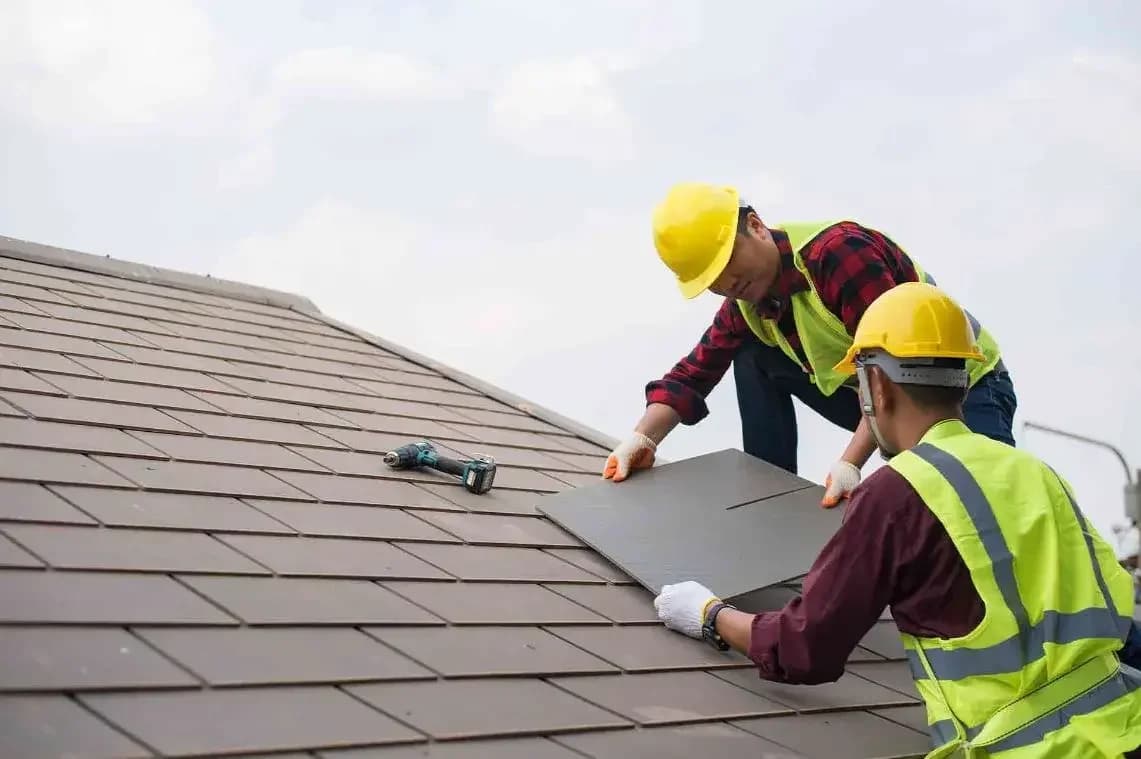
The workhorse for South Bay, inland tract neighborhoods, and most two-story homes. We install GAF Timberline HDZ, Owens Corning Duration, and CertainTeed Landmark — laminated architectural shingles rated to 130 mph wind and carrying strong algae-resistance warranties (GAF's StainGuard Plus runs 25 years, important in our humid coastal mornings). Realistic service life in San Diego sun is roughly 20 to 28 years for these premium lines when installed as a full system with proper attic ventilation; cheaper three-tab shingles fade and curl far sooner here, which is why we don't lead with them. The shingle is only as good as the underlayment and ventilation beneath it, so the spec sheet matters less than the install.
Concrete and Clay Tile
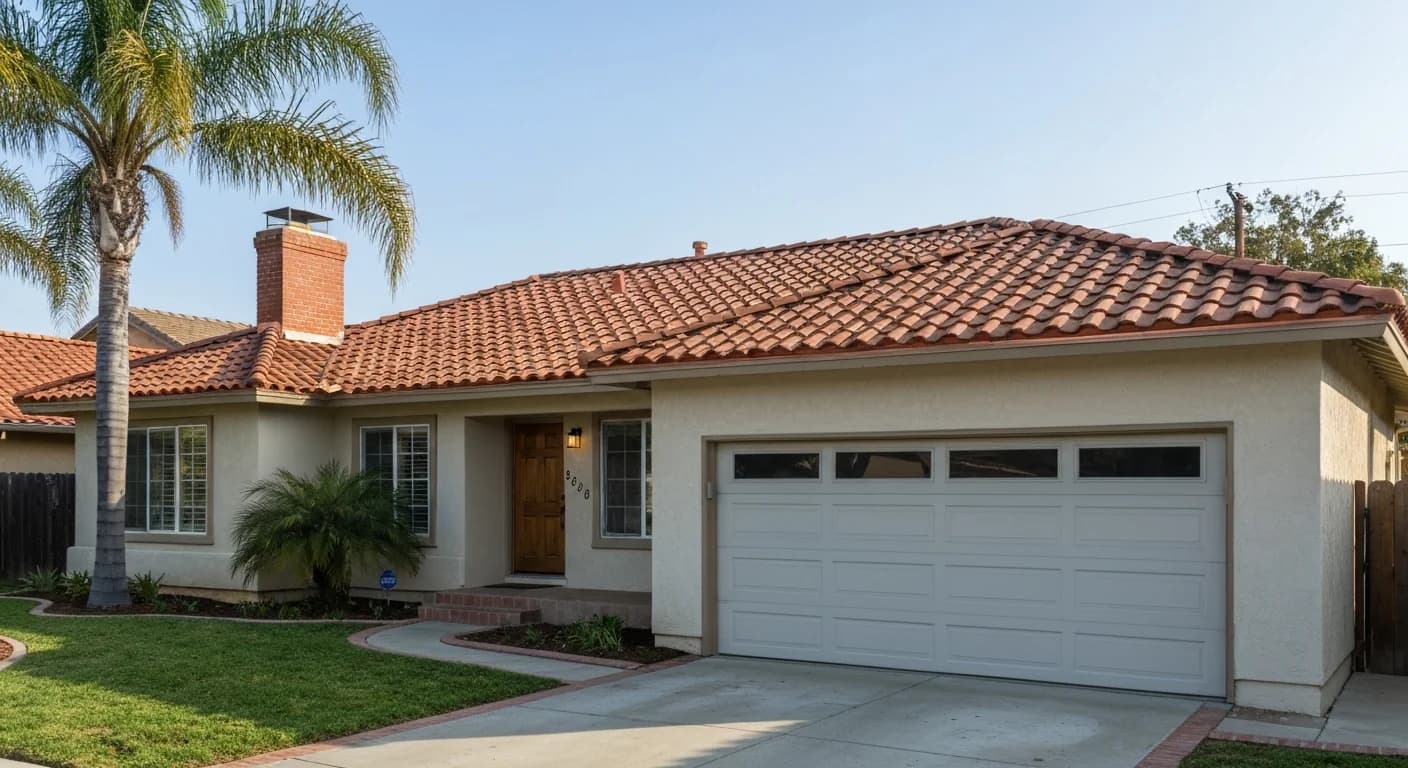
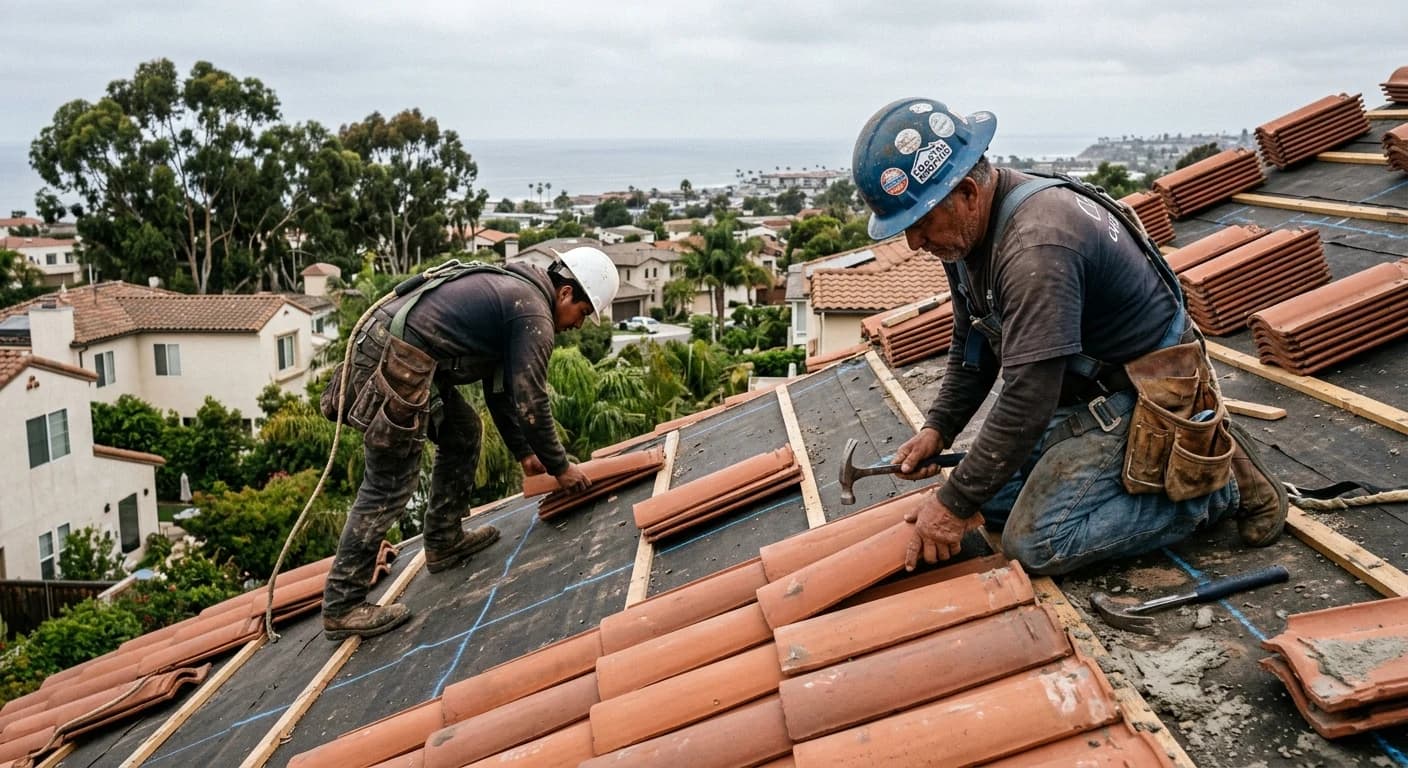
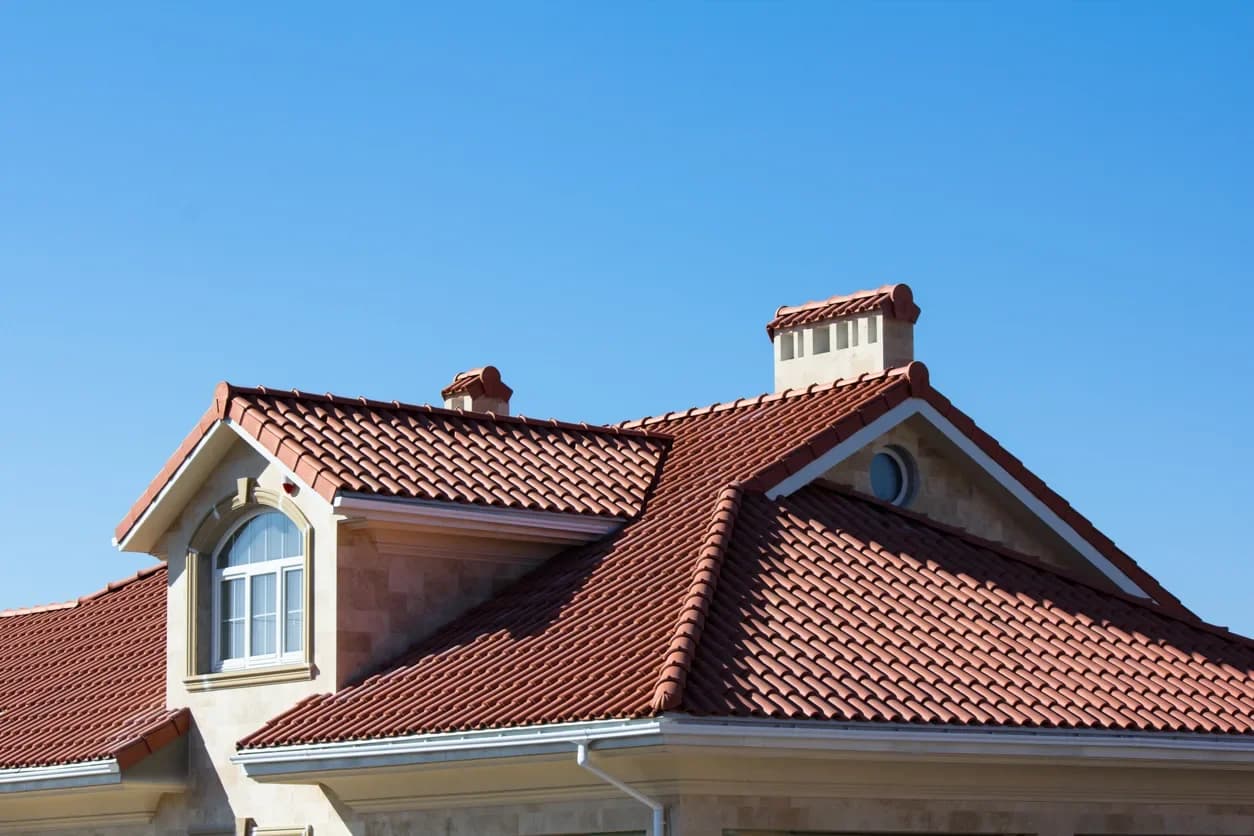
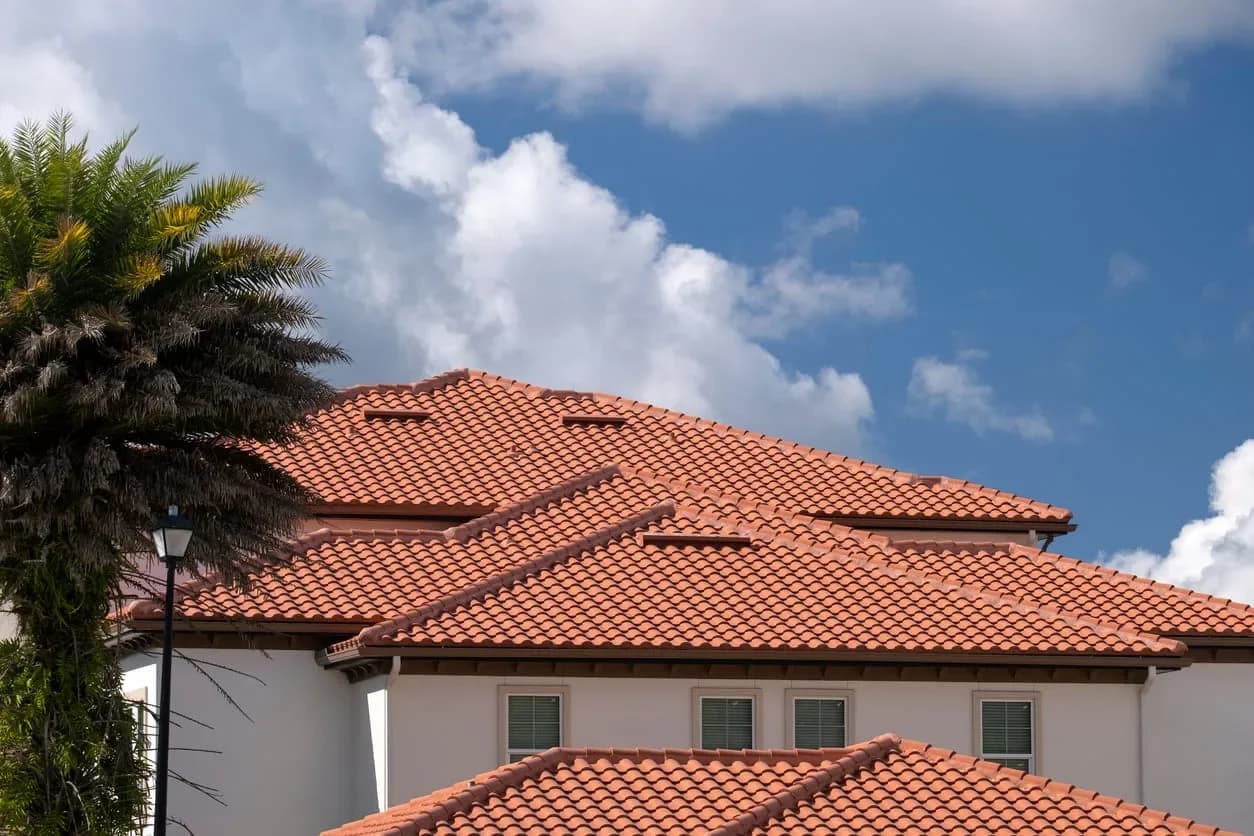
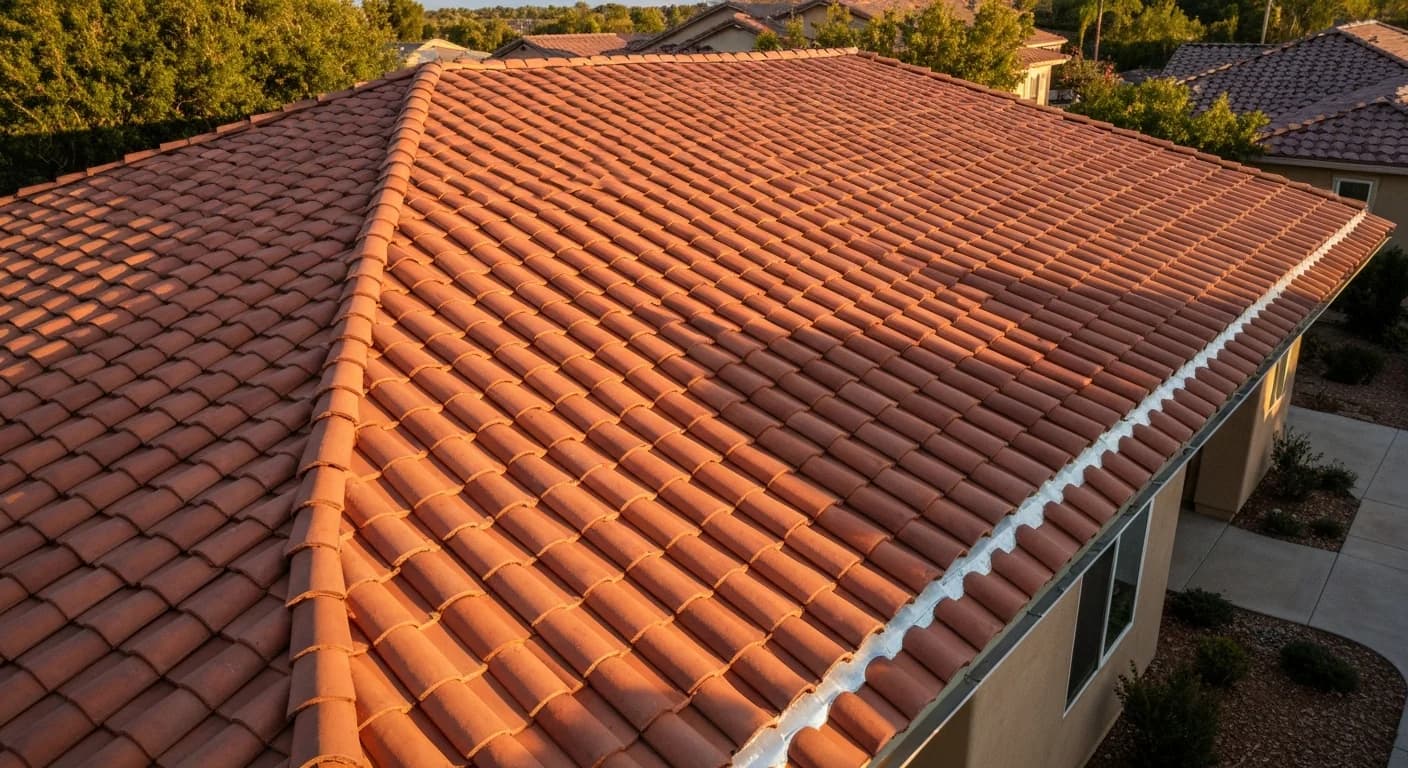
Tile is everywhere in San Diego's Spanish and Mediterranean housing stock, and it lasts a very long time — concrete tile 50-plus years, clay tile often 75 to 100. But the tile is not what fails. The underlayment beneath it ages out at roughly 20 to 25 years, and once it does, you get leaks even though the tile looks perfect. That is why the most common tile project here is a lift-and-relay: we carefully remove and stack the existing tile, strip the old felt, install fresh high-temperature underlayment, replace broken pieces, and re-lay the original tile. You keep the look and the longevity of the tile while resetting the waterproofing clock for another two-plus decades.
Standing-Seam Metal
For modern custom builds, low-slope sections, and high-wind East County exposures, 24-gauge standing-seam aluminum or steel with a Kynar (PVDF) finish delivers a 40-to-60-year roof. Near the coast we specify aluminum and salt-compatible fasteners specifically to resist the corrosion that eats ordinary metal. The concealed-fastener seam sheds wind-driven rain and resists ember intrusion, which suits both our storm bursts and our fire concerns.
Flat and Low-Slope: TPO, EPDM, Modified Bitumen
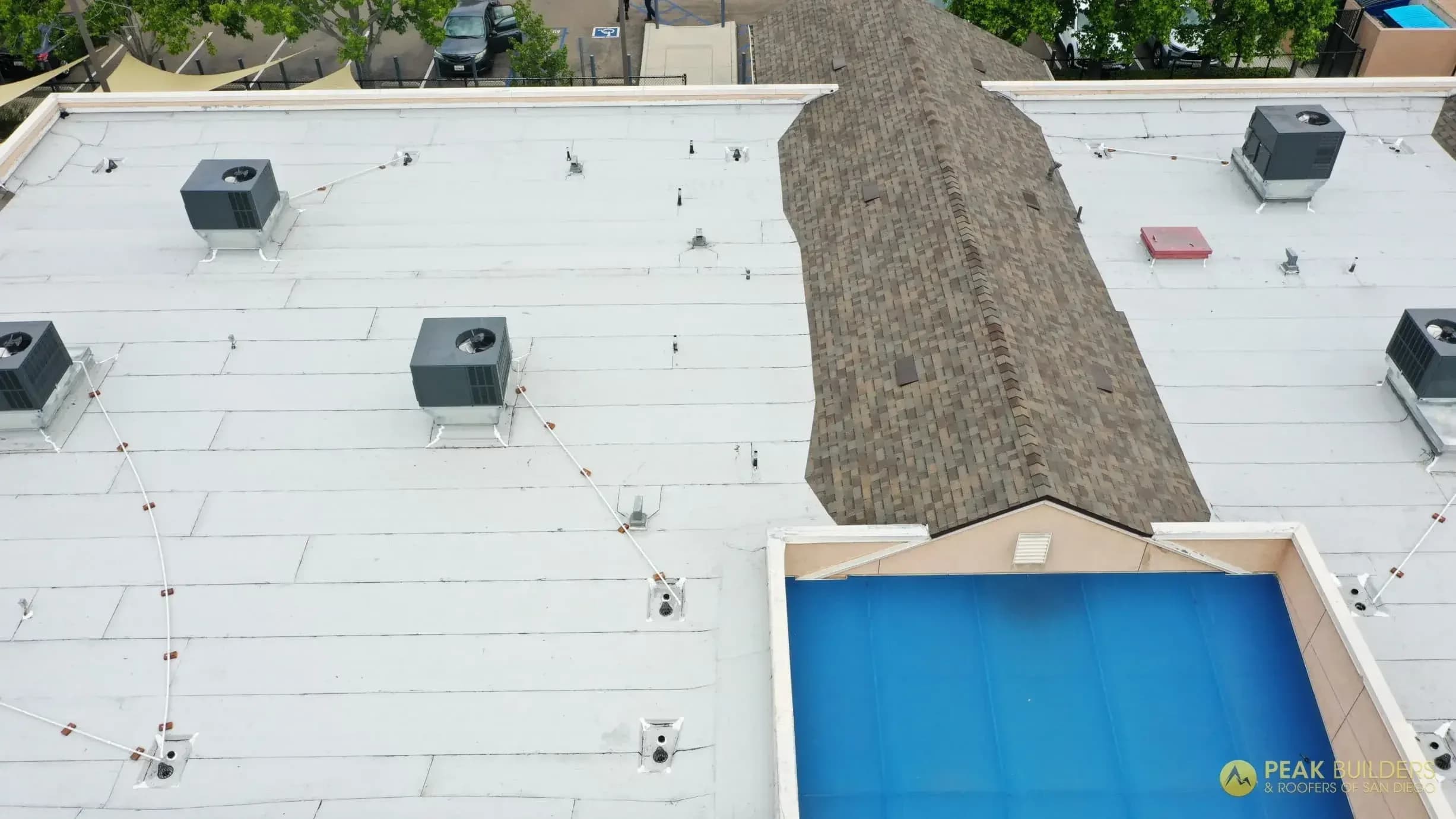
Many San Diego bungalows in North Park and Kensington, plus mid-century and contemporary homes, have flat or low-slope sections that pitched materials cannot protect. We install single-ply TPO and EPDM membranes and torch-down modified bitumen, generally good for 20 to 25 years, with drainage detailing engineered for those heavy winter bursts. White TPO also reflects heat, which dovetails with California's cool-roof energy rules.
What Drives a San Diego Roof Replacement
Square footage is the starting point, never the whole story. What actually drives the scope of work — and what you'll see itemized on your quote — includes roof pitch (a steep 12/12 needs more staging, safety rigging, and labor than a walkable 4/12), two-story versus single-story access, and architectural complexity: dormers, valleys, skylights, and chimneys each add flashing detail and labor. The number of existing layers matters, because a double-layer tear-off is more disposal and more time. Hidden conditions are the honest variable — until the deck is exposed we cannot see dry rot or old leak damage, so if we find it we stop, photograph it, and write a change order for your approval before replacing any sheathing.
Code-driven upgrades are real scope drivers in San Diego specifically. California's Title 24 energy code (we sit in Climate Zone 7) carries cool-roof reflectance requirements, and the 2025 standards taking effect January 1, 2026 extend cool-roof minimums to steep-slope residential re-roofs — meaning your new roof surface may need to be listed on the Cool Roof Rating Council directory to pass inspection. In Wildland-Urban Interface zones, the assembly has to meet Class A fire ratings. Coastal-overlay homes can trigger additional Coastal Commission review on the permit. None of this is a reason to delay — it is exactly the kind of thing a licensed local roofer handles for you. Every quote we write is free and itemized, line by line, so you can see exactly what each component adds to the scope rather than guessing.
Our Process
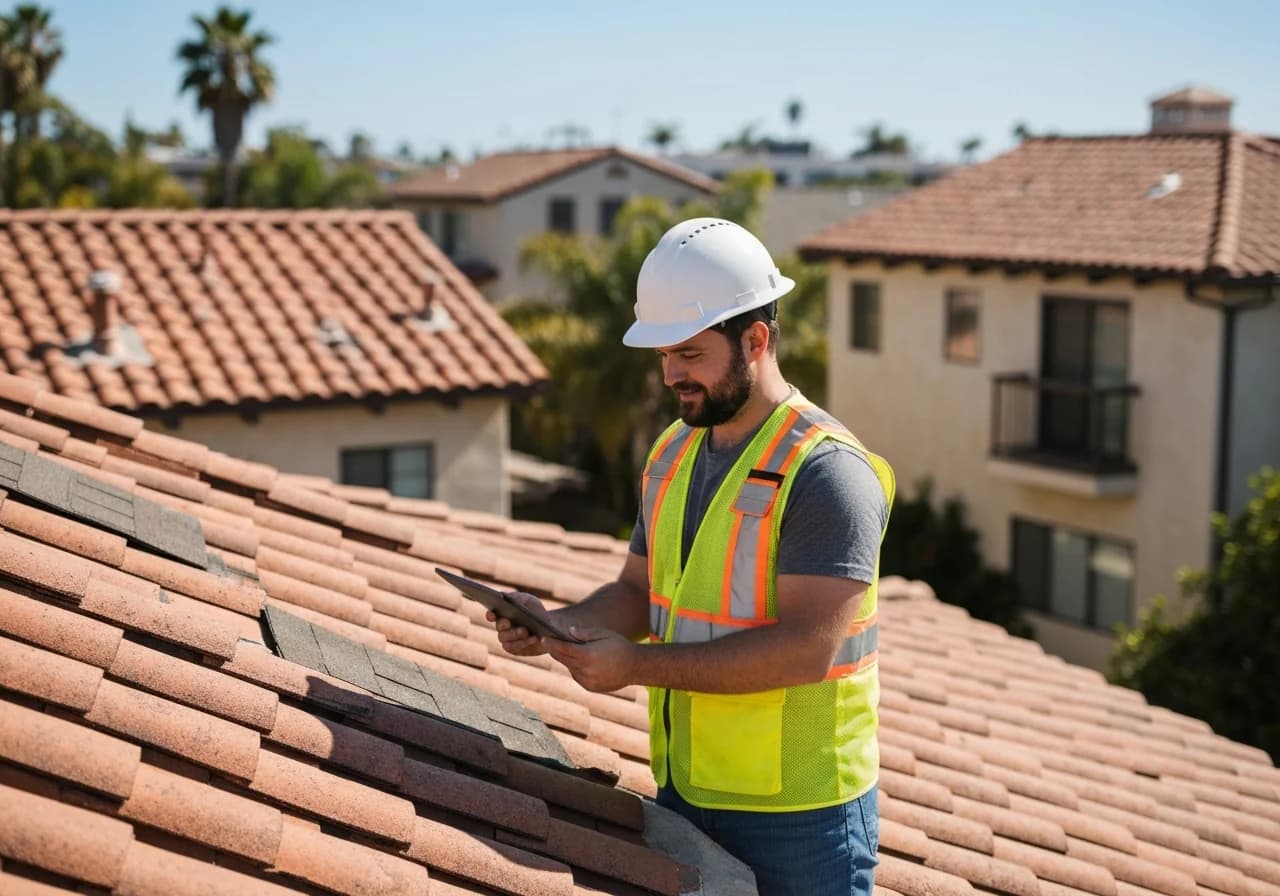
- Free inspection — a walk-and-drone assessment of the roof and a look in the attic, fully photographed.
- Written, itemized quote — every component and code upgrade spelled out, no lump-sum mystery.
- Permit — pulled in your name with the correct jurisdiction (City of San Diego, Chula Vista, El Cajon, or County; Coastal review if triggered).
- Install — full tear-off to the deck, deck repair if needed, then underlayment, flashing, ventilation, and your chosen surface, built to manufacturer spec.
- Daily cleanup + magnetic nail sweep — the property is left clean each evening and swept for nails at completion.
- Final inspection — the jurisdiction signs off on the permit.
- Warranty registration — your manufacturer system warranty is registered in your name and you receive a project binder.
Roof Replacement for San Diego's Microclimates and Code
Where your home sits changes the right roof. A La Jolla or Del Mar home a few blocks from the water needs corrosion-resistant fasteners and flashing and an underlayment that shrugs off salt humidity; the surface choice is secondary to the metal and membrane specs. A Poway, Scripps Ranch, or Alpine home in a fire zone needs a Class A assembly and ember-resistant detailing at the eaves and vents. A Chula Vista or National City home in the South Bay is usually about UV-durable shingles and solid ventilation.
Picture a 1985 tract home in Rancho Bernardo with original concrete tile. The tile still looks good from the street, but the owner is getting a ceiling stain after the last storm. The tile is fine — the 40-year-old underlayment is done. The right answer is a lift-and-relay with new high-temp underlayment and new flashing, reusing the existing tile, which resets the waterproofing for another 20-plus years rather than buying a whole new tile roof. Knowing the difference between what needs replacing and what can be reused is the difference between an honest local roofer and a sales pitch. Most of our work lands in the dry-season window of roughly May through October, though San Diego's mild weather lets us install nearly year-round.
Why Homeowners Trust Peak Builders
We are a licensed California roofing contractor, CSLB License #1008986, in business since 1999 with more than 5,000 San Diego roofs installed. We hold GAF Master Elite status — a certification fewer than three percent of U.S. roofers carry — and we are an Owens Corning Platinum Preferred contractor, the two credentials that let us register the strongest manufacturer system warranties available, including the GAF Golden Pledge up to 50 years. Every install also carries our lifetime, transferable workmanship warranty, which adds resale value when you sell. We hold a 4.9-star Google rating across 230-plus reviews and an A+ rating with the BBB. Because we are local, we are here for warranty service and future maintenance — not a storm-chasing crew that leaves town after the check clears.
Schedule Your Free Roof Inspection
If your roof is past twenty years, leaking, or you are not sure how much life is left in it, the right next step is a free, no-pressure inspection. We will tell you honestly whether you need a full replacement, a tile lift-and-relay, or just a repair — and you will get a written, itemized quote with material options matched to your neighborhood and San Diego's code requirements. Call Peak Builders & Roofers at (619) 330-8185 or email [email protected] to schedule. We serve all of San Diego County, from La Jolla and Carlsbad to Chula Vista, El Cajon, Poway, and Escondido.