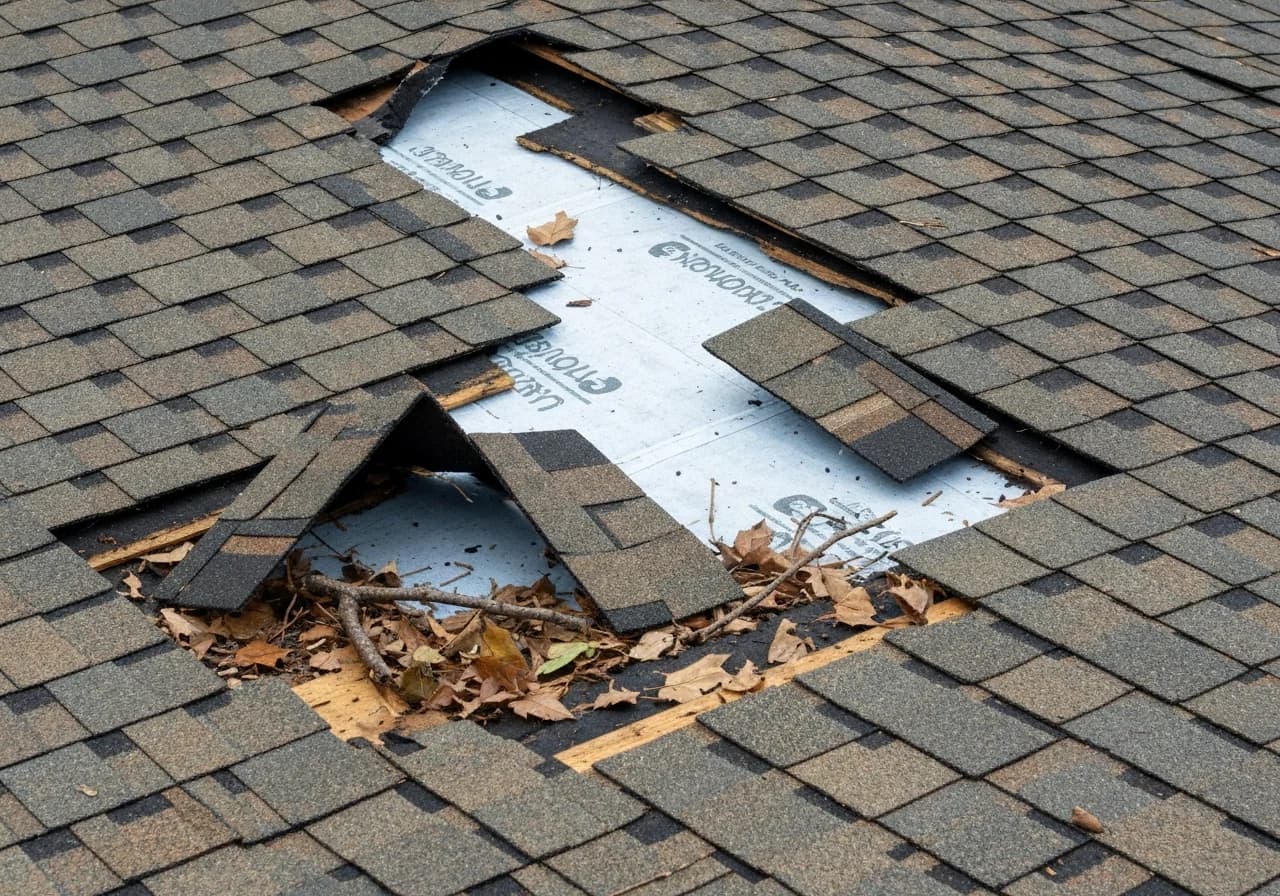






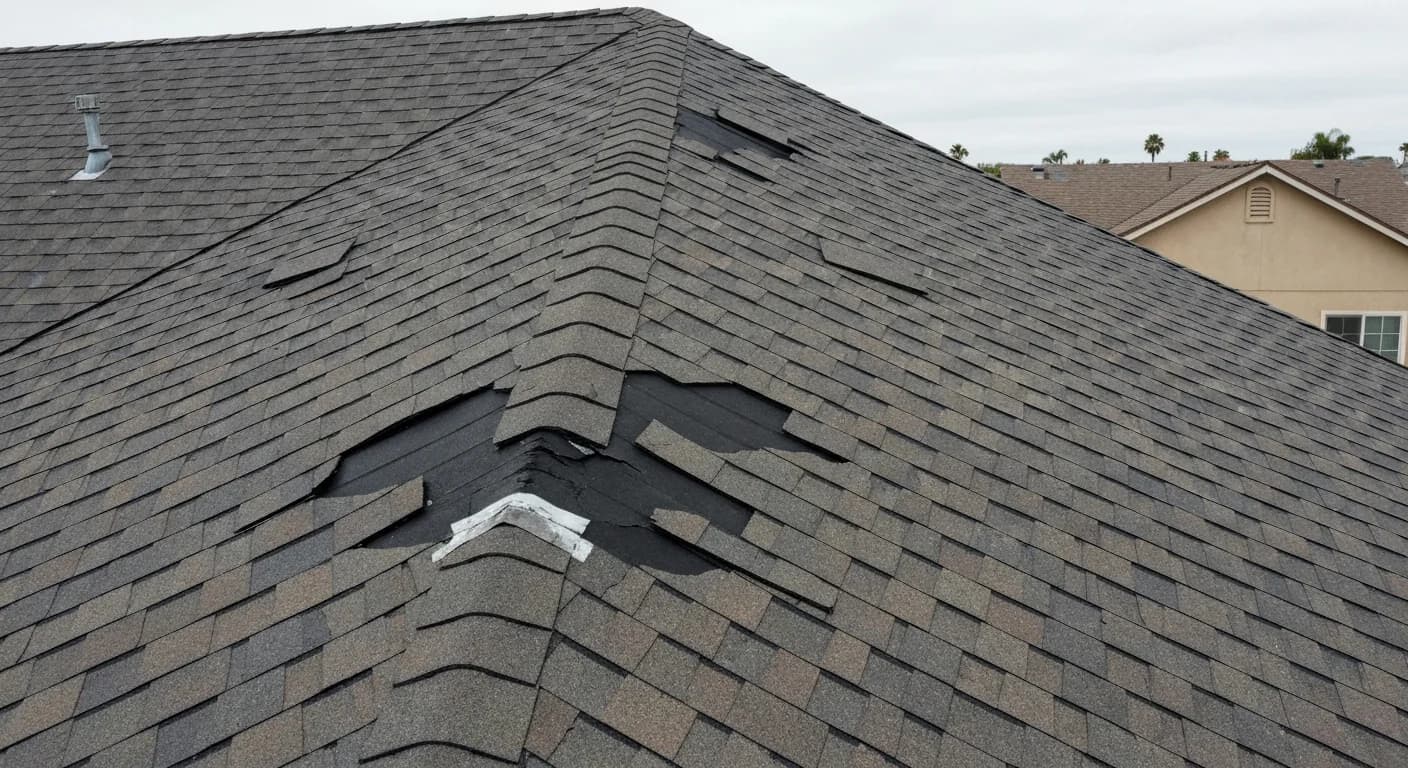
A brown ring on the ceiling, a drip into a bucket during the first real rain of the season, a tile that slid off in a Santa Ana gust — roof repair in San Diego almost always starts with one small, alarming sign. The good news is that most San Diego leaks are repairable, not catastrophic, and you do not need a whole new roof to stop the water. Roof leak repair is the work of finding exactly where water is entering, fixing that failure point, and verifying the area is watertight again. With Peak Builders & Roofers, the typical path is a same-week free inspection, a written itemized diagnosis with photos, and a repair completed in one to three days — with same-day emergency tarping if you have an active leak during a storm. The hardest part of any leak is not the patch; it is the diagnosis, because water rarely enters where it drips. It travels along rafters and underlayment before it shows up on your drywall, sometimes feet from the real source. That is the work we do first, and it is what separates a repair that holds from one that comes back next winter.
The real problem: where San Diego roofs actually fail
San Diego does not get the freeze-thaw cycles or hail that wreck roofs in colder states. Instead, our roofs age from sun, salt, and the occasional violent burst — intense year-round UV that bakes asphalt and dries out sealants, marine-layer humidity and coastal salt air that corrode metal, Santa Ana winds that lift and crack tiles, and a handful of heavy winter atmospheric-river storms that find every weak seam at once. Because so much of the county's housing stock is Spanish and Mediterranean tile, the single most misunderstood fact about local leaks is this: when a tile roof leaks, the tile is almost never the actual problem. The waterproofing layer is the underlayment underneath, and that is usually what has failed. Knowing that changes everything about how a repair should be approached — and whether you are being sold a real fix or a cosmetic one.
Common failure points we diagnose every week
Slipped, cracked, and broken tile
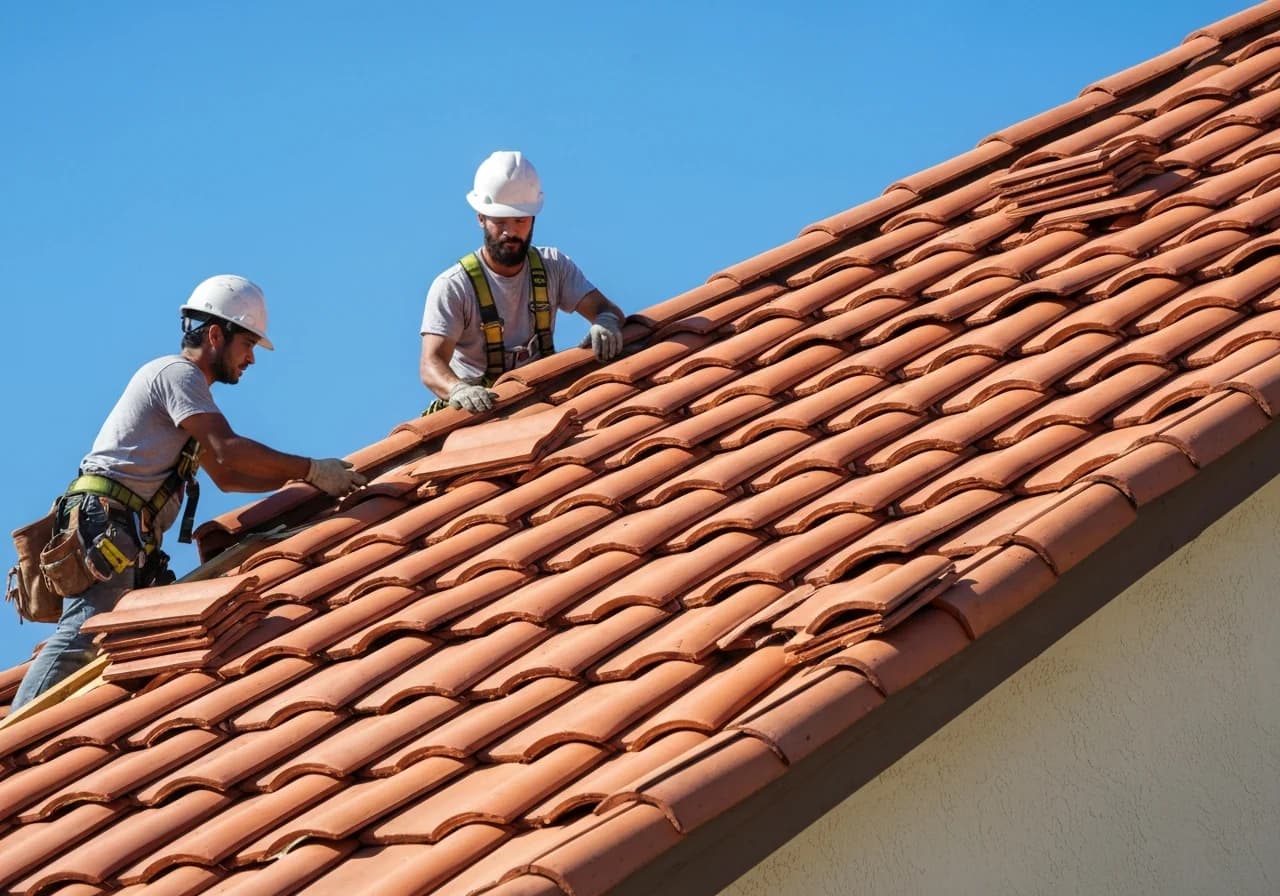
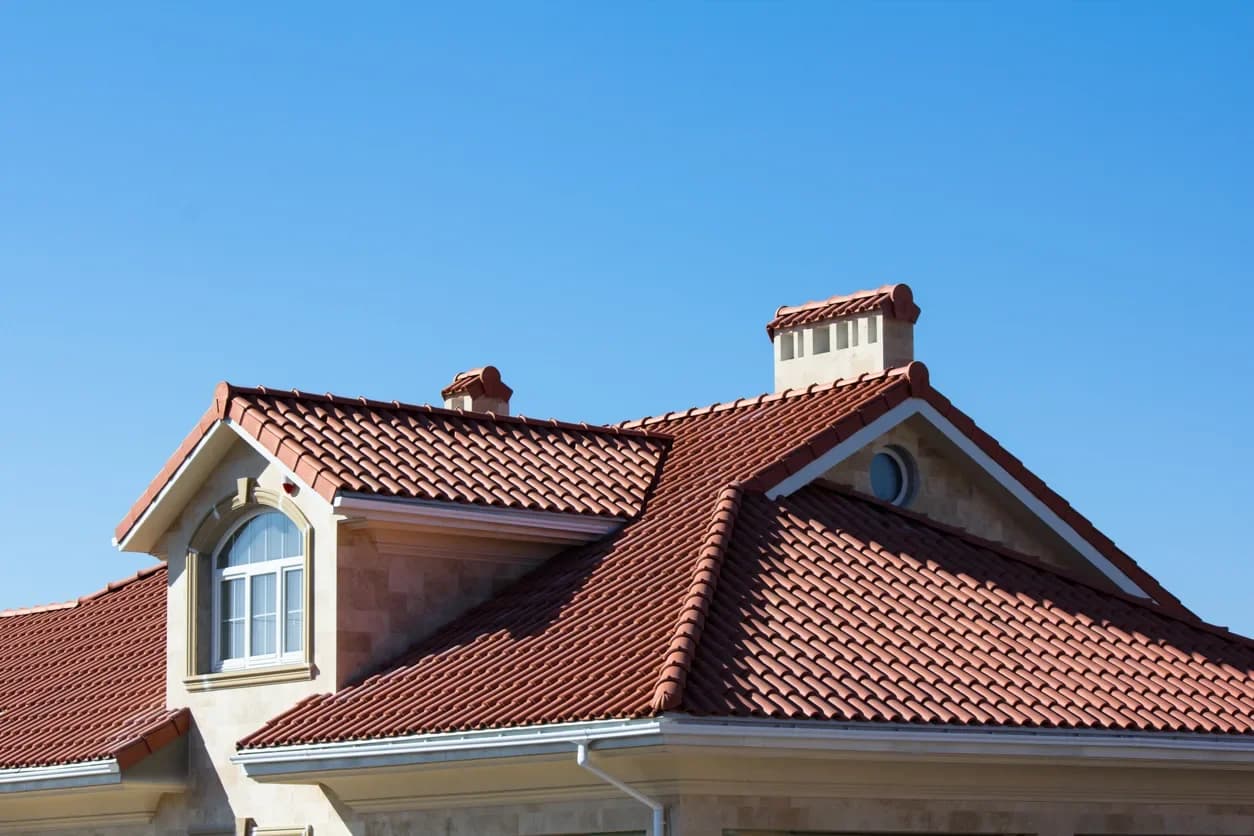
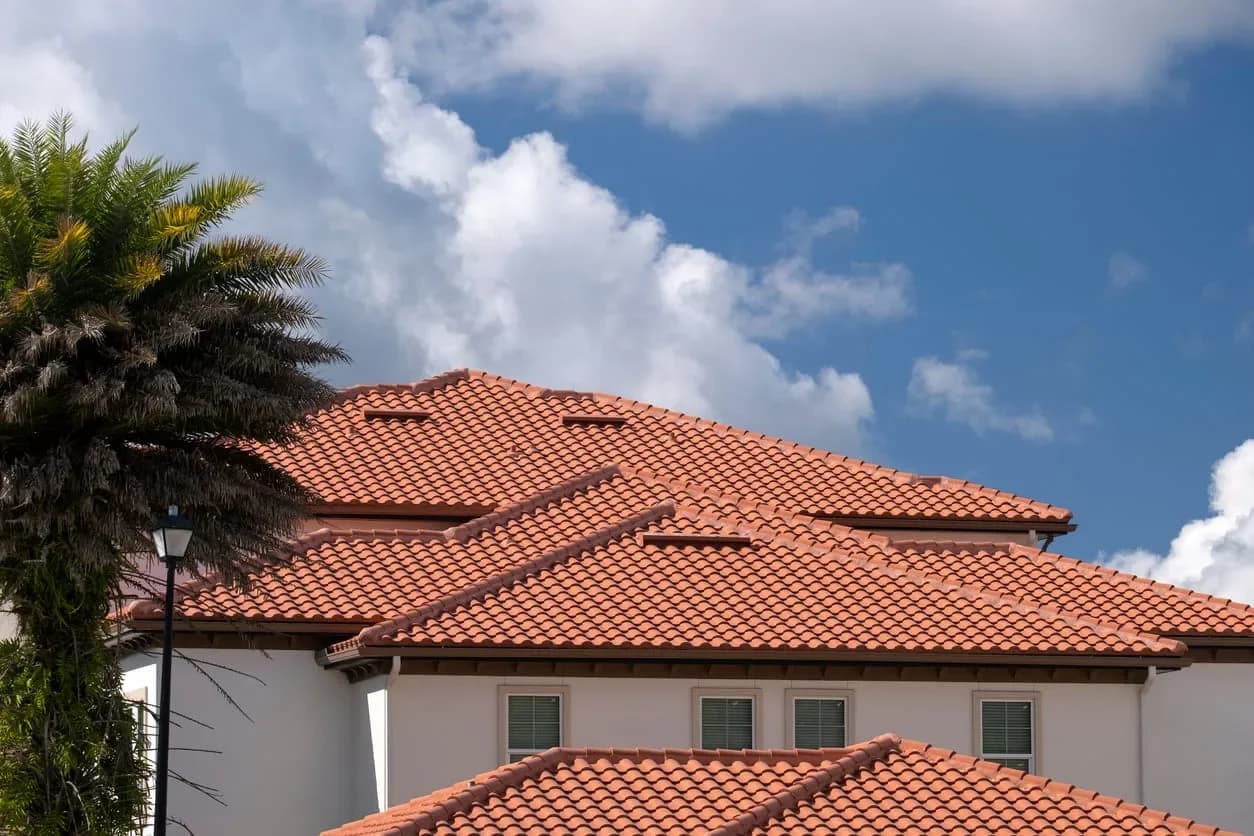
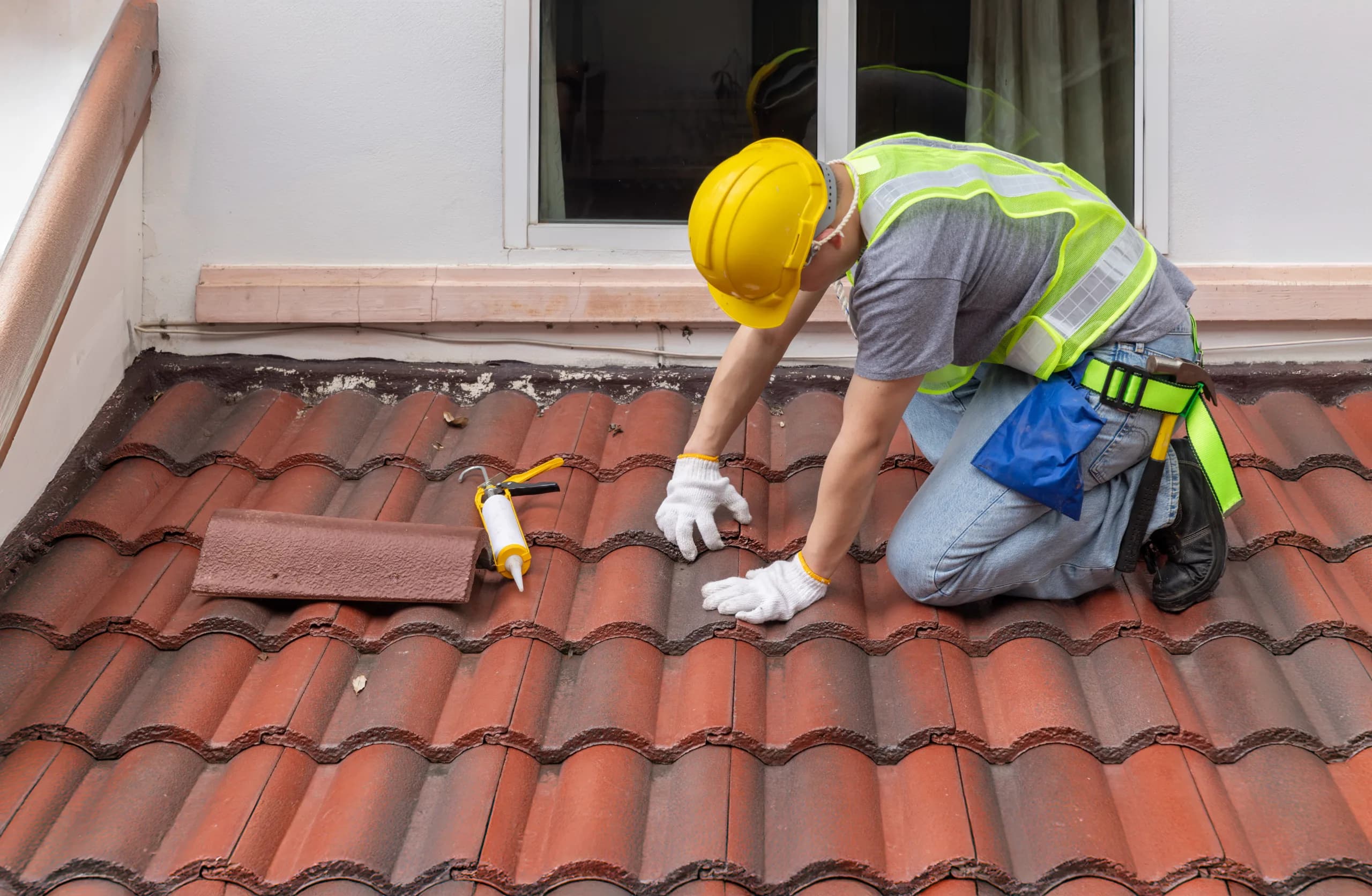
A displaced or cracked tile is not itself a leak — concrete and clay tile shed water by overlap, and one missing piece exposes the felt or synthetic underlayment beneath. That underlayment can take it for a while, but once UV and age have made it brittle, the exposed zone is where water gets to your decking. We reset or replace the affected tiles and, just as important, inspect and replace the underlayment in that zone so the repair is actually waterproof and not merely complete to the eye. On a sound tile roof where the underlayment has aged out over a wider field, the right answer is often a lift-and-relay: stack the existing tile, install fresh underlayment, and reset the original tile rather than buying all-new tile you do not need.
Flashing failure and coastal corrosion
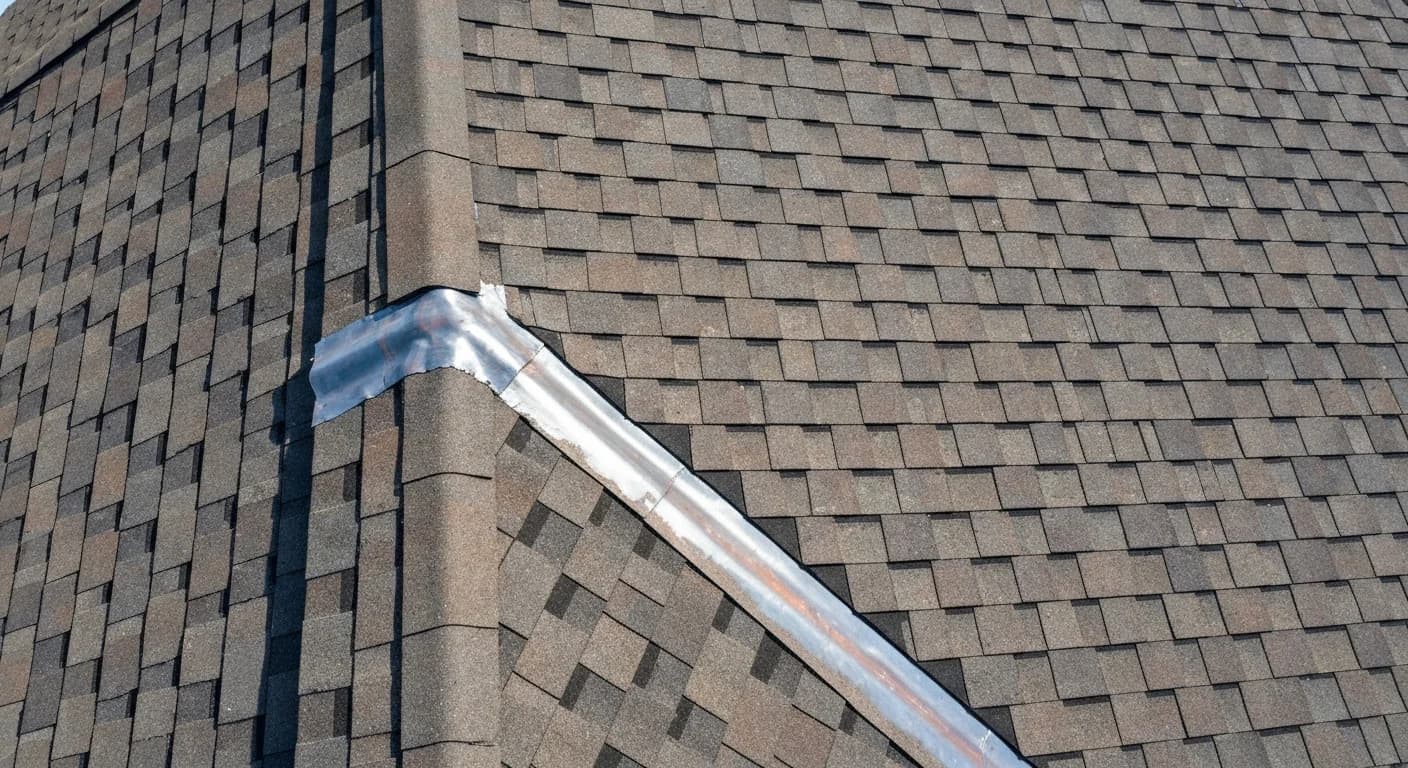
Flashing — the metal that seals roof-to-wall transitions, chimneys, and valleys — is the most common single source of leaks on any roof. In coastal neighborhoods like La Jolla, Del Mar, Encinitas, Point Loma, and Coronado, salt air accelerates corrosion of galvanized steel flashing, which can rust through or pull loose within 10 to 15 years rather than the 25-plus you would get inland. We remove corroded flashing and replace it with corrosion-resistant material — stainless, or copper on premium and historic homes — so the transition seals again rather than funneling water straight into the gap it was meant to close.
Skylight seals and roof penetrations
Skylights, plumbing vents, and exhaust penetrations are the second-biggest leak source, and again the culprit is usually the flashing or the rubber boot around the penetration, not the skylight glass itself. Cracked neoprene vent boots and dried-out skylight seals are a clean, fast repair when caught early — and a ceiling-staining mess when ignored through a wet winter.
Dry-rot and hidden decking damage
When a leak has been quietly active for a season or two, the damage often is not on the roof surface at all — it is in the sheathing and rafters beneath, and marine-layer humidity along the coast keeps everything damp enough to feed the rot. Soft, spongy decking, fascia rot, and stained attic boards all mean water has already gotten in. We probe for this during inspection because repairing the surface over rotted wood guarantees the problem returns. Catching it early keeps a simple flashing repair from becoming a structural one.
UV-aged shingles
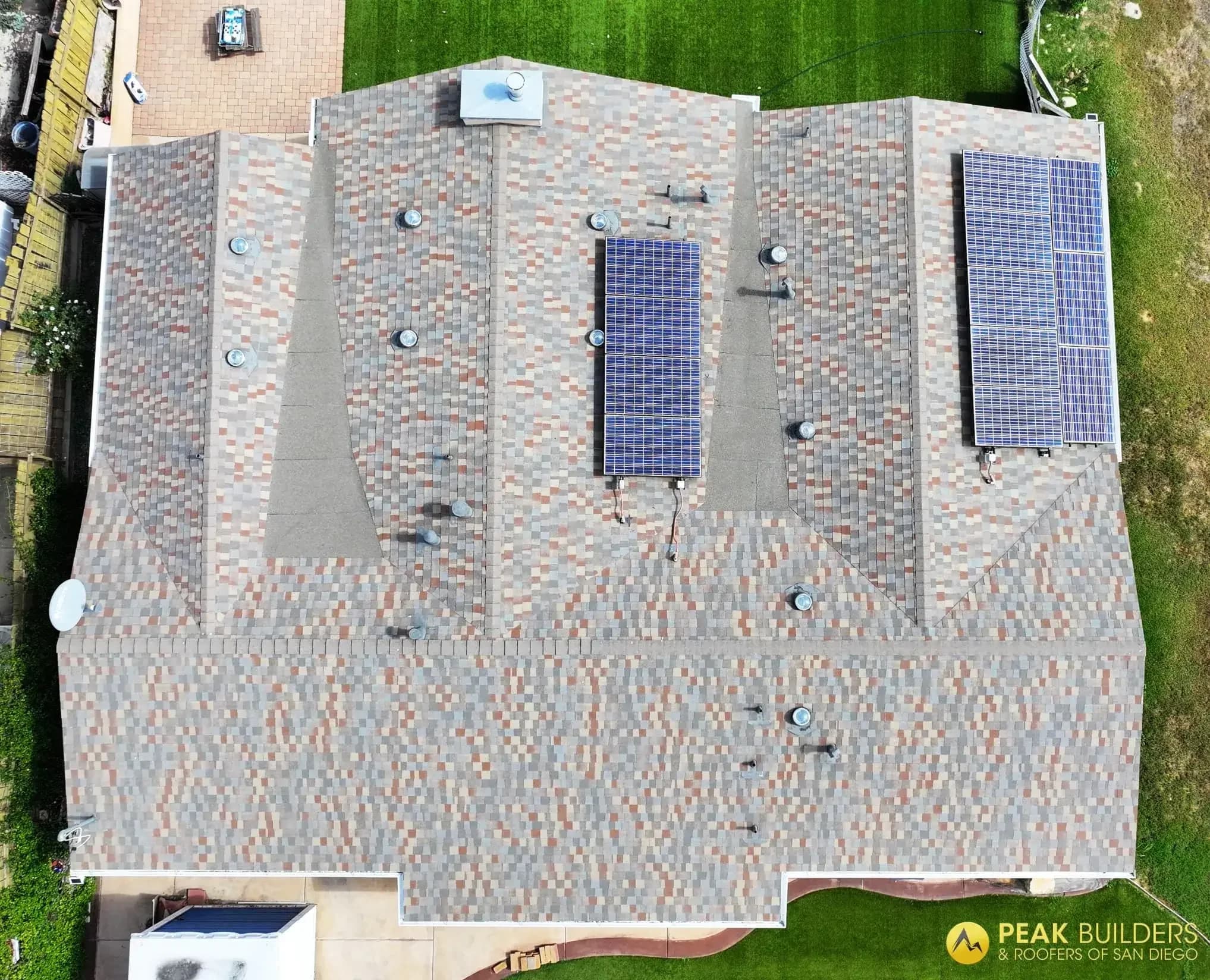
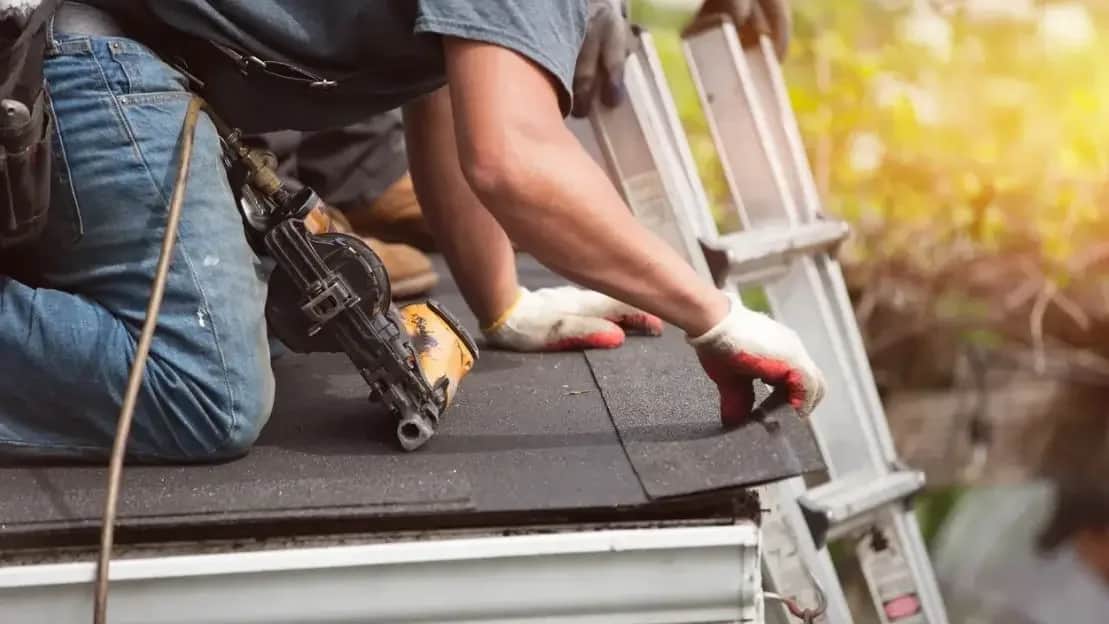
On asphalt-shingle roofs, San Diego's UV load shows up as granule loss, curling, and brittle edges that the next wind event peels back. Isolated wind-lifted or missing shingles in a small area are a straightforward repair, matched to common architectural systems like GAF Timberline HDZ, Owens Corning Duration, or CertainTeed Landmark. When 20 percent or more of the field is degraded and shedding granules into the gutters, repair becomes patchwork on a roof that is near the end of its life — and we will tell you that honestly.
What we use to make the repair last
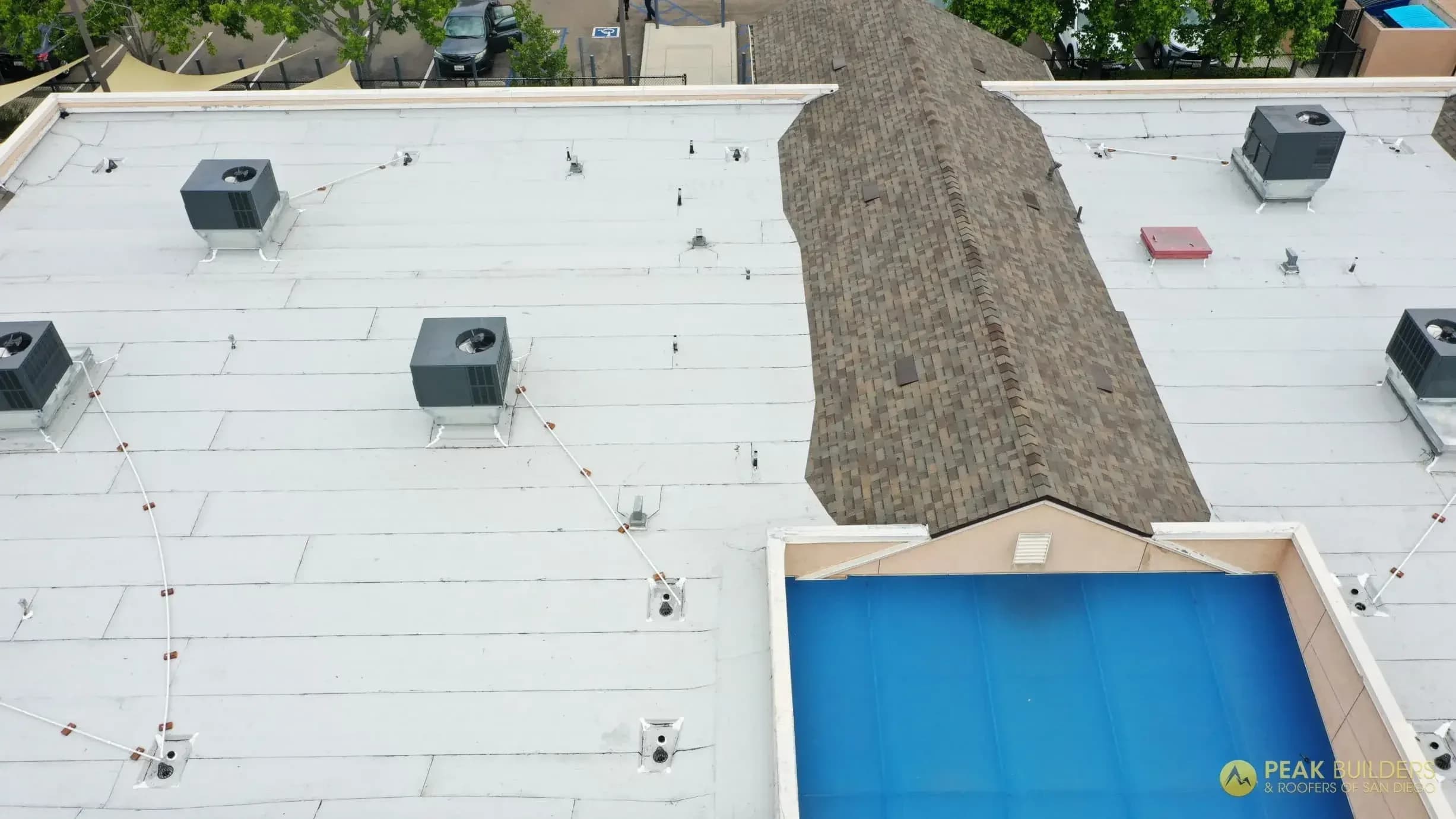
The materials matter because a repair is only as good as how it integrates with your existing system. On shingle roofs we match to durable architectural lines — GAF Timberline HDZ, Owens Corning Duration, CertainTeed Landmark — all of which hold up well against San Diego UV and typically deliver 20 to 30 years in this climate when properly installed. Beneath tile, the workhorse is the underlayment: modern synthetic or modified-bitumen membranes that far outlast the old organic felt and are the true driver of a tile roof's 40-to-60-year lifespan, even though the tile itself can last a century. On the flat and low-slope sections common on many San Diego homes, we work in TPO, EPDM, and modified bitumen; reflective single-ply TPO performs especially well here because it sheds heat in our Climate Zone 7 sun. Along the coast, where salt corrosion is the enemy, corrosion-resistant standing-seam aluminum and stainless or copper flashings dramatically outlast galvanized steel. Matching the repair material and fastening to what is already on your roof — and to the microclimate it sits in — is what keeps a patch from becoming the next leak.
Repair versus replacement: the honest version
This is the question every homeowner with a leak is really asking, so here is the straight answer. If your roof has 40 percent or more of its service life left and the failure is localized — a slipped tile field, one corroded flashing, a cracked vent boot, a single skylight — repair is almost always the right call, and it can buy you many more years. If the roof is in the last stretch of its life and you are seeing multiple unrelated leaks in one season, widespread flashing corrosion, systemic underlayment failure across a tile roof, or shingles shedding granules everywhere, then repairs only delay the inevitable. We would rather tell you that during a free inspection than sell you a patch that fails next winter. Our job is to show you the photos and let the roof make the argument.
What affects the scope of your repair
Every roof is different, so every quote is free and itemized rather than guessed at over the phone. The things that genuinely move scope and effort include roof pitch and how steep and walkable the surface is; two-story or complex access that requires more staging and safety setup; how many layers exist if a prior roof was installed over the original; the material itself, since matching discontinued tile or premium shingle takes more sourcing; and hidden conditions like dry-rotted decking or failed underlayment that only reveal themselves once we open the area up. Code can also factor in: for permitted work, California's Title 24 energy code and our fire-zone Class A assembly requirements may apply, and a steep-slope cool-roof compliance change took effect for permits pulled on or after January 1, 2026. We walk you through any of these that touch your specific repair so there are no surprises, and every line is spelled out before any work begins.
Our process
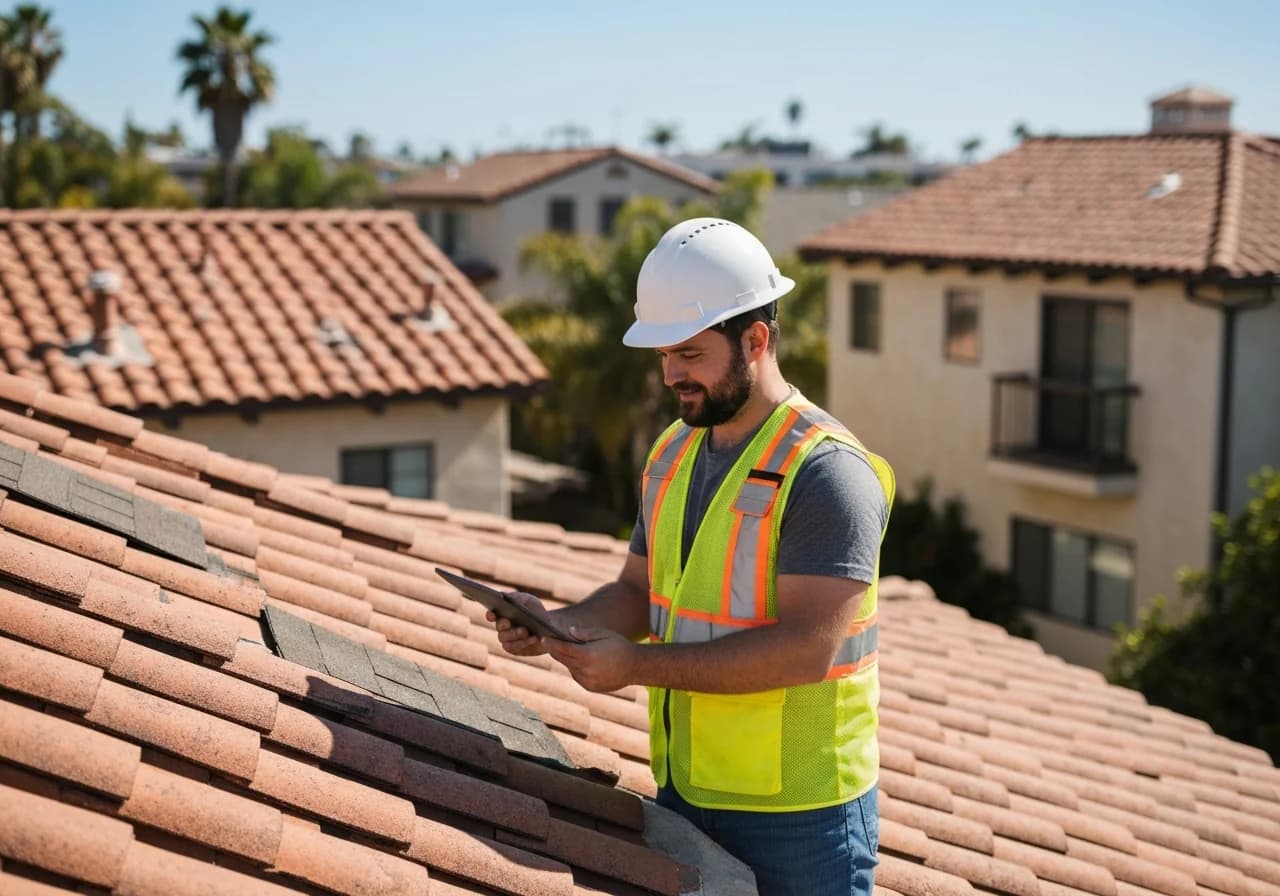
- Free inspection — a San Diego roofer documents the roof surface, flashing, penetrations, and underlayment with photos, and probes the attic for hidden moisture and rot.
- Written, itemized diagnosis — you get a clear scope with photos identifying the actual leak source, not a vague guess.
- Permit when required — minor repairs usually need none; structural or larger-scope work does, and we pull it in your name through the City of San Diego, Chula Vista, El Cajon, or County as applicable.
- Emergency tarp if needed — active leak during a storm? We tarp same-day to stop interior damage while parts arrive.
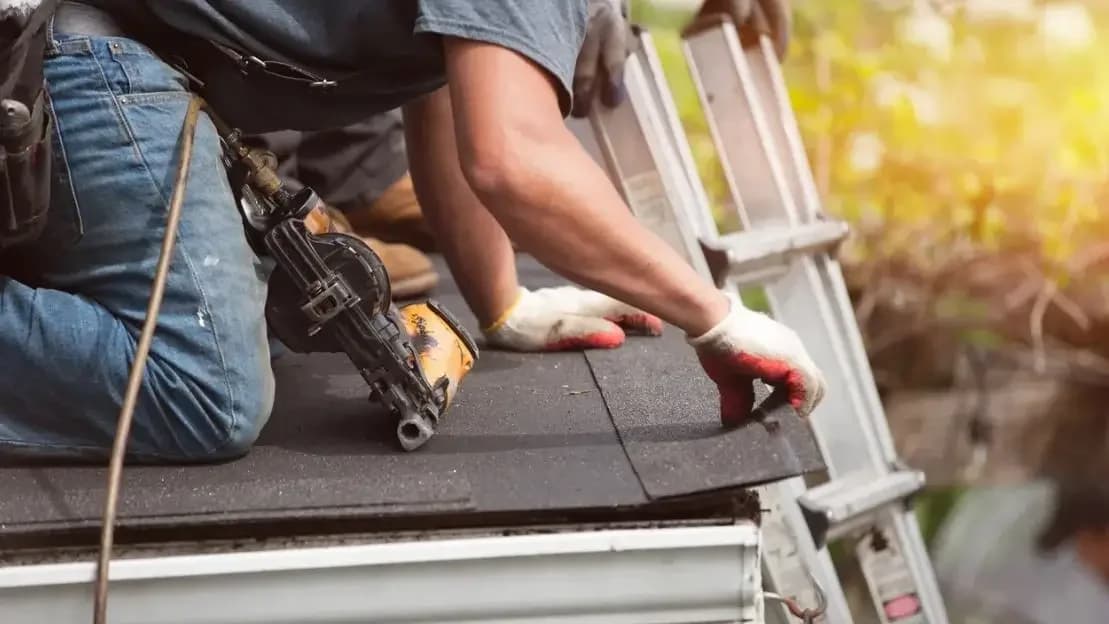
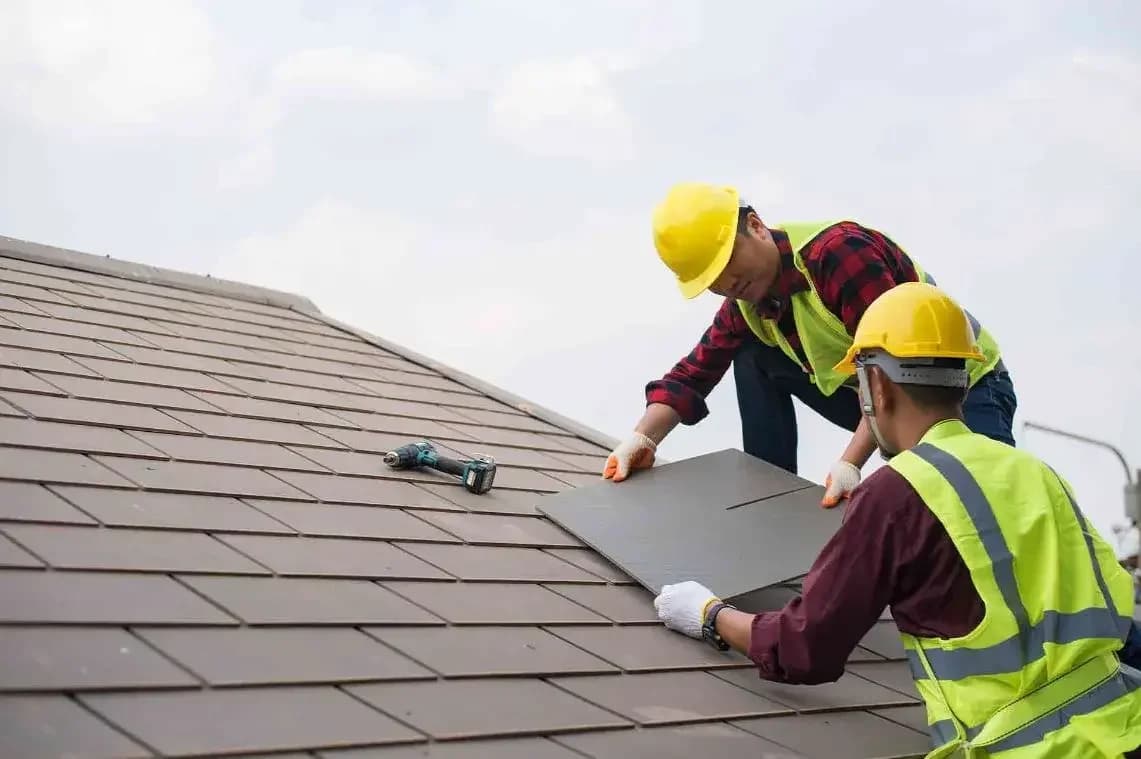
- Repair — the licensed crew completes the fix, typically in one to three days, protecting landscaping as they go.
- Daily cleanup and magnetic nail sweep — we leave your property clean and run a magnet to recover stray fasteners.
- Final inspection and warranty registration — we verify the area is watertight and register your workmanship and any applicable manufacturer warranties.
Built for San Diego's microclimates
Where your home sits changes how it fails. On the coast — La Jolla, Del Mar, Encinitas, Coronado, Point Loma — salt air is the dominant force, corroding flashing and fasteners years before the roofing material itself wears out, so coastal repairs lean on stainless, copper, and aluminum components. Inland and across East County — El Cajon, Santee, Poway, Scripps Ranch, Rancho Bernardo — the punishment is heat and fire exposure, which ages shingles faster and makes Class A fire-rated assemblies and WUI considerations real factors. In the South Bay, around Chula Vista, intense sun drives UV degradation on older shingle roofs. A common scenario: a 1990s concrete-tile home in Poway calls us after the first heavy rain because of a hallway ceiling stain. The tiles look fine. We find the underlayment has gone brittle around a cracked vent boot uphill of the stain, lift and relay the affected field with new synthetic underlayment, replace the boot, and the leak is gone — no full reroof, no upsell. Most of our repairs land in dry season, roughly May through October, but our emergency response runs year-round because storms do not check the calendar.
Why homeowners call us
Peak Builders & Roofers has worked San Diego roofs since 1999, with more than 5,000 roofs installed across the county and a 4.9-star Google rating from over 230 reviews. We hold California CSLB License #1008986 and are a GAF Master Elite contractor — a credential held by roughly the top two to three percent of U.S. roofers — as well as an Owens Corning Platinum Preferred contractor. Those manufacturer credentials are not just badges; they let us back qualifying work with strong system warranties, including GAF's Golden Pledge coverage of up to 50 years on full systems, alongside our own lifetime, transferable workmanship warranty. For a repair, that means the fix is documented, registered, and stands behind your home rather than disappearing the moment we drive away.
Stop the leak before the next storm
A small leak is the easiest roof problem to solve today and the most damaging one to ignore — water does not stop on its own, and a season of quiet intrusion turns a flashing repair into rotted decking and ruined drywall. If you have a ceiling stain, a slipped tile, daylight in the attic, or you just rode out a wind event and want peace of mind, get it looked at now. Peak Builders & Roofers offers a free, no-obligation roof inspection with a written diagnosis and photos, same-week scheduling, and same-day emergency tarping for active leaks. Call (619) 330-8185 to get on the schedule and find out exactly what your roof needs — and just as importantly, what it does not.