




If you live within a few miles of the water in La Jolla, Del Mar, Coronado, or Point Loma, you have probably watched a neighbor's "lifetime" metal roof streak with rust years before it should have. That is almost never a problem with metal roofing itself — it is a problem with the wrong metal roof alloy being installed near San Diego salt air. A correctly specified metal roof here means a standing seam aluminum panel with a baked-on fluoropolymer (Kynar 500 / PVDF) finish, mechanically locked over a high-temperature underlayment, and it will protect your home for 40 to 60 years with almost no maintenance. Steel-based systems can be the right call inland, but at the coast the alloy choice is the whole ballgame.
Here is what to expect when you call Peak Builders & Roofers of San Diego for a metal roof: a free on-site inspection where we measure pitch, deck condition, and your distance from the ocean; a written, itemized quote that names the exact panel, gauge, and finish; permitting through your local building department; and a clean install that typically runs three to seven working days for a standard single-family home. Complex roofs with multiple valleys, dormers, or skylights take longer. The rest of this page explains standing seam versus metal shingle and stone-coated steel, why aluminum beats steel at the coast, how long each system really lasts, the cool-roof and energy story under California's 2026 code, and the truth about noise.
The problem metal roofing actually solves in San Diego
Most San Diego roofs fail from two things working together: relentless year-round UV that bakes asphalt and dries out underlayment, and marine-layer humidity plus salt that corrodes anything susceptible. Add the rare-but-real Santa Ana wind-and-ember events and the occasional heavy winter-storm burst, and a 20-to-25-year asphalt roof can look tired by year 15 at the coast. Homeowners who are tired of re-roofing on that cycle — especially on modern, clean-lined custom homes in Del Mar, La Jolla, and Pacific Beach — turn to metal because a properly built metal roof simply outlives the cycle.
The catch is that "metal" is not one product. Galvanized steel, Galvalume-coated steel, aluminum, and copper behave very differently in salt air, and the difference shows up in years, not in looks. A roof can appear flawless for a decade and then unravel quickly once a sacrificial coating is spent. The job of a coastal roofer is to match the alloy and finish to your exact microclimate so the roof you pay for once is the roof you keep for decades.
Standing seam vs. metal shingle vs. stone-coated steel
Standing seam — the architectural standard
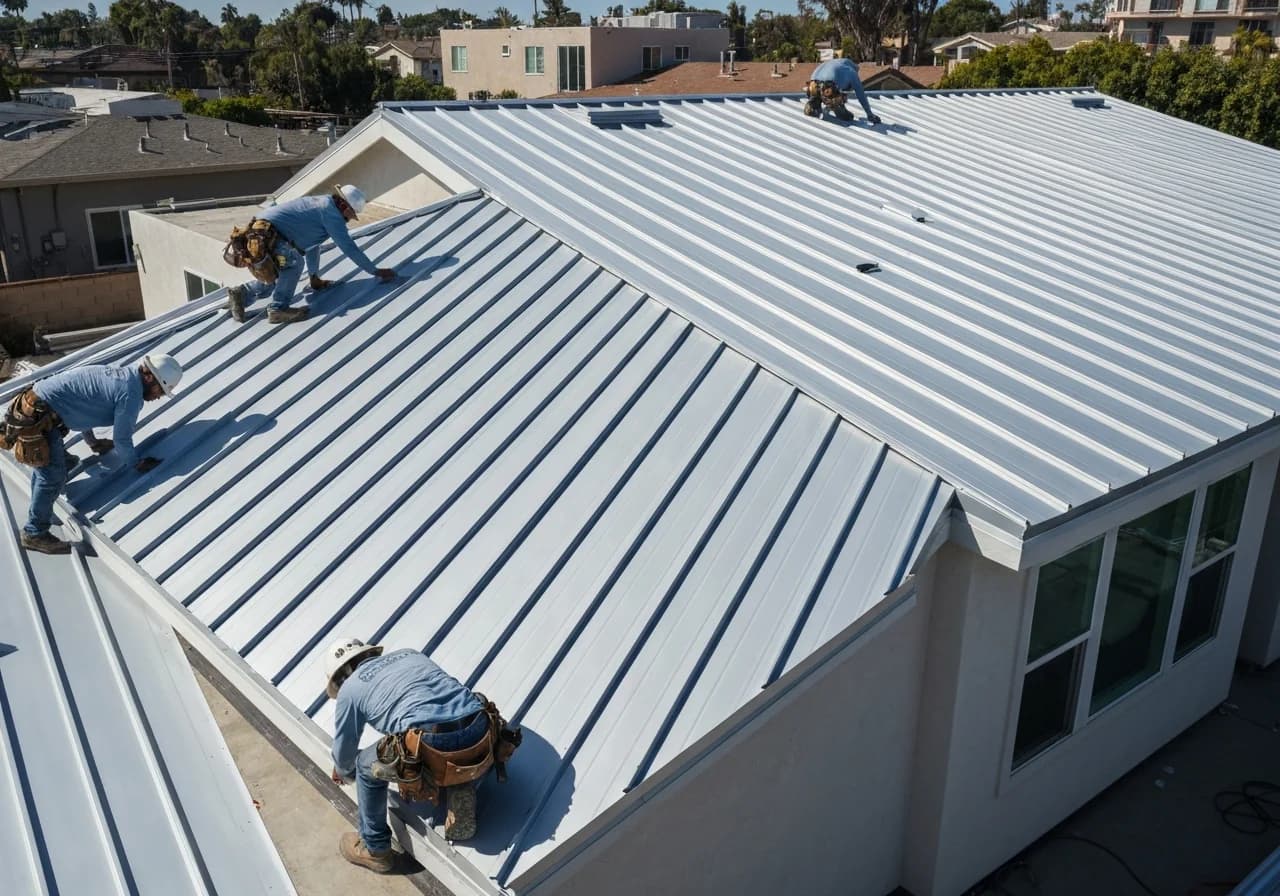
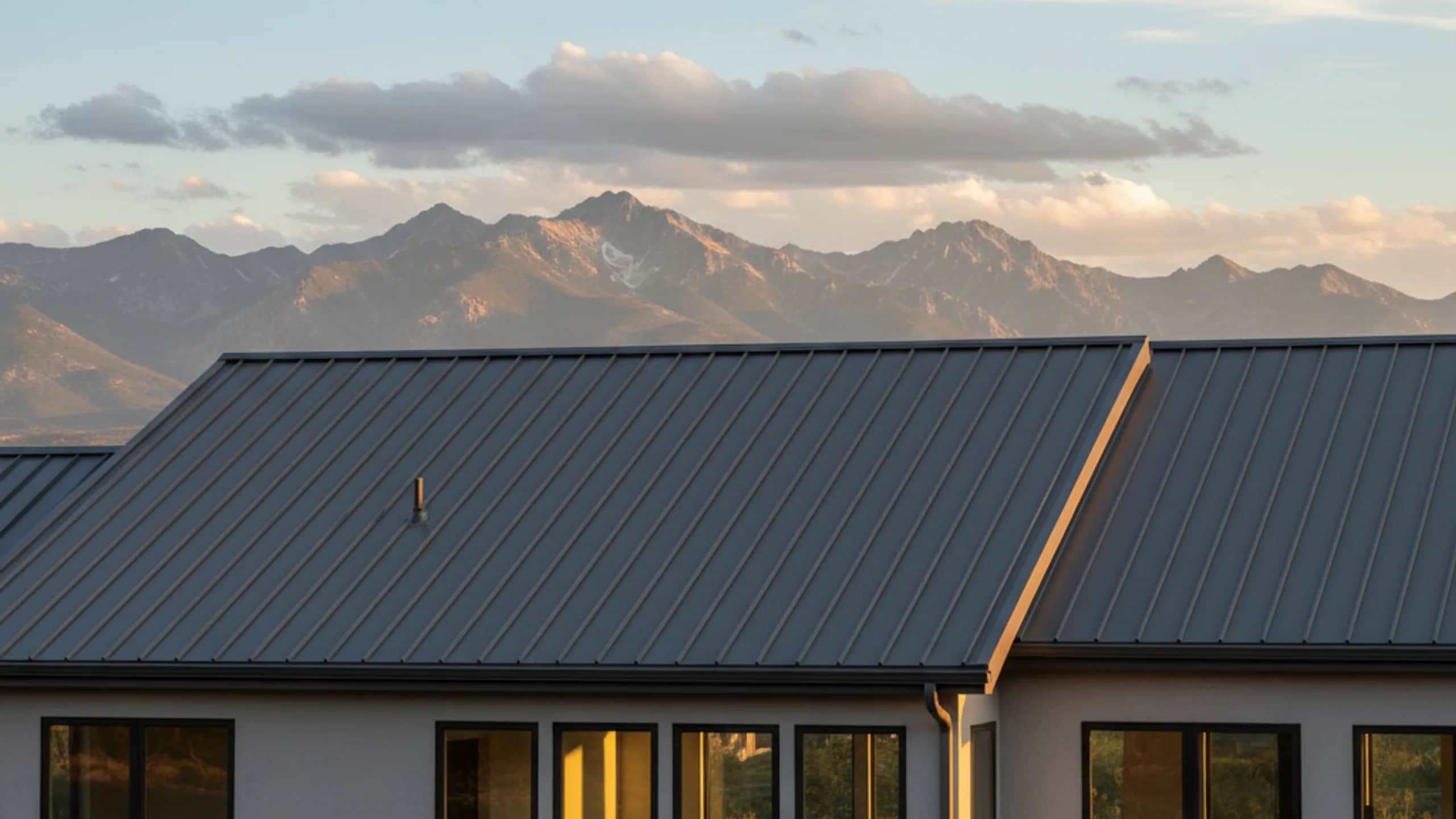
Standing seam is a series of continuous vertical panels whose raised, interlocking seams run from ridge to eave. The fasteners are concealed and the panels are attached with clips that let the metal expand and contract with San Diego's day-night temperature swings — no nails punched through the face to leak. This is the profile you see on contemporary custom homes, and in 24-gauge steel or comparable aluminum it is the most weather-tight metal system available. With a factory Kynar 500 / PVDF finish, a standing seam roof lasts 40 to 60 years in aluminum and roughly 30 to 45 years in coated steel, with the steel figure dropping sharply near the surf line.
Metal shingle / tile profiles
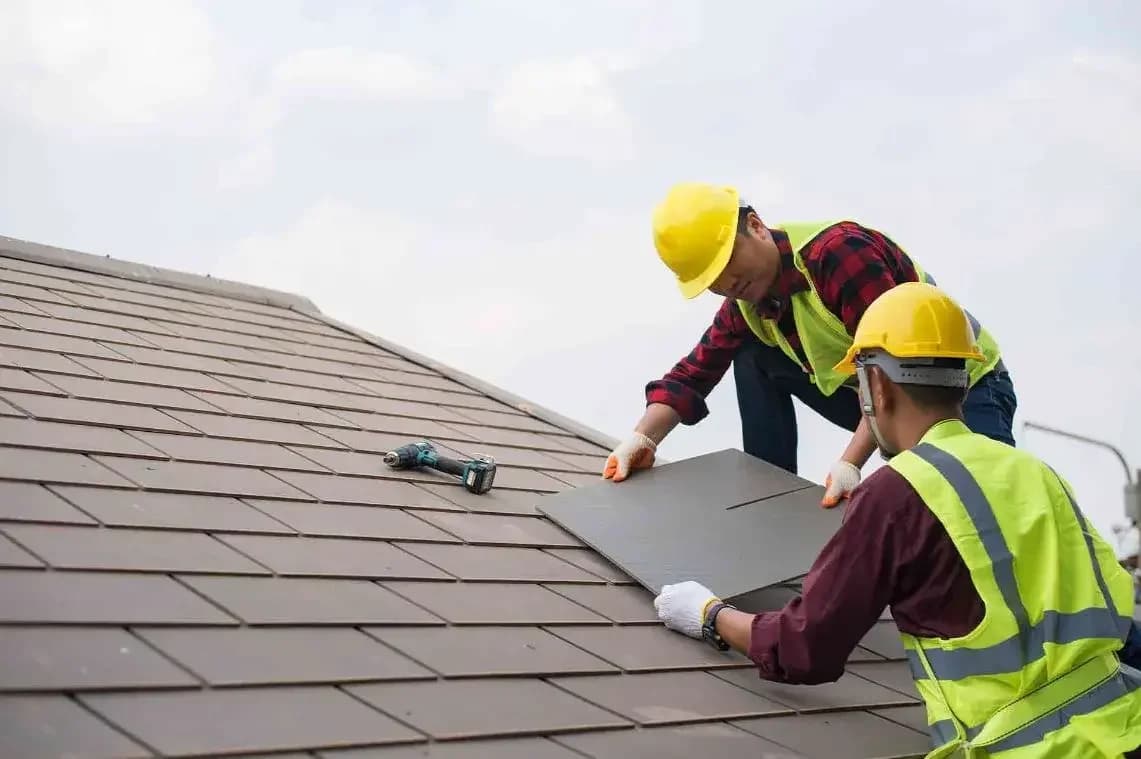
Metal shingles are individual stamped panels that mimic the look of asphalt shingle, slate, or shake. They give you the longevity and fire behavior of metal while satisfying neighborhoods or HOAs that want a traditional roofline. They install faster on cut-up roofs than long standing seam pans and hide minor deck irregularities well. Expect 40 to 50 years from a quality coated steel or aluminum shingle.
Stone-coated steel
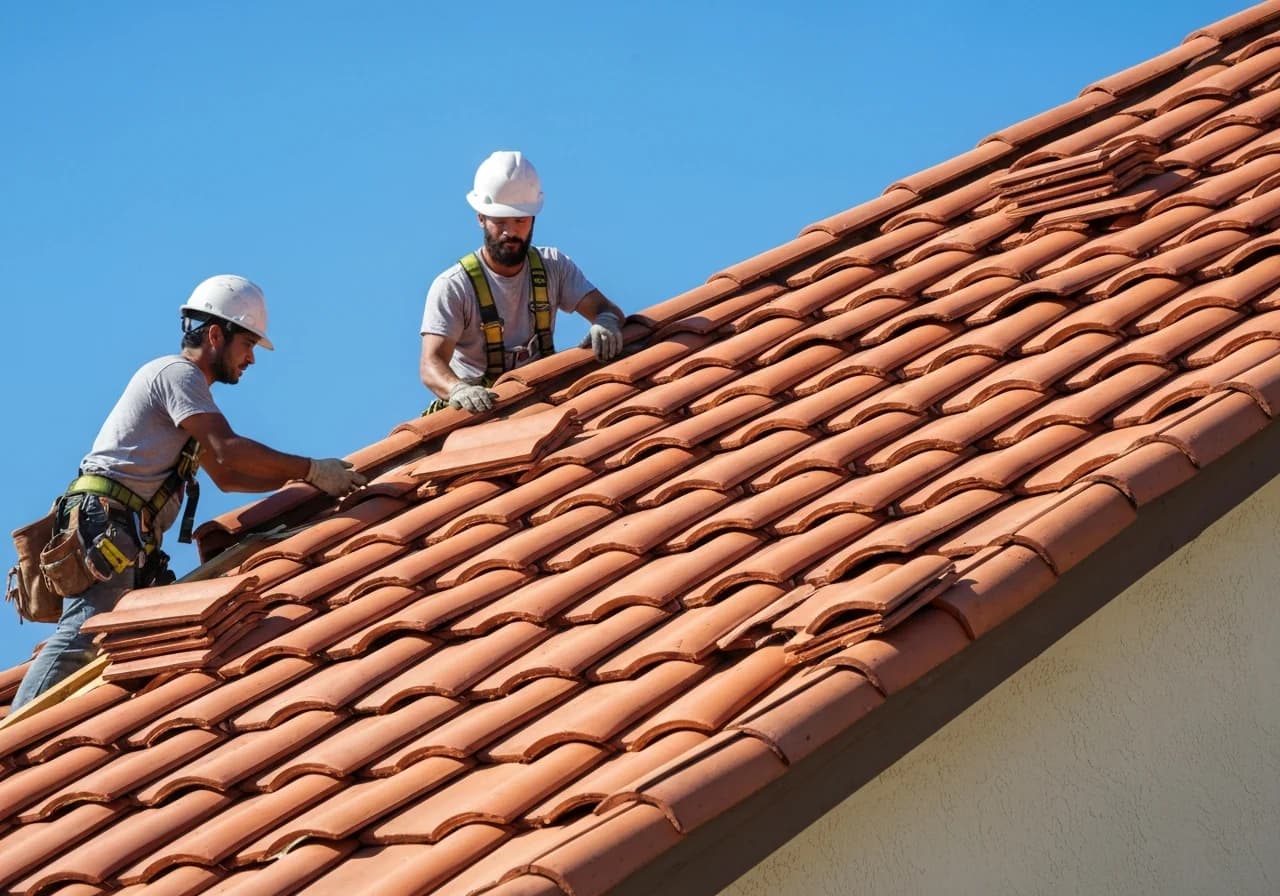
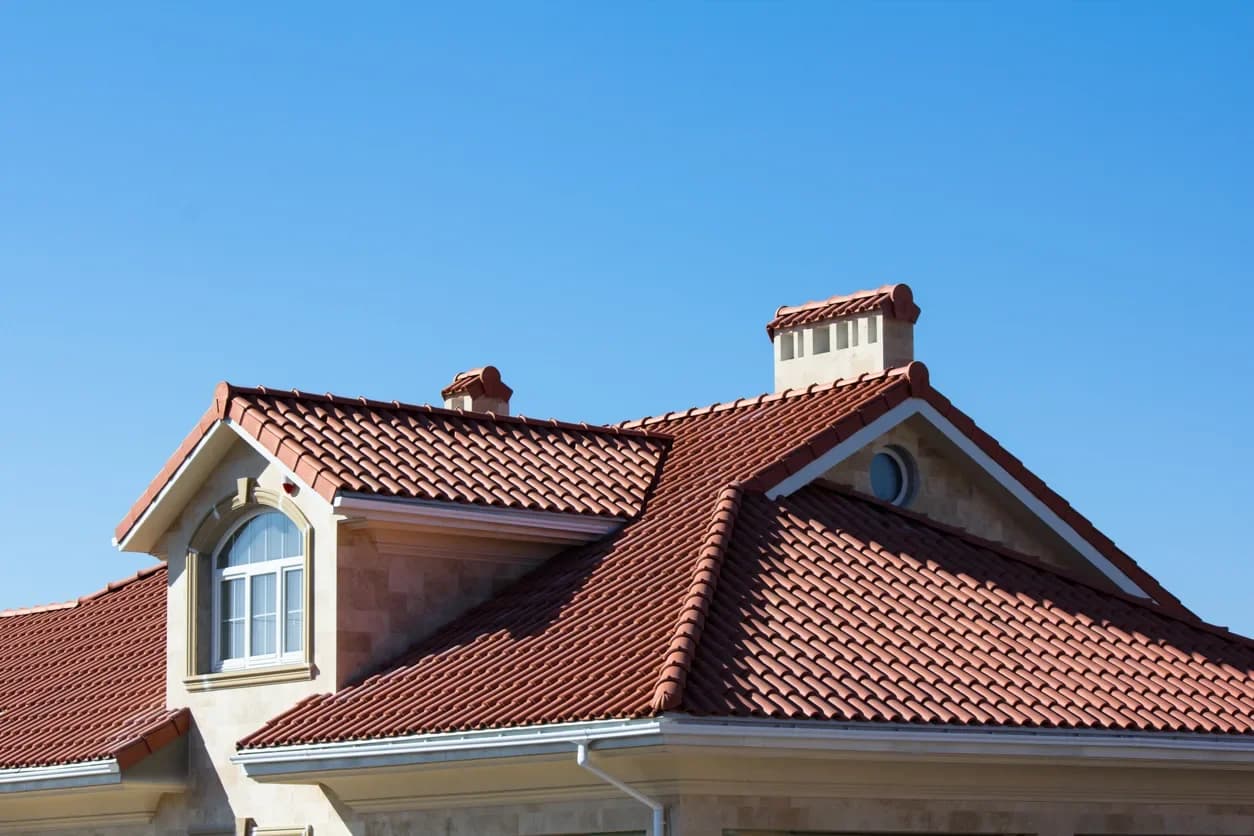
Stone-coated steel is a steel panel embossed into a shingle or barrel-tile shape and finished with bonded stone granules. It reads as tile or shake from the street, which makes it a favorite in Spanish and Mediterranean neighborhoods and in HOA-restricted communities that require a "tile" appearance — without the structural weight of real clay or concrete tile. Service life lands around 40 to 50 years. Because the substrate is steel, we still weigh coastal exposure carefully before recommending it close to the ocean.
Why aluminum, not steel, near the San Diego coast
This is the single most important decision on a coastal metal roof, so it is worth being blunt. Salt-laden marine air accelerates corrosion on steel, and that includes Galvalume- and G90-galvanized steel. Those coatings work by sacrificing themselves to protect the steel underneath; in a salt zone they are consumed faster, and once they are gone, rust propagates quickly. We routinely see galvanized steel within a few miles of the water look fine for a decade and then deteriorate over just two or three years.
Aluminum does not corrode in salt spray. It forms a tight, self-renewing aluminum-oxide passivation layer that keeps protecting the metal even if the surface is scratched — the same reason boat hulls, marine hardware, and coastal architecture use aluminum rather than steel. In coastal settings aluminum commonly outlasts steel by 10 to 20 years. That is why, for homes within roughly four miles of the ocean — La Jolla, Del Mar, Encinitas, Coronado, Point Loma — we specify standing seam aluminum with a Kynar finish, full stop. Four to ten miles inland, coated steel becomes reasonable and aluminum is still the safer pick. Out in East County and inland North County — El Cajon, Santee, Poway, Escondido — salt is no longer the driver and quality coated steel performs for its full rated life. Copper sits above all of these: it patinas to blue-green over 20 to 30 years and can run 80 to 100 years, which is why it shows up on luxury and historic restoration work.
Energy, cool-roof code, and the 2026 change
Metal is one of the best cool-roof materials available. Factory Kynar 500 / PVDF finishes (Sherwin-Williams Fluropon Cool, PPG Duranar Sunstorm) use cool pigments that reflect a large share of solar heat — reflective metal panels routinely exceed a solar reflectance of 0.60, far above code minimums — which can drop attic temperatures noticeably and ease the load on your AC during San Diego's long warm season.
This matters more starting in 2026. San Diego County sits in California Climate Zone 7, and projects permitted on or after January 1, 2026 fall under the 2025 update of the Title 24 energy code, which tightens steep-slope cool-roof expectations. The practical takeaway: a factory-finished cool-pigment metal roof clears the steep-slope reflectance and emittance thresholds comfortably, and we document compliance on the standard CF1R/CF2R forms at permit so your re-roof passes inspection without surprises. Metal also carries a Class A fire rating as part of a WUI-compliant assembly, which matters in San Diego's fire-prone inland and hillside neighborhoods.
The noise myth, and the real trade-offs
The loudest objection to metal is rain noise, and it is mostly a myth left over from barn roofs nailed to open purlins. On a house, metal goes over a solid plywood deck, a synthetic underlayment, and your attic insulation — three sound-deadening layers. Installed that way, a metal roof is no louder inside than asphalt or tile; most homeowners notice no difference. Lightning is another myth: metal does not attract it, and being non-combustible it handles a strike better than wood shake.
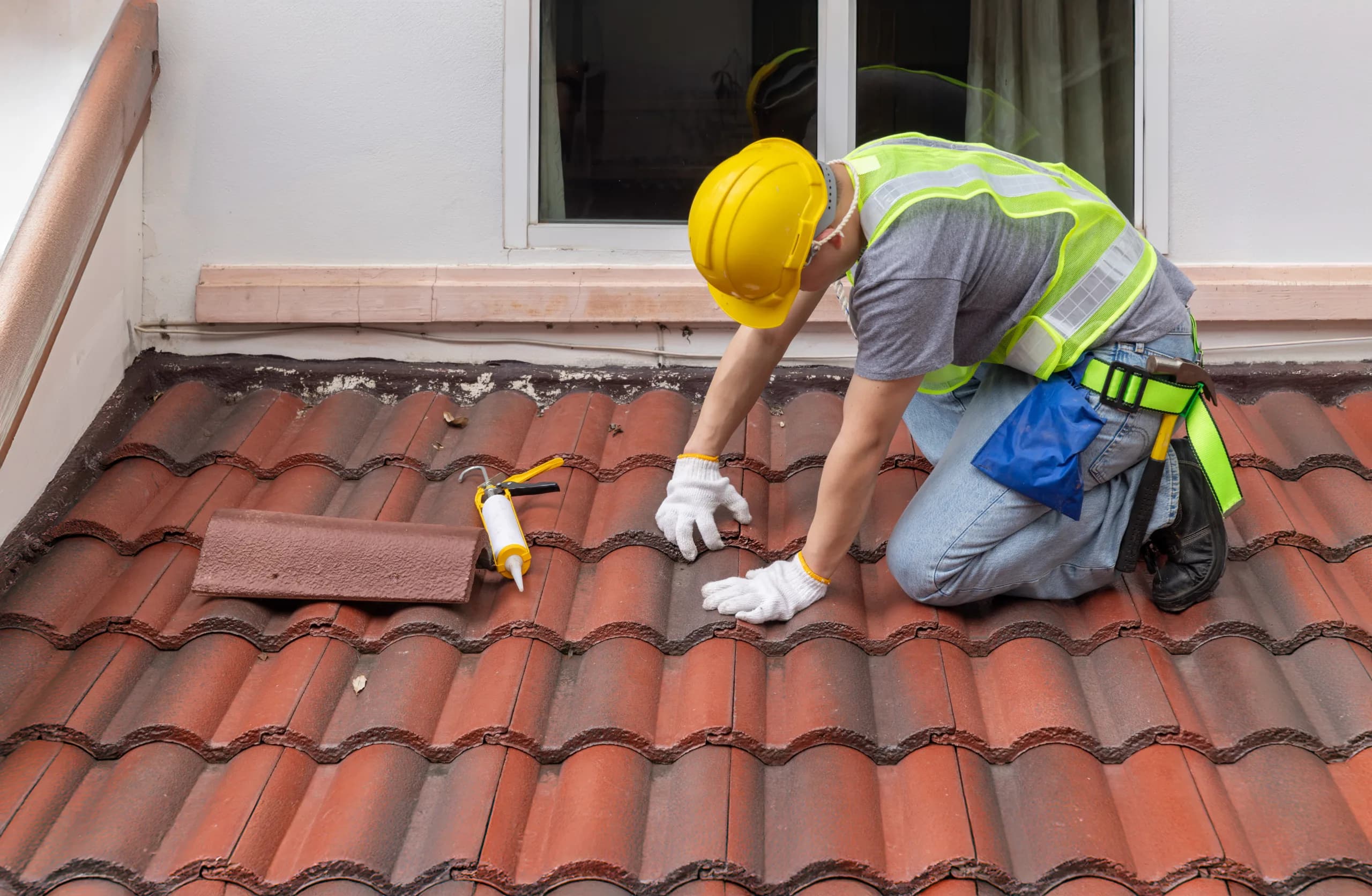
The honest trade-offs are these. Metal costs more up front than asphalt, though it eliminates a re-roof you would otherwise pay for again within its lifespan. Thin, low-gauge panels can dent under heavy impact — rarely an issue in San Diego, where damaging hail is uncommon, but worth noting under big overhanging branches. And metal rewards correct detailing: the underlayment, flashing, and clip work are where a roof is won or lost, which is why installer quality matters as much as the panel you choose.
What goes into your metal roof project
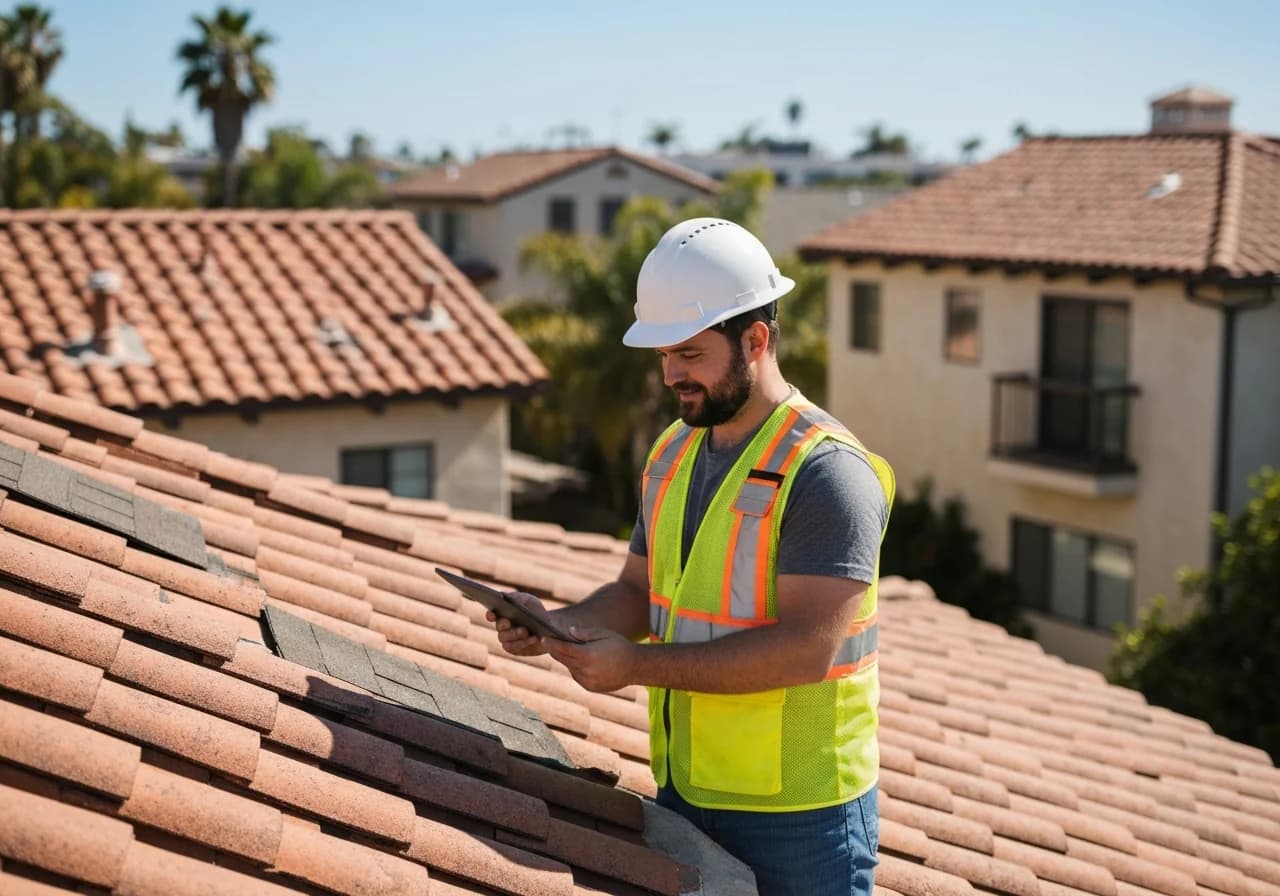
Every roof is quoted free and itemized after we are on the roof, because the scope is driven by your specific house, not a per-square average. The biggest factors: roof pitch and complexity (more valleys, hips, dormers, and skylights mean more custom flashing and labor); two-story or steep access that changes staging and safety setup; how many existing layers have to be torn off and hauled away; and your material and finish choice — aluminum versus coated steel, standing seam versus stone-coated, standard color versus a premium cool pigment or copper.
Then there is what we find once the old roof is off. Hidden deck rot or delaminated sheathing has to be replaced before any metal goes down, and salt-air homes hide more of it than inland homes. Title 24 cool-roof and WUI fire-zone upgrades can add reflective-finish or assembly requirements depending on your jurisdiction and permit date. Ventilation corrections, new flashing at walls and chimneys, and skylight reflashing also shape the final scope. We walk you through every line so you understand what you are paying for and why — and nothing is hidden until invoice day.
Our process
- Free inspection — we measure your roof, assess deck condition and ventilation, and confirm your distance from the coast to lock in the right alloy.
- Written, itemized quote — exact panel, gauge, finish, and scope, in plain language, with no obligation.
- Permit — we pull permits through the City of San Diego, Chula Vista, El Cajon, or County, and handle Coastal Commission overlay considerations near the water.
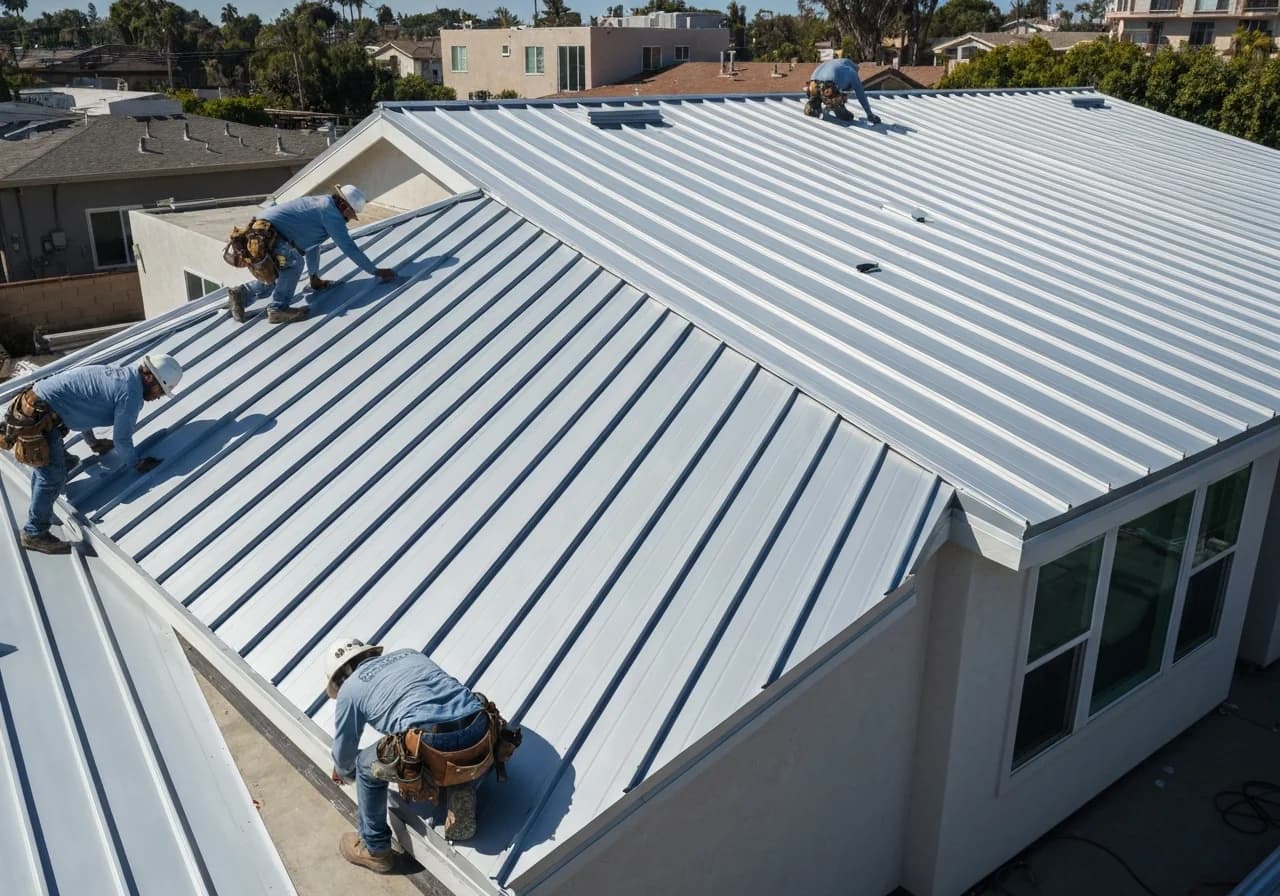
- Install — tear-off to the deck, rot repair, high-temperature synthetic underlayment, clipped panels with mechanically seamed joints, custom-bent flashings and ridge caps.
- Daily cleanup + magnetic nail sweep — your driveway and yard are swept every day, with a final magnetic pass for stray fasteners.
- Final inspection — we walk the roof and pass the building department sign-off.
- Warranty registration — we register your manufacturer finish and system warranties and hand you the paperwork.
Built for San Diego's microclimates
A metal roof in Encinitas and a metal roof in Santee are not the same specification, and we treat them differently. At the coast, salt air and Coastal Commission rules near the bluffs push us to aluminum and careful permitting; the dry-season install window from roughly May through October keeps the deck dry during tear-off. Inland and in East County, year-round heat and WUI fire exposure make the cool-roof reflectance and Class A assembly the headline, and coated steel performs well. In the South Bay around Chula Vista and National City we tune the spec between those poles.
A typical coastal scenario: a Point Loma homeowner with a 1990s galvanized steel roof that is rust-streaking at the seams calls us expecting a repair. On inspection, the G90 coating is spent and the rust is structural at the panel laps — patching would buy a year. We re-roof in standing seam aluminum with a cool-pigment Kynar finish, replace two sheets of salt-damaged sheathing we find at tear-off, and register a finish warranty that will outlast the homeowner's mortgage. That is the coastal pattern: the second metal roof is aluminum, and we would rather you do it once.
Why San Diego homeowners trust Peak Builders
Peak Builders & Roofers of San Diego has been roofing this county since 1999 and has installed more than 5,000 San Diego roofs. We hold California CSLB License #1008986, carry a 4.9-star Google rating across 230+ reviews, and maintain an A+ BBB rating. We are a GAF Master Elite contractor — a credential held by only about 2 to 3 percent of U.S. roofers — and an Owens Corning Platinum Preferred contractor, which lets us back qualifying systems with manufacturer warranties up to 50 years alongside our own lifetime, transferable workmanship warranty. On metal specifically, that means your Kynar finish, your panel substrate, and our installation labor are all covered in writing, and the coverage transfers to the next owner — a real asset at resale in markets like La Jolla and Del Mar.
Get your free metal roof inspection
If you are weighing a metal roof for a coastal or inland San Diego home, the right next step is a free, no-obligation inspection so we can confirm the correct alloy and finish for your exact location before anyone quotes a panel. We serve La Jolla, Carlsbad, Encinitas, Del Mar, Coronado, Chula Vista, Poway, Point Loma, Escondido, El Cajon, Oceanside, Rancho Santa Fe, Santee, Scripps Ranch, Rancho Bernardo, North Park, and the rest of San Diego County. Call Peak Builders & Roofers at (619) 330-8185 or email [email protected] to schedule your inspection and get a written, itemized plan for a roof built to last 40 to 60 years.