





If your Spanish or Mediterranean home has a tile roof that's started leaking, dropping cracked tiles into the gutters, or staining the ceiling after a winter storm, the problem almost certainly isn't the tile. Tile roof repair in San Diego is one of the most misunderstood jobs in the trade, because the part that fails is the layer you can't see. Concrete and clay tile routinely outlast the people who install them, but the waterproof membrane underneath has a fixed service life, and when it wears out the whole roof starts to leak even though every tile still looks perfect from the street.
Here's the plain answer most homeowners are searching for. If your tile is intact but your roof is leaking, you usually do not need a full tile roof replacement. You need a lift-and-relay: a crew carefully removes the existing tile, stacks it on the roof, strips and replaces the worn underlayment and flashings underneath, then re-lays your original tile back into position. You keep the look of your home, you reuse the expensive part, and you reset the clock on the only component that was actually failing. A typical San Diego lift-and-relay runs about five to eight working days. A full tear-off and new-tile install runs longer. Either way, the first step is a free roof inspection so you know which one your home actually needs before anyone quotes the job.
Why the underlayment — not the tile — decides how long your roof lasts
This is the single most important thing to understand about tile roofing in San Diego, so it's worth being specific. A tile roof is a two-part system. The tile is the armor: it sheds the bulk of the water, takes the UV and the wind, and provides the fire rating and the curb appeal. But tile is not technically waterproof. Wind-driven rain, the marine layer, and condensation all get past the tile, and the layer that actually keeps water out of your house is the underlayment fastened to the roof deck beneath the tile.
Concrete tile lasts roughly 40 to 50 years. Genuine clay tile, common on older La Jolla, Point Loma, and Rancho Santa Fe homes, can run 50 to 75 years or more. The underlayment under that tile does not. Older organic felt underlayment — the 30 or 40 lb asphalt-saturated paper that came standard on 1980s and 1990s San Diego tract homes — typically gives you 15 to 25 years before it dries out, cracks, and stops shedding water. That's the mismatch that puts a roof in trouble: the tile is barely middle-aged while the membrane under it has already quit.
So when someone tells you a 1992 Poway concrete tile roof "needs to be replaced," ask the right follow-up. The deck and most of the tile are usually fine. What's worn out is a thin layer of paper, and you do not have to buy all-new tile to fix it.
What a lift-and-relay actually involves
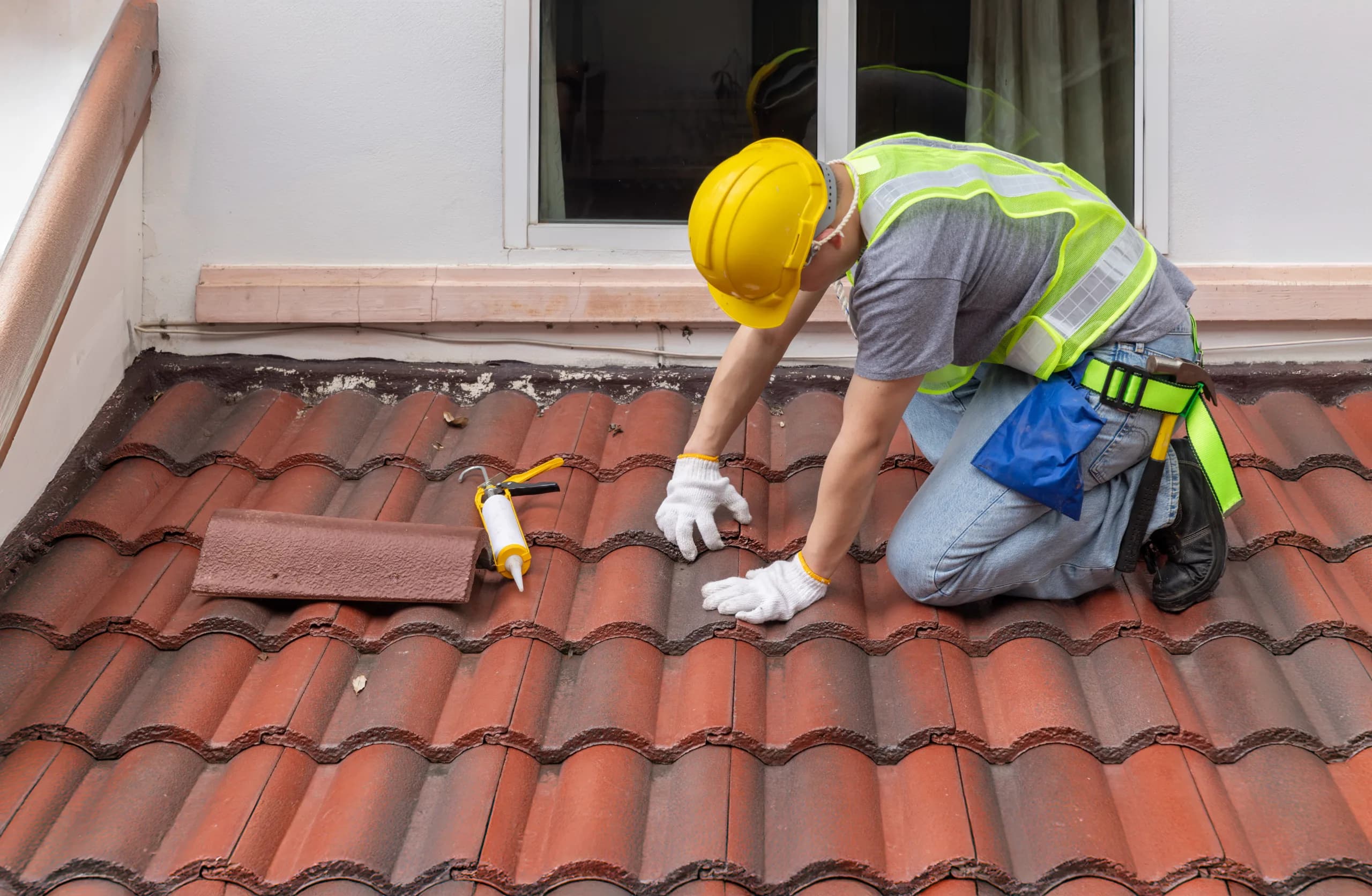
A lift-and-relay (also called a tile reset or tile lift-and-lay) is a precise, labor-intensive job, and it's where an experienced tile crew earns its keep. Done right, it gives you a brand-new waterproofing system under the tile you already own.
The sequence we follow:
- Inspect and document. We confirm the tile is in good enough shape to reuse — generally 90% or better intact — and photograph the roof so tile goes back where it belongs, especially on blended-color clay roofs.
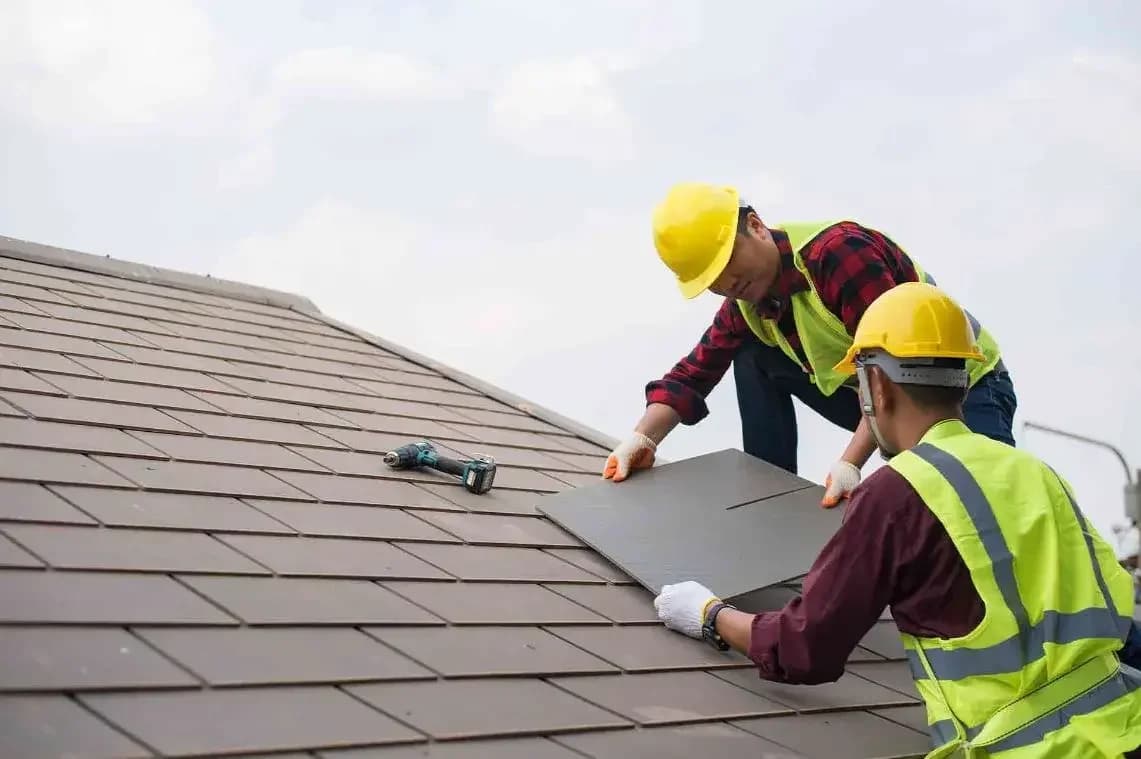
- Lift and stack. Tile is removed by hand and stacked in courses on the roof, sorted so field tile, hip, ridge, and trim pieces stay organized.
- Strip to the deck. Old underlayment and corroded flashings come off down to the sheathing.
- Repair what's hidden. Any dry rot, delaminated plywood, or fastener damage in the deck gets replaced now, while it's exposed — this is the moment to fix it.
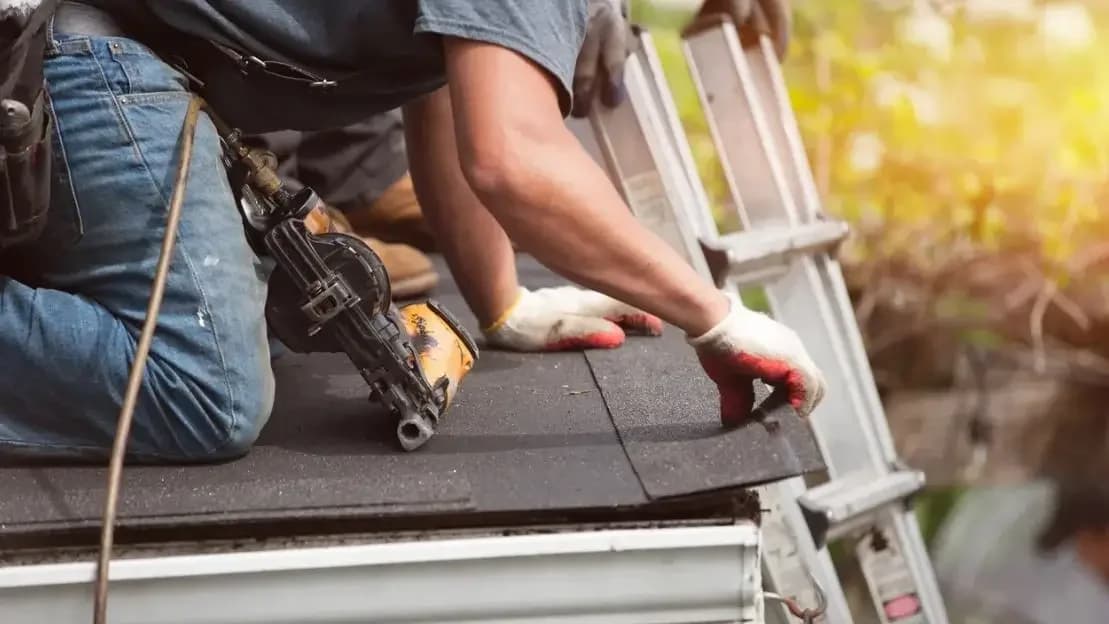
- New waterproofing. We install fresh underlayment rated for the assembly. On coastal and fire-zone homes that often means a high-temp synthetic or a self-adhered peel-and-stick membrane, which carries a 25-to-30-plus-year service life versus roughly a decade for a single layer of old-style felt.
- New flashings and metal. Valleys, headwalls, pipe penetrations, and chimney flashings are replaced in corrosion-resistant metal — non-negotiable near salt air.
- Re-lay the tile. Your original tile goes back down over the new system, with broken pieces (usually 5–10% of a roof) swapped out for matches.
- Rebuild the ridges and hips. Cracked mortar is replaced, typically with a modern mortar-plus-weatherblock or mechanically fastened ridge system that holds up far better than old straight-mortar bedding.
The result is a roof that looks exactly like it did, but is waterproof again for another two to three decades.
Matching discontinued tile profiles
The hardest part of any San Diego tile repair isn't the labor — it's finding tile that matches. Many of the concrete and clay profiles installed across the county in the '80s, '90s, and 2000s have been discontinued by manufacturers like Eagle, Boral/Westlake Royal, MCA, and US Tile. When a roof needs a few hundred replacement pieces and the profile no longer exists, a careless crew leaves you with an obvious mismatched patch.
We solve this the way veteran tile roofers do. First, we harvest sound tile from inconspicuous areas — behind a chimney, a rear-facing slope, a section getting covered by solar — and use those to repair the visible field, then fill the hidden area with the closest available current profile. Second, we keep relationships with regional tile yards and salvage suppliers that stock discontinued and used inventory. On a clay roof where color and weathering matter most, this matching work is the difference between a repair you notice and one you don't.
Concrete tile vs. clay tile in San Diego
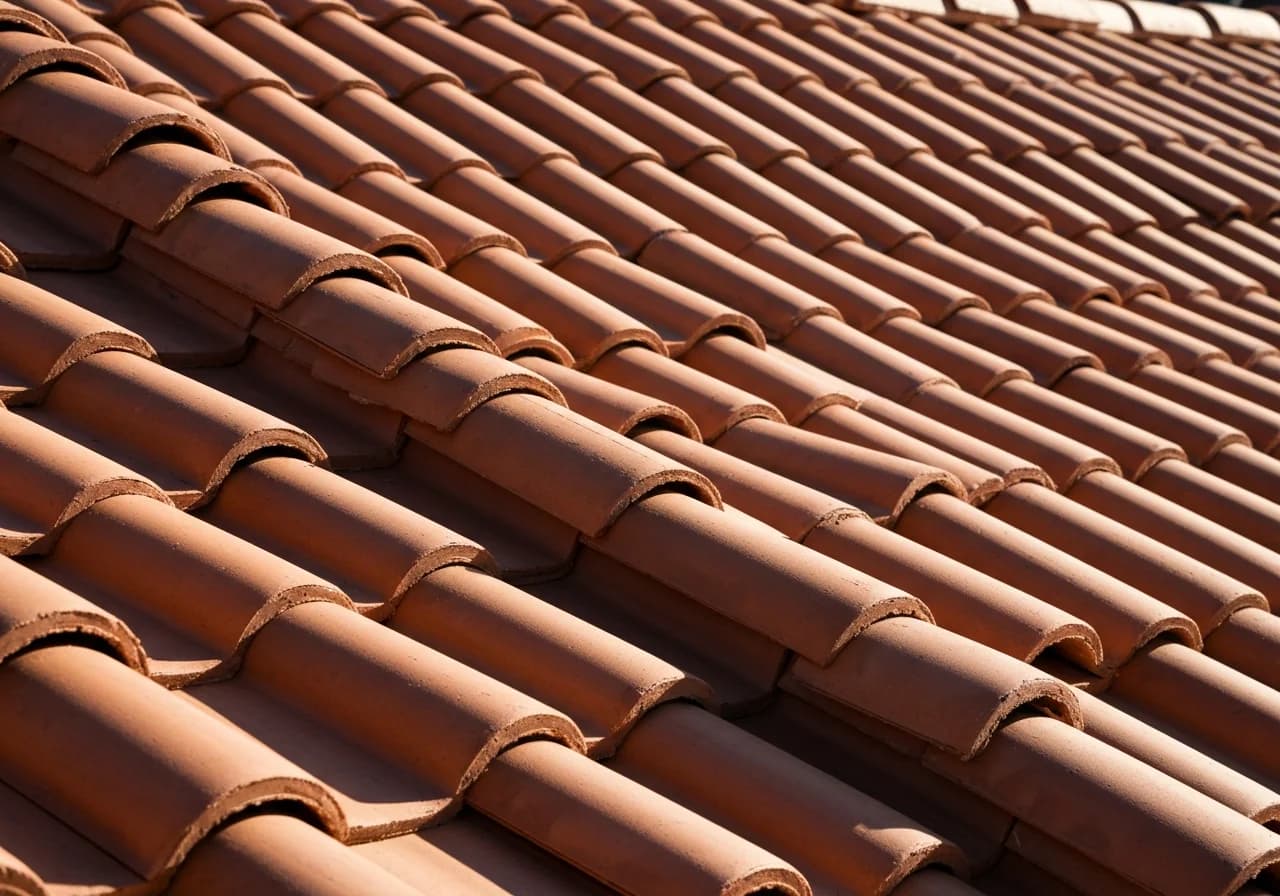
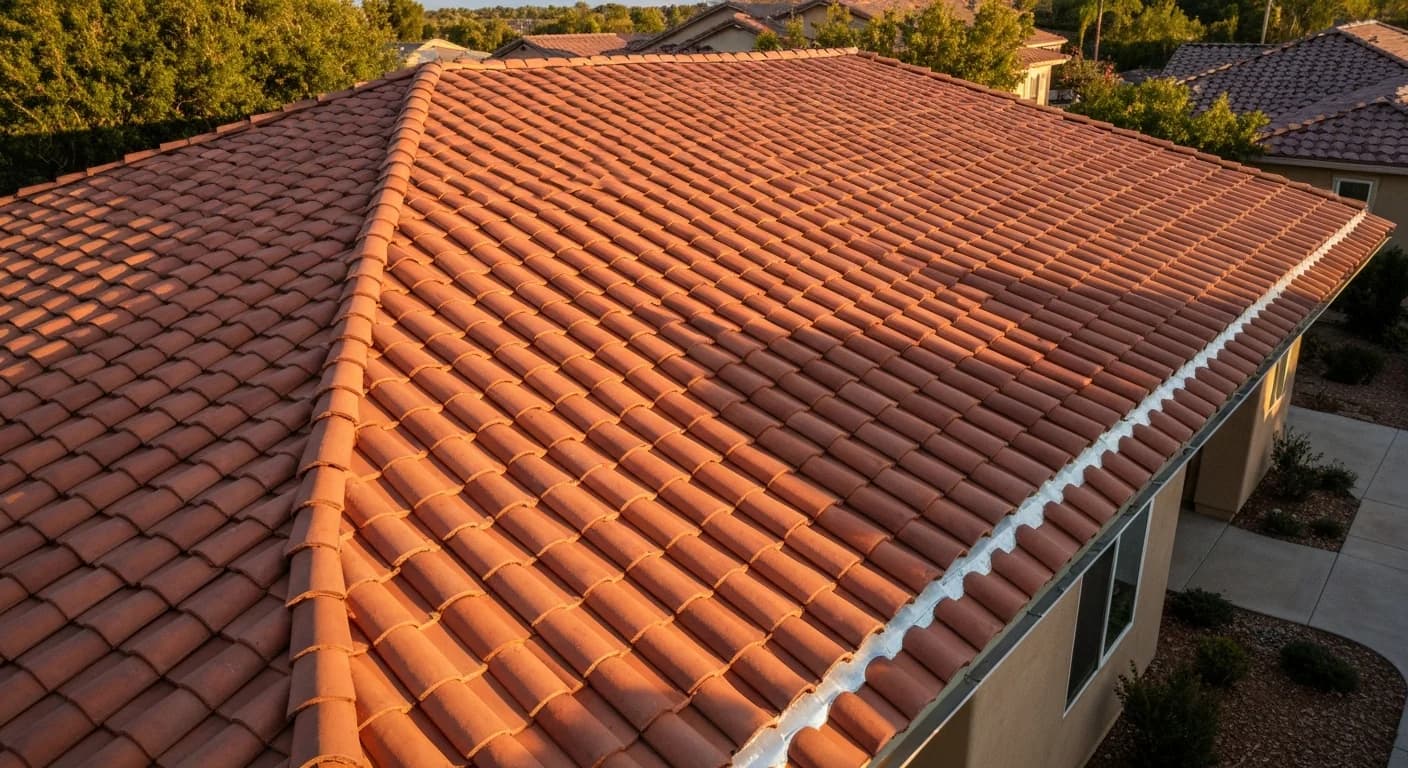
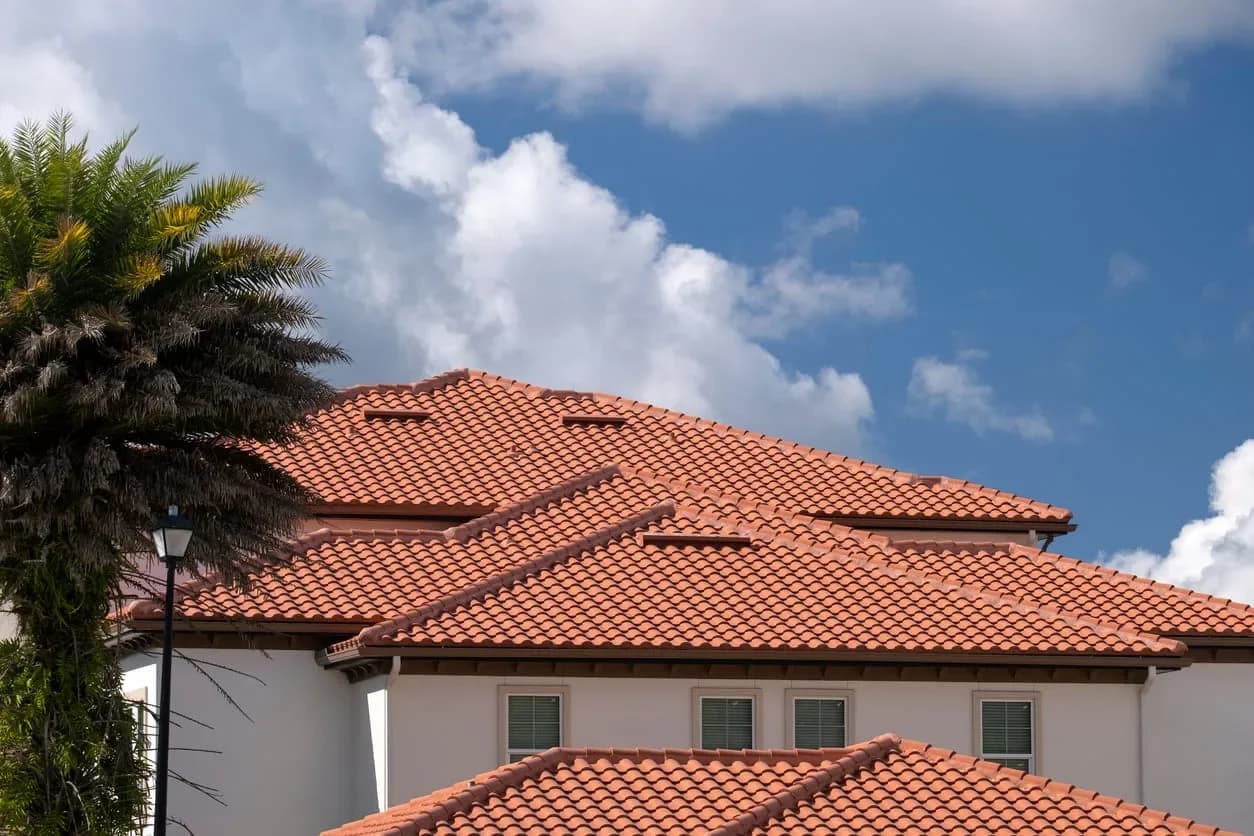
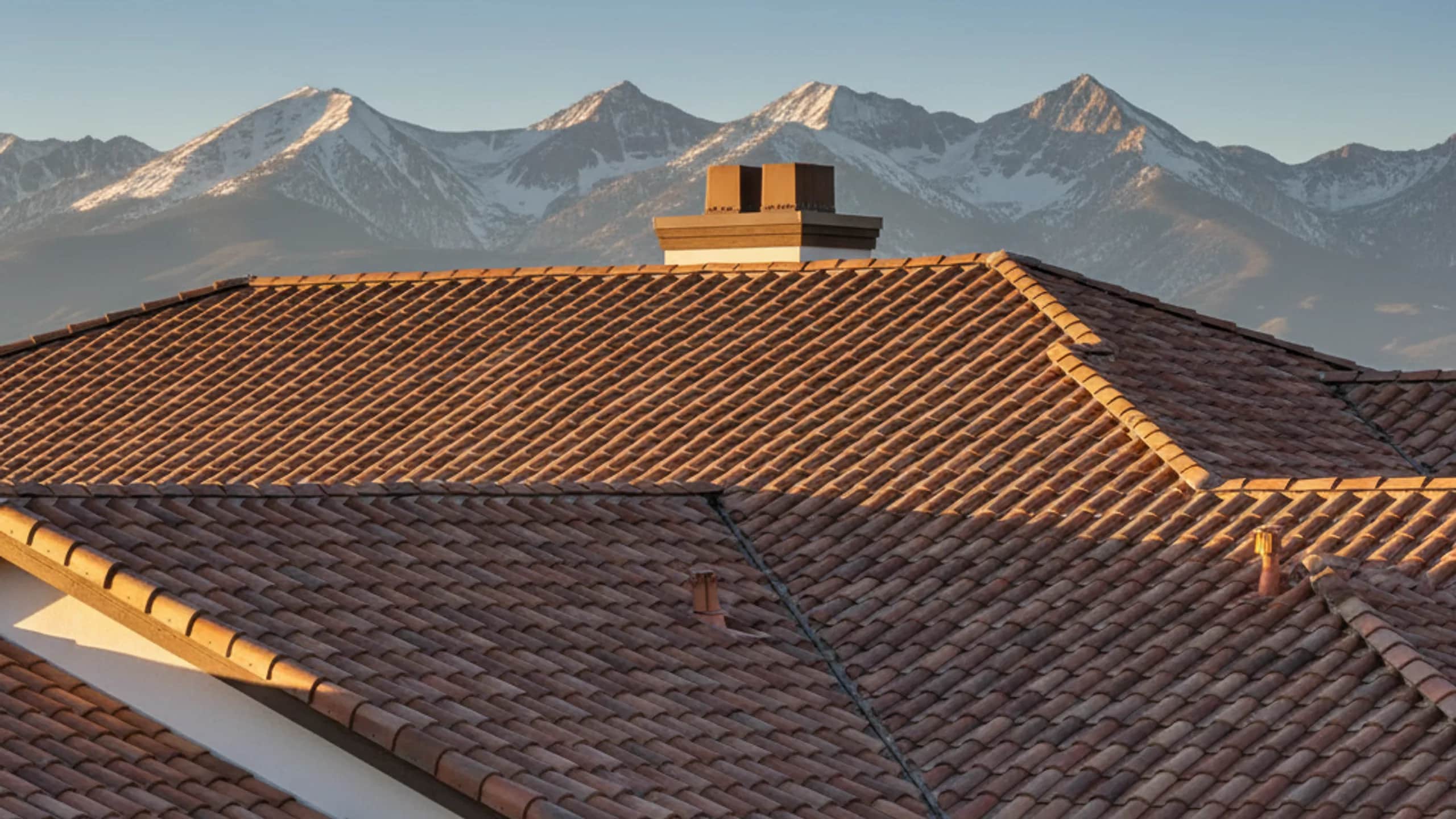
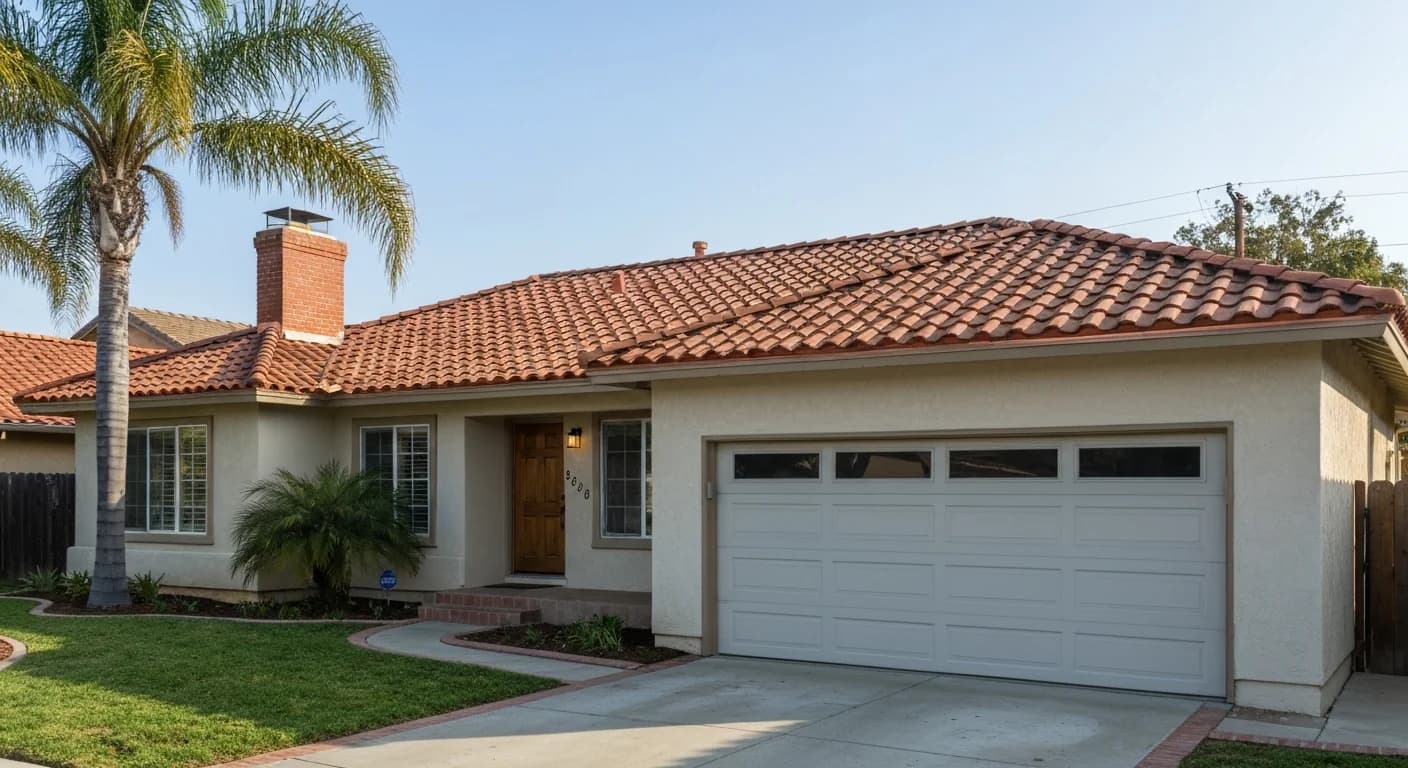
Both belong on San Diego roofs, and the right choice usually follows your home and your neighborhood. Concrete tile — the familiar "S" barrel and low-profile flat shapes on most tract homes from Carlsbad to Chula Vista — is heavier, takes color through a surface coating that can soften over decades, and delivers a long, dependable service life. Clay tile — the traditional barrel and mission profiles on Spanish Revival homes in La Jolla, Coronado, Point Loma, and Rancho Santa Fe — holds its color essentially forever because the color is fired into the body of the tile, and it can outlast concrete by decades. Clay is also the more authentic and higher-value look on a true Mediterranean home, which matters at resale in the coastal market.
One practical note for either material: tile is heavy, on the order of 850 to 1,100 pounds per roofing square. If you're converting a home that originally had asphalt shingle over to tile, the structure has to be evaluated to carry that load. On a lift-and-relay you're reusing existing tile on a structure already built for it, so that's rarely an issue — another reason relay is the efficient move when the tile is already there.
What affects the scope of a tile roof repair in San Diego
Every tile roof is different, and a handful of real conditions drive how much work a job takes. We walk all of these on the free inspection and lay them out in a written, itemized quote so there are no surprises:
- Roof pitch and height. Steeper slopes and two- and three-story access slow the work and change the safety setup.
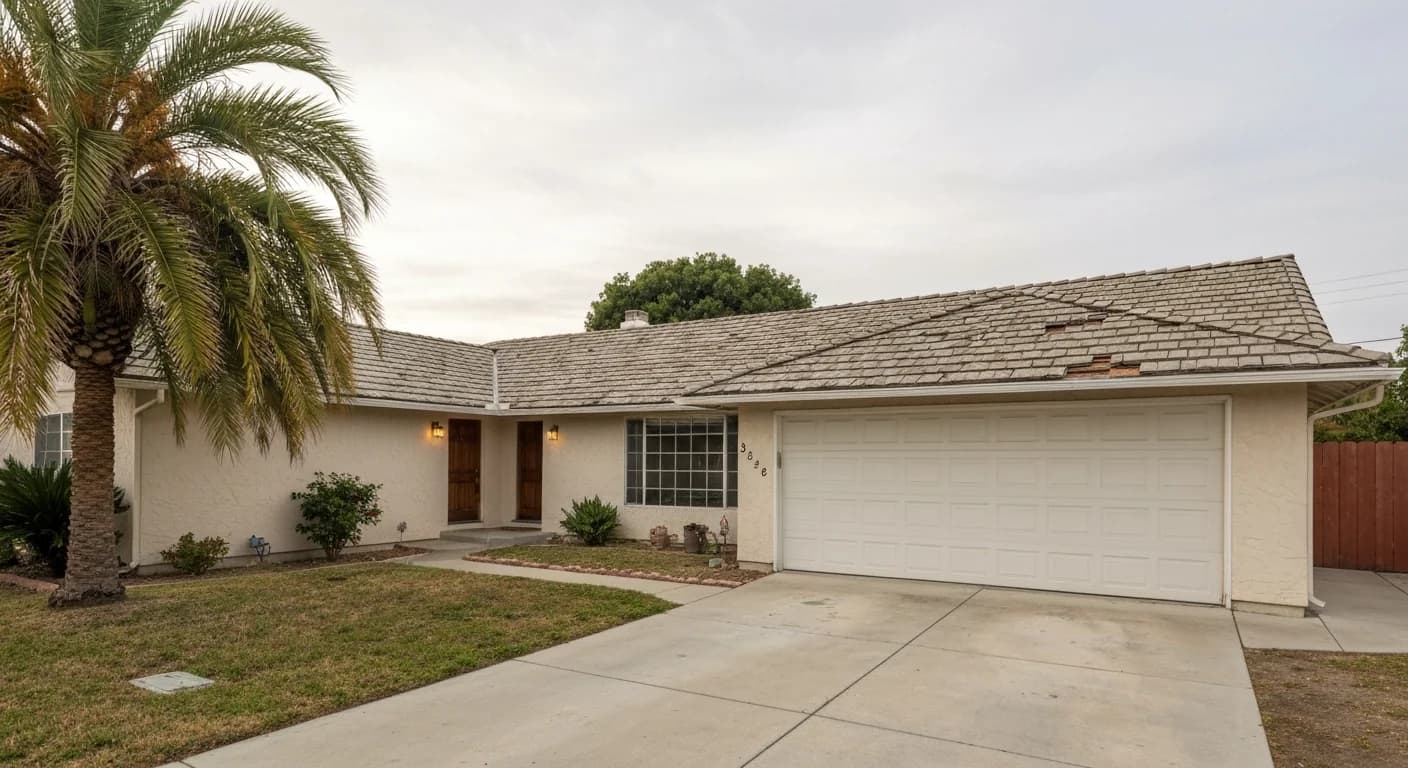
- Tile condition. A roof with 5% breakage relays cleanly; one with 25% breakage may favor full replacement, especially if the profile is discontinued.
- Hidden deck damage. Dry rot and delaminated sheathing are only found once the tile is off — we carry a documented allowance for it rather than guessing.
- Underlayment spec. A premium self-adhered membrane is a step up from basic felt but buys you a meaningfully longer service life, which matters most on coastal and fire-zone homes.
- Flashing and metal. Chimneys, skylights, valleys, and wall transitions all add detail work that a flat field doesn't.
- Code upgrades. Title 24 energy requirements and WUI fire-assembly upgrades (more below) can add components to a re-roof.
There's no charge for the inspection or the estimate, and every quote is broken out line by line — tile, underlayment, flashings, ridge, deck allowance, disposal — so you can see exactly what you're paying for.
Our process
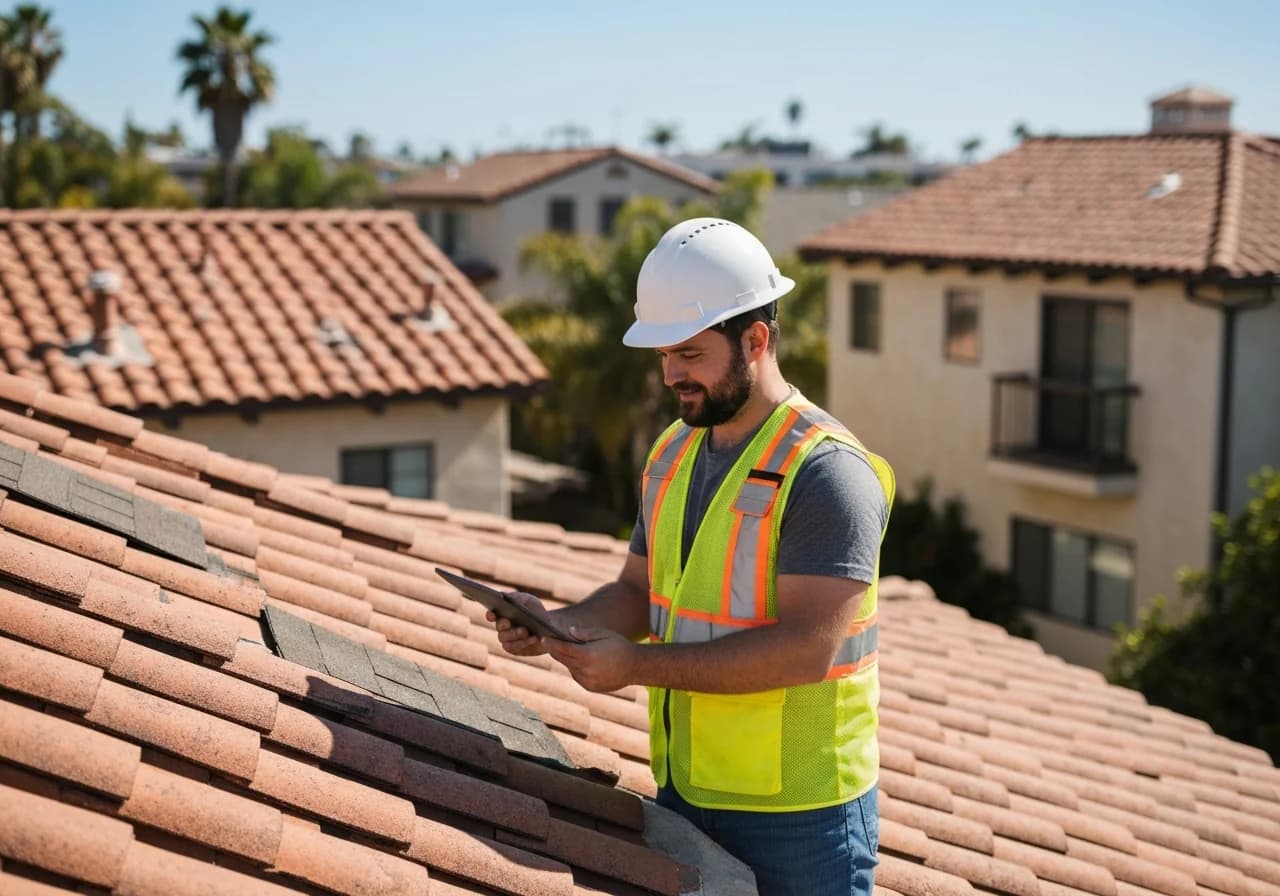
- Free inspection — on-site and drone evaluation of your tile, underlayment age, flashings, and deck.
- Written, itemized quote — every component spelled out, with relay vs. replacement laid out clearly.
- Permit — we pull it through the right authority (City of San Diego, Chula Vista, El Cajon, County, with the Coastal Commission overlay near the shore).
- Install — lift-and-relay or full tile install, with your property protected throughout.
- Daily cleanup + magnetic nail sweep — your driveway and yard get swept every day, not just at the end.
- Final inspection — we confirm the work with you and the building inspector.
- Warranty registration — workmanship and manufacturer system warranties registered in your name.
Built for San Diego's climate and code
San Diego is the biggest tile market in California, and our conditions are specific. Along the coast — La Jolla, Del Mar, Encinitas, Coronado, Point Loma — salt air corrodes ordinary galvanized fasteners and flashings in as little as 7 to 10 years, which is why we spec stainless or non-ferrous metal on coastal relays. Year-round UV and the marine layer's humidity age the underlayment faster than the tile, which is exactly why relay timing matters. Inland and in East County — El Cajon, Santee, Poway, Escondido — the bigger concerns are heat load and wildfire. Most San Diego tile work happens in the dry-season install window, roughly May through October, before the winter storm bursts arrive.
Code has tightened, too. California's Title 24 energy standards updated effective January 1, 2026, and for steep-slope roofs (over 2:12) in our region they call for cool-roof performance — an aged solar reflectance and thermal emittance target that lighter, reflective tile finishes are well suited to meet. Just as important in San Diego's many Wildland-Urban Interface (WUI) zones is the Class A fire requirement: the entire roof assembly — deck, underlayment, and tile together — must be ignition-resistant, not just the tile on top. Tile is naturally non-combustible, but a relay is the ideal moment to bring the full assembly, including ember-resistant venting and bird-stop at the tile ends, up to current WUI standard.
A realistic example: a 1996 concrete-tile home in Scripps Ranch starts leaking at a hallway ceiling after the first real winter storm. The owner is quoted a full replacement by one company. On inspection, the tile is 95% sound — the failure is 28-year-old felt and a rusted valley. The right answer is a lift-and-relay with new high-temp underlayment, new stainless valley metal, a rebuilt ridge, and a WUI-compliant assembly. Same roofline, leak gone, and the waterproofing is good for another generation — without the disruption of tearing off perfectly good tile.
Why San Diego homeowners trust Peak Builders
Peak Builders & Roofers of San Diego has been roofing this county since 1999, with more than 5,000 San Diego roofs installed and a 4.9-star Google rating across 230-plus reviews. We hold California CSLB License #1008986, an A+ rating with the BBB, and both GAF Master Elite certification (held by only about 2–3% of U.S. roofers) and Owens Corning Platinum Preferred contractor status — credentials that let us back our work with a lifetime, transferable workmanship warranty alongside manufacturer system warranties up to 50 years. Tile is the signature roof of San Diego, and matching discontinued profiles, spec'ing the right underlayment for your microclimate, and getting the flashing details right on a relay is exactly the kind of detailed work that experience pays off on.
Get a straight answer on tile roof repair in San Diego
If your tile roof is leaking, shedding pieces, or just getting old enough to wonder about, find out whether you need a lift-and-relay or a full replacement before you commit to anything — most homeowners are relieved to learn their tile is fine and only the underlayment needs attention. Call Peak Builders & Roofers of San Diego at (619) 330-8185 for a free, no-pressure roof inspection and a written, itemized quote. We'll tell you honestly what your roof needs and what it doesn't.