Asphalt Shingle Replacement: A Practical Guide for San Diego Homeowners
A complete asphalt shingle roof replacement in San Diego is a one-time project that, done correctly with the right underlayment and flashing for our climate, should protect your home for 25 to 30 years. Asphalt is the most common roofing material across San Diego's newer inland and East County tracts, and when an aging shingle roof starts shedding granules or curling at the edges, replacement is usually the sound decision. This guide walks through when to replace, how to choose the right shingle for our coast, and the San Diego-specific details that separate a roof that holds up from one that leaks in five years.
When Replacement Beats Another Repair
The honest dividing line is scope and condition, not symptoms. A few wind-lifted shingles after a Santa Ana event, or a single cracked tab from a tree-limb impact, is a roof repair — patch it and move on. Replacement becomes the right call when deterioration is spread across every slope rather than concentrated in one spot, or when the roof's age and damage extent mean the next repair is never far off.
Age is the most reliable signal. Three-tab shingles last 15 to 20 years; architectural (dimensional) shingles are built for 25 to 30. Once a roof reaches that window, repairs buy progressively less time. The clearest physical tell is granule loss: those mineral granules are the shingle's UV shield, and under San Diego's relentless year-round sun they wear off fast on the south- and west-facing slopes. When you're cleaning granules out of the gutters by the cupful — not from one impact zone but everywhere — the asphalt underneath is cooking and the surface protection is essentially gone.
Other end-of-life indicators include widespread curling or cupping, cracking distributed through the field of the roof, exposed nail heads, soft or spongy spots underfoot, and a pattern of repeated leaks in the same areas. On north-facing slopes here we also see something coastal homeowners don't always expect: the marine layer keeps those planes damp for hours each morning, and that persistent moisture grows moss and dark algae streaking that traps water against the shingle and accelerates the breakdown. A roof inspection is the fastest way to settle the repair-versus-replace question with photos of the actual deck and slope conditions rather than a guess from the ground — and to flag safety issues like compromised decking before they become interior damage.
Choosing the Right Shingle for the Coast
Not all asphalt shingles belong on a San Diego roof, and the differences matter more here than in milder inland climates.
Three-tab shingles are the basic tier — a flat profile with a 15-to-20-year service life. They still appear on rentals and older tracts, but they give up roughly a decade of life and meaningful wind resistance compared to the alternative.
Architectural shingles are what we install on the large majority of replacements. Products like the GAF Timberline HDZ, Owens Corning Duration, and CertainTeed Landmark use a laminated, dimensional profile that resists wind uplift far better than three-tab — the HDZ line carries a 130-mph wind rating, which matters during Santa Ana season and our atmospheric-river winter storms. Manufacturer warranties on these systems run 25 to 50 years when they're installed by a credentialed contractor and registered.
Class 4 impact-resistant shingles are worth a look for foothill and inland homes exposed to wind-driven debris; they carry the highest impact rating in the industry, and many insurers recognize them, so ask your carrier before you commit.
Two San Diego-specific specs are non-negotiable in my experience. First, cool-roof shingles: California's Title 24 energy code (we sit in Climate Zone 7) has long required reflective roofing on low-slope work, and the 2025 standards — effective January 1, 2026 — newly extend cool-roof requirements to steep-slope residential re-roofs. Practically, that means your permitted shingle replacement now generally needs a cool-rated product, which also drops attic temperatures and eases the summer cooling load on your home. Second, flashing metal: anywhere within a mile or two of the water — La Jolla, Del Mar, Coronado, Point Loma, Encinitas — galvanized flashing corrodes from salt air within a few years. We spec stainless or aluminum flashing on coastal jobs, because the most common new-roof leak we get called back to fix elsewhere is rusted-through reused flashing.
What the Project Actually Involves
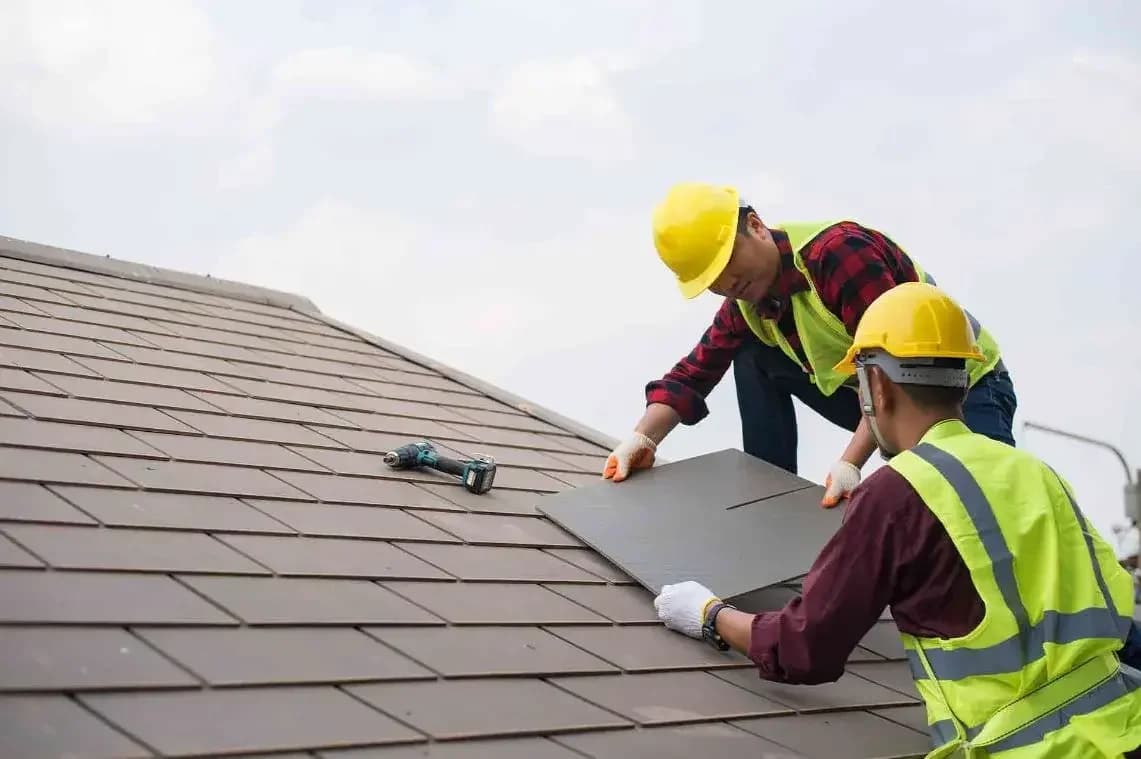
A proper shingle replacement is a full system rebuild, not just a new top layer. Knowing the steps also helps you judge good workmanship while a crew is on your roof.
- Tear-off to the deck. Everything comes off so the plywood or OSB sheathing is visible. This is when hidden rot — usually around valleys, chimneys, and bathroom vent penetrations — gets found and replaced. Soft decking left in place voids the shingle warranty and telegraphs through as sagging within a couple of years.
- Underlayment. Synthetic underlayment goes across the whole deck; it outperforms old-school felt on tear resistance and water management. We run self-adhered ice-and-water membrane in the valleys and around every penetration.
- New flashing and drip edge. All flashing at chimneys, skylights, walls, valleys, and pipes is replaced — never reused — along with metal drip edge at eaves and rakes. In fire-zone (WUI) communities like Scripps Ranch, Poway, Rancho Santa Fe, and the El Cajon foothills, this is also where we build a Class A fire assembly and install ember-resistant attic vents, which the WUI code requires to keep wind-blown embers out of the attic during a Santa Ana wildfire event.
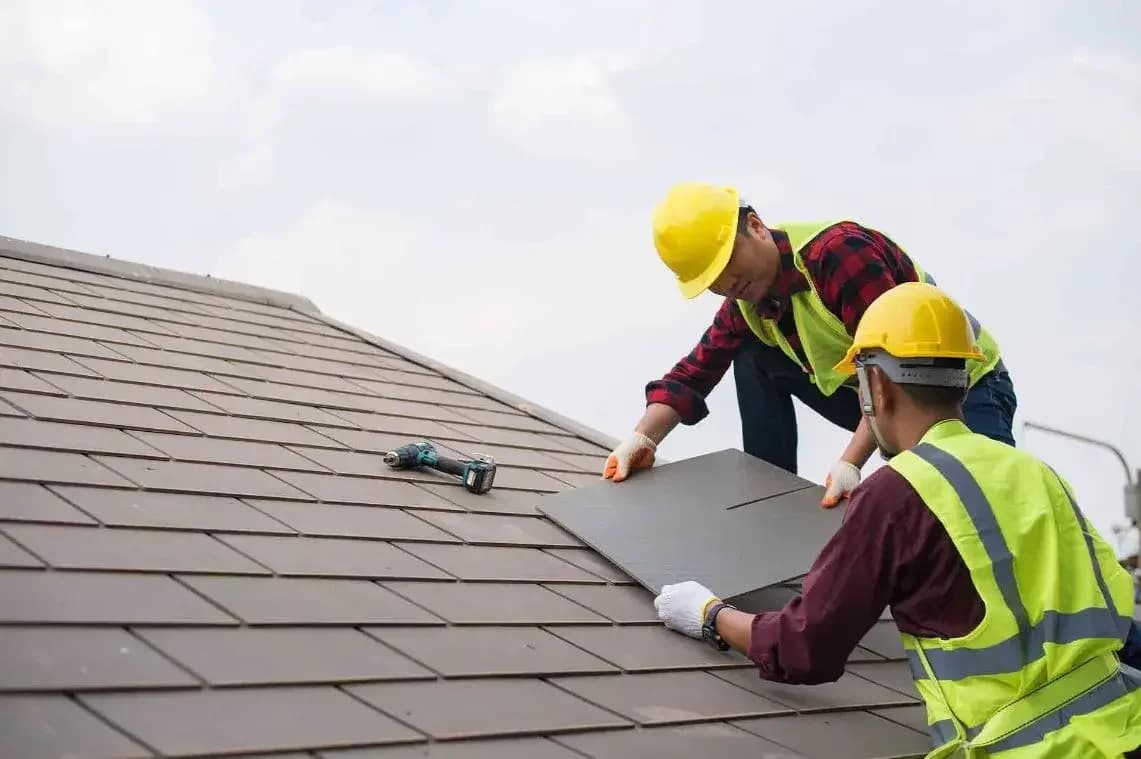
- Shingle installation. Courses run from the eave up, with nail placement, exposure, and overlap held to manufacturer spec — that's what preserves both the wind rating and the warranty. Six nails per shingle in our wind zone and properly set starter courses are the difference between a roof that holds and one that lifts. Ridge-cap shingles finish the hips and peaks.
- Cleanup and inspection. Full debris haul-off, a magnetic sweep for nails, and permit sign-off through the City of San Diego or County building department (coastal parcels may also trigger Coastal Commission review). Always insist on a permit; an unpermitted re-roof can stall a future home sale.
The Tile Roof Exception You Should Know About
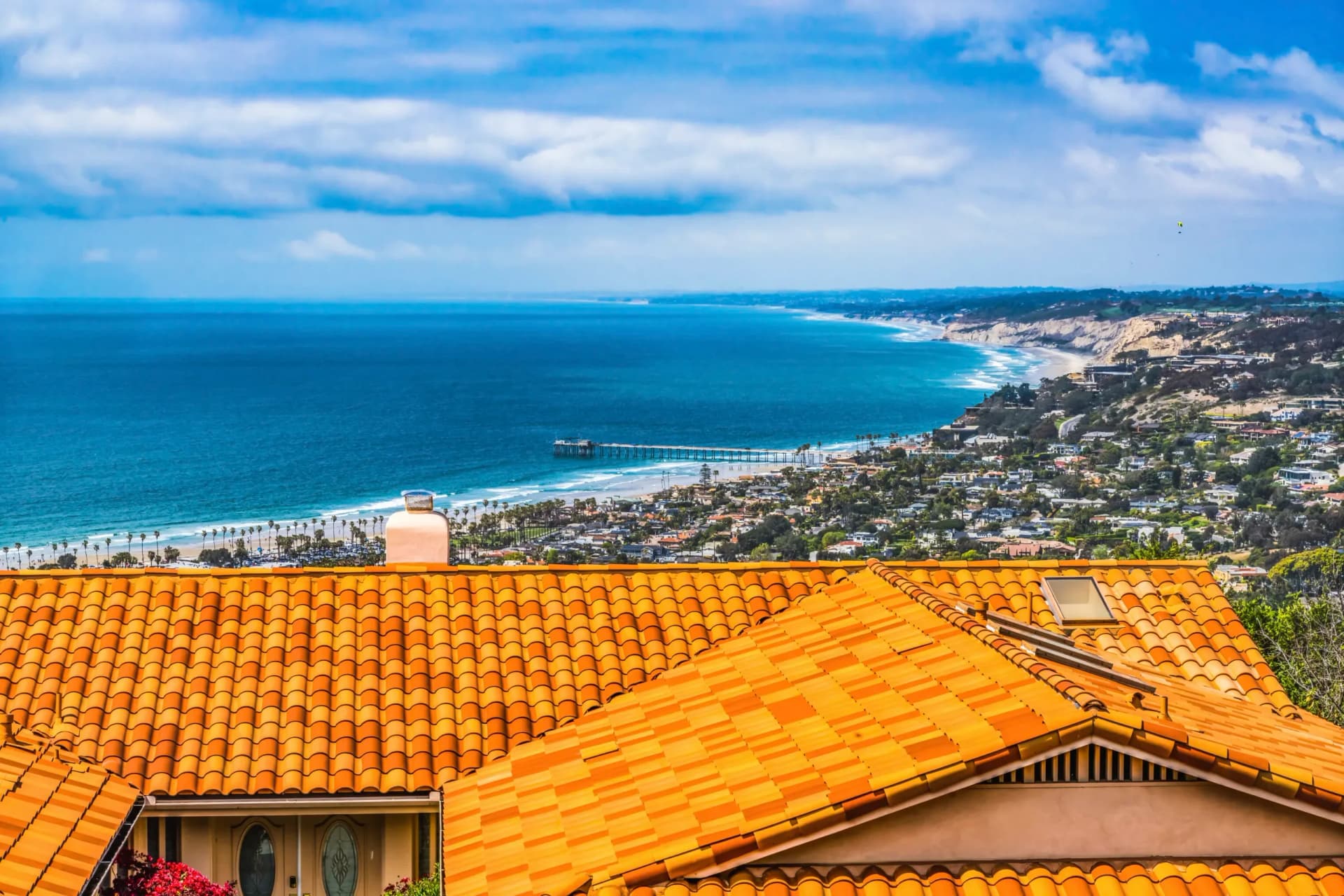
One distinction comes up constantly on San Diego's Spanish and Mediterranean homes: if you have a tile roof, the tiles themselves often last 50-plus years, but the underlayment beneath them fails at 20 to 25 years — which is why so many tile roofs here leak while the tile still looks perfect. That's a re-felt under tile roofing, with the existing tile lifted and reset, not an asphalt job at all. If your home is genuinely asphalt-shingled, this guide applies; if it's tile, get the right diagnosis first so you're not disturbing material that has decades of life left.
How to Judge Good Workmanship
Beyond credentials, a few details tell you a roof was done right. Look for crisp, straight shingle courses with consistent exposure; clean, tight cuts in the valleys; flashing that's tucked under wall siding and counter-flashed rather than smeared over with sealant; and ventilation that's actually balanced between intake at the eaves and exhaust at the ridge. Ask whether the installer registers an extended manufacturer system warranty — that's available only through credentialed contractors, and it covers the workmanship, not just the materials, which is what protects you if a problem surfaces years down the road. On the coast, confirm in writing that the flashing is stainless or aluminum, never galvanized.
Why Homeowners Hire Peak Builders
Peak Builders & Roofers of San Diego has replaced more than 5,000 roofs across the county since 1999, holding CSLB license #1008986 and an A+ BBB rating, with a 4.9-star average across 230-plus reviews. We're a GAF Master Elite and Owens Corning Platinum Preferred contractor — a credential only the top tier of roofers hold — which lets us register extended manufacturer system warranties most companies can't offer. We work roofs across San Diego from La Jolla and Carlsbad to Chula Vista, Escondido, Oceanside, and Santee, and we handle the full envelope — storm-damage restoration, gutter installation, and flat, metal, and commercial systems alongside shingle replacement. To find out exactly what your roof needs, request a free, no-obligation inspection and quote — call (619) 330-8185 or reach us here.
Frequently Asked Questions
How long does an asphalt shingle roof last in San Diego?
Architectural shingles last 25 to 30 years here; three-tab, 15 to 20. Our intense UV shortens the life of south- and west-facing slopes, and the coastal marine layer grows algae on north slopes — both reasons to choose a quality architectural product and keep your gutters clear.
Should I repair or replace my asphalt roof?
It comes down to condition, age, and how widespread the damage is — not a single threshold. Isolated damage in one area is a repair. Widespread granule loss, curling, or cracking across multiple slopes, soft decking, or a roof past 15 to 20 years points to replacement as the safer, longer-lasting choice. A roof inspection with photos of the deck and each slope will tell you which one you're actually facing.
Do I need a cool roof when I replace my shingles?
Most likely, yes. San Diego is in Title 24 Climate Zone 7, and the 2025 energy standards (effective January 1, 2026) extend cool-roof requirements to steep-slope residential re-roofs. Your permitted replacement should use a cool-rated shingle, which also lowers summer attic heat.
How long does a shingle roof replacement take?
Most single-family homes are torn off and re-roofed in two to four working days, weather permitting. Larger or steeply pitched roofs, extensive deck repair found at tear-off, or coastal flashing details can extend that. Permit inspection is scheduled at completion.
How do I find out what my roof needs?
Request a free, no-obligation inspection and quote. We'll get on the roof, document the deck and each slope with photos, confirm the right shingle and flashing for your location and fire zone, and explain exactly what your home needs. Call (619) 330-8185 or contact us here to schedule.