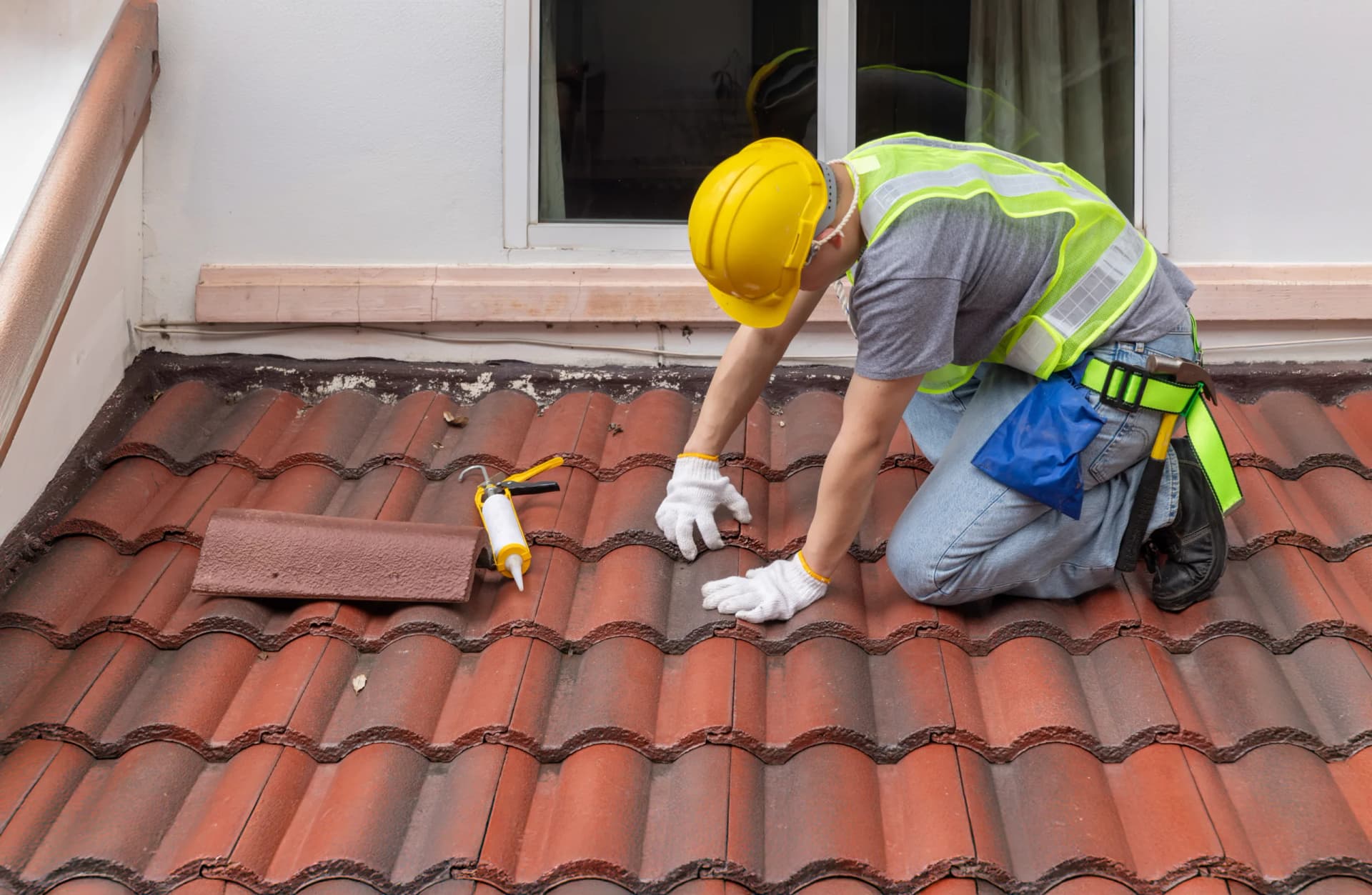

Commercial Roof Maintenance in San Diego: Protecting Your Investment
Commercial roof maintenance in San Diego comes down to two scheduled inspections a year — one before the winter rains (September–October) and one after — plus routine drain cleaning, penetration checks, and a documented log of every roof access. That cadence is the single biggest predictor of whether a flat membrane reaches its full design life or fails a decade early. More often than not, the difference between a roof that lasts and one that gives out comes down to whether anyone was watching the drains.
We've maintained commercial roofs across San Diego County since 1999 — from Kearny Mesa warehouses to Gaslamp mixed-use and coastal medical-office buildings in La Jolla — and the failure patterns repeat. The roof rarely dies of old age. It dies of a clogged drain, a cracked HVAC curb, or a telecom crew that walked an aged membrane in steel-toe boots. All three are preventable.
Why San Diego commercial roofs fail differently
Most commercial buildings here carry low-slope membrane systems — TPO, EPDM, modified bitumen, or older built-up roofing — and those systems punish neglect in ways a steep tile roof does not. A flat roof has no gravity helping it shed water. The instant a drain clogs or a scupper backs up, the roof ponds, and standing water is the enemy of every membrane ever made. Ponding adds dead load, breeds algae, and slowly works its way under lifted seams and around penetrations until it finds the insulation and steel deck below.
San Diego's rainfall makes this worse than the annual total suggests. We average only about ten inches a year, which lulls owners into complacency, but the atmospheric-river storms that have hammered the region in recent winters dump two inches an hour. A drainage system that "works fine" in a drizzle will pond badly when a January storm train stalls over the county. Add the coastal reality — salt-laden marine air corroding any galvanized flashing, drains, or fasteners within a few miles of the water — and a roof that was never spec'd for the environment ages fast. Near the coast in Coronado, Point Loma, and Del Mar we replace corroded galvanized edge metal with stainless or aluminum, because the lighter-gauge galvanized simply rusts through within a few seasons of salt exposure.
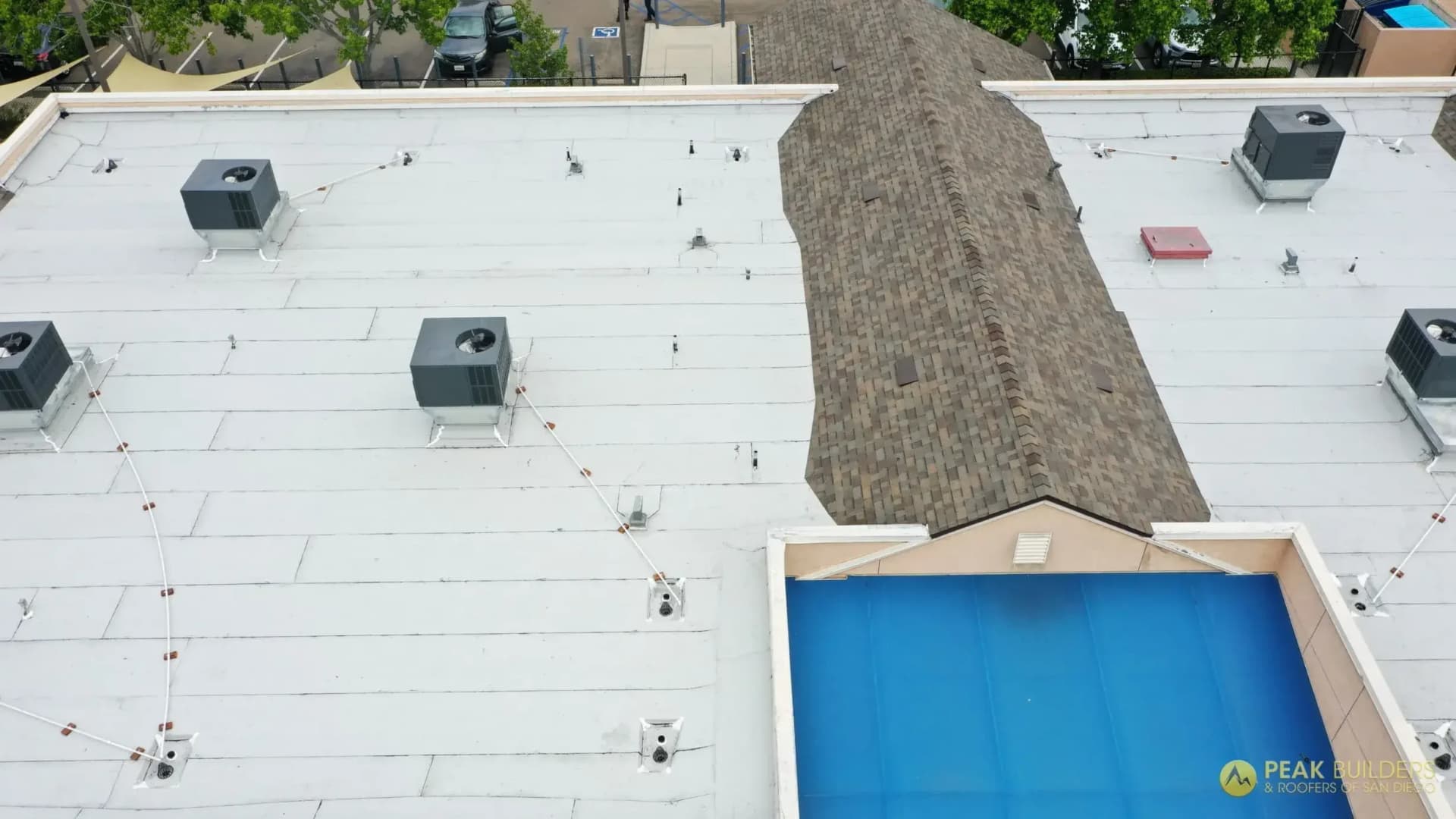
Then there's the equipment. Commercial roofs are the building's mechanical floor: HVAC curbs, exhaust fans, condensate lines, gas piping, conduit, satellite and telecom gear. Every one of those is a penetration, and every penetration is a potential leak. The density of rooftop traffic — technicians servicing units, electricians pulling wire, low-voltage crews dragging cable — means the membrane takes abuse no residential roof ever sees.
The maintenance schedule that actually works
A real program isn't a once-a-decade look. It's a rhythm tied to San Diego's weather year.
- Pre-rain inspection (September–October): Clear every drain, scupper, and downspout; replace cracked drain domes; probe penetration flashings and termination bars; and walk the full field looking for blisters, splits, and punctures. This is the highest-value visit of the year.
- Post-storm checks: After any major event, confirm drains ran clear, look for water still standing 48 hours later (a sign of a low spot or blocked outlet), and inspect any area where occupants reported a drip.
- Annual comprehensive inspection: A qualified contractor probes seams (pull-testing adhesive laps, hand-probing welded TPO), tests drain flow, and audits every penetration other trades have added since the last visit — the unflashed conduit a sign installer ran last spring is a classic find.
- Infrared moisture scan every five years: A nighttime IR survey reveals wet insulation hiding under an intact-looking membrane, so you can spot-replace saturated areas before they spread across the deck.
That last point matters because water under a membrane is invisible from above for months. By the time a tenant sees a ceiling stain, the deck below the leak is often already compromised. A scheduled roof inspection catches the problem while it is still a flashing detail, not a structural one.
The problems we find most often
Clogged drains, every time. Eucalyptus litter, dust driven in on Santa Ana winds, and bird debris fill roof drains faster than property managers expect. Twice-yearly drain service is not optional in this county, and we frequently tie it into the building's gutter and drainage maintenance so the whole water path is handled in one visit.
HVAC curb failures dominate on roofs past ten years. The curb flashing expands and contracts daily; the sealant joint eventually splits, and water tracks under the unit where no one looks. Reflashing a curb correctly — not re-caulking it — is the durable fix.
Foot-traffic damage from non-roofing trades. The fix is simple and almost no one does it: a walkway-pad system to the equipment and a sign-in log for roof access. We've cut puncture frequency on serviced buildings dramatically just by routing technicians along pads.
Failed prior repairs. A patch slapped on without surface prep, primer, or full seam overlap will peel — usually worse than the original defect. Most "mystery" leaks we chase are someone else's shortcut, and undoing them well is half of good roof repair.
North-slope and parapet mold. San Diego's marine layer keeps shaded north-facing parapets and wall transitions damp; we treat and improve drainage there before it migrates into the wall assembly.
Materials and how long they last here
Knowing your membrane tells you what maintenance it needs and how many years you can reasonably expect from it. TPO — a heat-welded, reflective single-ply — is the workhorse on San Diego commercial buildings; well installed and maintained, it commonly runs 20–25 years, and its white surface helps with the cool-roof rules below. EPDM (black rubber) is durable and forgiving but absorbs heat, so it pairs best with shaded or coated assemblies. Modified bitumen and older built-up roofing are tough and repairable but heavier and more seam-dependent. On low-slope-to-pitched conversions near the coast, a standing-seam metal system in aluminum or coated steel outlasts almost everything else against salt air. Whatever the system, the rated lifespan is only achievable with the drainage clear and the penetrations re-flashed before they fail — neglect routinely cuts those numbers by a third.
Code and permits you should plan around
There's a code driver every commercial owner should know. California's Title 24, Part 6 energy standards — San Diego sits in Climate Zone 7 — require cool-roof assemblies on most low-slope commercial re-roofs, and the 2025 update effective January 1, 2026 extends cool-roof requirements further, newly reaching steep-slope re-roofs. In practice that means a reflective TPO or coating spec is usually mandatory on a re-cover or replacement, not a choice. We pull permits through the City of San Diego or the County, and for waterfront properties we factor in California Coastal Commission review. In the county's wildland-urban-interface fire zones, assemblies also need to meet Class A fire ratings with ember-resistant detailing — relevant for buildings backing onto open space after a Santa Ana wind event.
When maintenance ends and replacement begins
This decision should be driven by condition, age, and safety — not guesswork. A membrane that has reached the back end of its service life, shows widespread saturation on an IR scan, has brittle or splitting seams across the field, or is leaking in multiple unrelated locations has stopped being a maintenance candidate. At that stage, continuing to patch usually means more interior damage and tenant disruption, not less. The practical path: start an honest condition conversation around year 15 with an infrared scan, track how the field and seams hold up year over year, and move to a planned roof replacement when the damage is widespread rather than localized. A documented inspection history also strengthens insurance claims after a major storm — adjusters treat a maintained roof very differently from a neglected one, which is where storm damage restoration and good records work hand in hand.
Choosing a commercial roofer in San Diego
Commercial work demands more than a ladder and a crew. Confirm the contractor's California C-39 roofing license at cslb.ca.gov, ask for general liability with your property address named on the certificate, and verify hands-on experience with your specific membrane — a great shingle crew is not automatically a TPO crew. Peak Builders & Roofers of San Diego holds CSLB #1008986, has worked on more than 5,000 San Diego roofs since 1999, carries GAF Master Elite and Owens Corning Platinum Preferred credentials, and holds a 4.9-star rating across 230-plus reviews and an A+ BBB rating. Those manufacturer certifications matter on new installs because they unlock the system warranties most contractors can't offer.
If you want a clear-eyed read on where your roof stands, start with a professional roof inspection — and if your building also has aging flat-roof sections or failing gutters and drainage, we'll fold those into one maintenance plan. We serve commercial owners across San Diego County from Carlsbad and Encinitas down through La Jolla, Point Loma, and Coronado to Chula Vista, plus Poway, Scripps Ranch, Escondido, El Cajon, Santee, Oceanside, and Rancho Santa Fe.
Call (619) 330-8185 or request a free, no-obligation commercial roof inspection and we'll build a maintenance plan around your building.
Frequently Asked Questions
How often should a commercial roof in San Diego be inspected?
At least twice a year — once before the rainy season in September or October and once after the winter storms pass — plus a quick check after any major weather event. Roofs with dense HVAC and telecom equipment, or buildings within a few miles of the coast where salt air accelerates corrosion, often justify quarterly visits. The pre-rain inspection is the one to never skip.
Why does my flat roof leak when it hasn't rained hard?
The two usual culprits are ponding water that slowly works under an aged membrane, and a penetration failure — most often a cracked HVAC curb flashing — where water tracks in unseen and shows up days later. Condensate lines and clogged drains backing up can also mimic rain leaks. A proper inspection traces the entry point rather than just chasing the interior stain.
What does a commercial roof maintenance program include?
A typical agreement covers two scheduled inspections, drain and scupper cleaning, minor repairs to flashings and seams, a written condition report, and priority response when an emergency does happen. The goal is to catch small failures while they're still small, before they reach the insulation and deck.
Does Title 24 affect my commercial re-roof?
Yes. San Diego is in California Climate Zone 7, where Title 24 generally requires a cool-roof (reflective) assembly on low-slope commercial re-roofs, and the 2025 standards effective January 1, 2026 expand cool-roof rules further. In practice that means a reflective membrane or coating is usually required on a re-cover or replacement, which we account for when we design the system and pull your permit.
How long does a commercial membrane roof last in San Diego?
A well-installed TPO, PVC, or EPDM system reaches 20–25 years here when it's maintained — drains kept clear, penetrations re-flashed before they fail, and foot traffic controlled. Without maintenance, the same roof commonly fails closer to 15. Coastal salt exposure and heavy rooftop equipment shorten the timeline. To see where yours stands, call (619) 330-8185 for a free inspection.