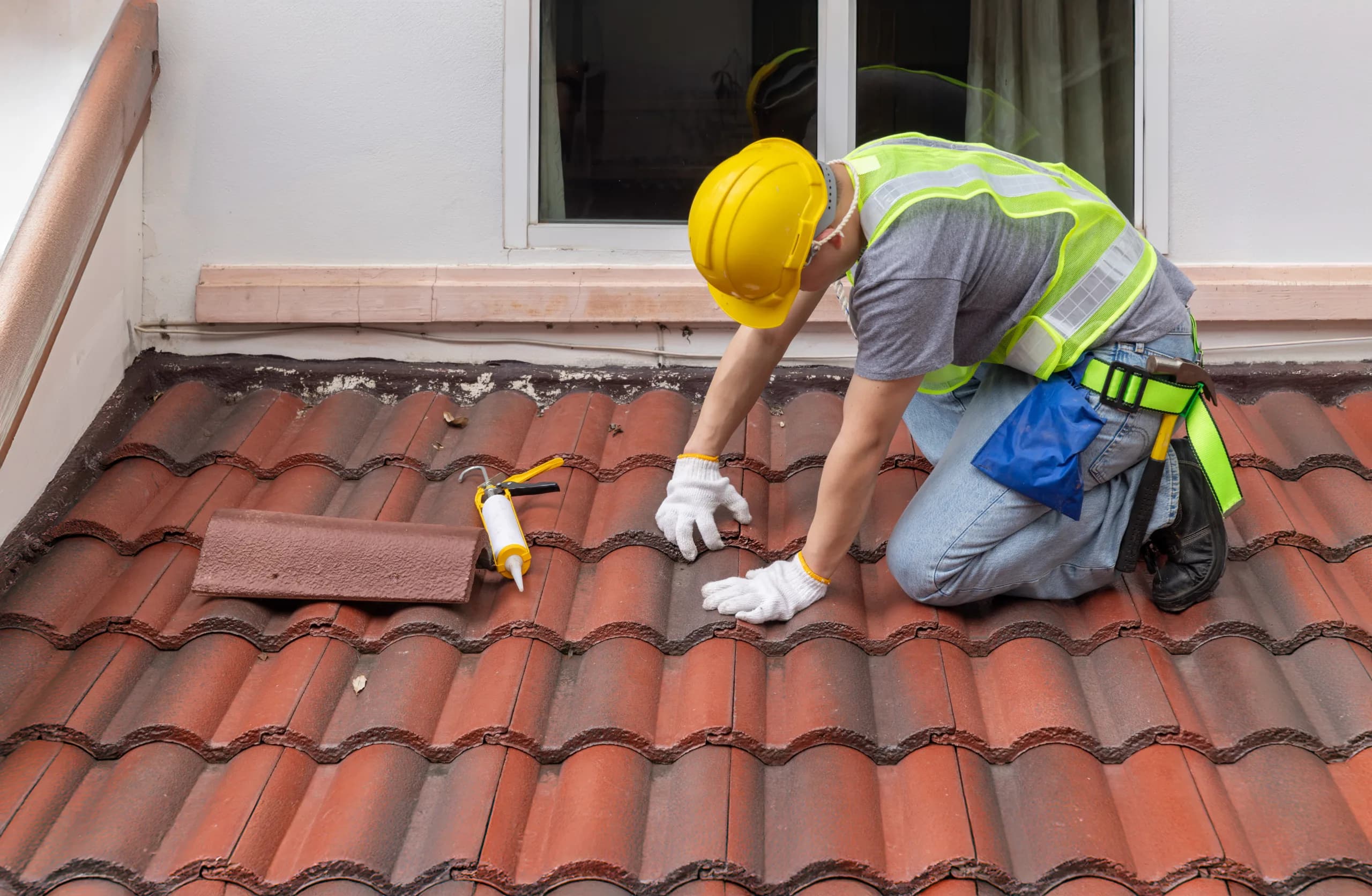

Roof Leak Repair: When to DIY vs When to Call a Pro (San Diego)
A roof leak is DIY-friendly only when it is dry, simple, and reachable from a ladder without stepping onto the roof: clearing a clogged gutter, snugging a backed-out flashing screw, or laying a temporary tarp before a storm. The moment water is already inside the house, the leak involves flashing or tile, or the fix requires walking the slope, it crosses into licensed-roofer territory — because in San Diego the visible drip is almost never directly above the actual hole. This guide draws that line precisely, with the local failure patterns we see across the county.
We've put more than 27 years and 5,000-plus San Diego roofs behind that line — Peak Builders & Roofers of San Diego has worked here since 1999. The mistakes below aren't hypothetical; they're the jobs we get called to fix after a weekend patch went sideways.
What's genuinely safe to DIY
A short list of roof tasks are safe for a homeowner comfortable on a stable ladder and willing to keep both feet off the roof itself.
Clearing gutters and downspouts. Eucalyptus leaves, jacaranda litter, and palm fronds clog San Diego gutters relentlessly, and a backed-up gutter overflows behind the fascia and rots the roof edge. Clean them twice a year — before the late-fall atmospheric-river storms and again after Santa Ana season blows debris in. It's the single highest-value thing a homeowner can do, and it pairs naturally with gutter installation if your run is undersized for our flash-flood rain bursts.
Hand-tightening a visible, accessible flashing screw. If you can see a screw backing out of a skylight or vent boot from the ladder, snug it gently. Don't overtighten, and if it's rusted or stripped, stop — that's now a flashing job.
Swapping a cracked plastic vent cap. Our year-round UV cooks the plastic caps on static vents brittle within a decade. A matching replacement pops on by hand — but match the vent type exactly, because a forced mismatch leaks worse than the crack did.
Laying a temporary tarp before a storm. If rain is in the forecast and you can secure a tarp from a ladder or a safe window, do it. A tarp is a stopgap that buys time to get a real roof repair scheduled — it is not the repair. Everything beyond this list belongs to a roofer, for reasons specific to how San Diego roofs fail.
Why the visible drip lies — and why that ends DIY
Water entering a roof rarely drips straight down. It runs along the underside of the sheathing, tracks down a rafter, even wicks along a wire, then drops through the ceiling drywall at the lowest point it reaches — routinely 10 to 20 feet from where it actually got in. We've stood in a Kensington bungalow with a stain over the dining room and traced the entry to a cracked headwall flashing above the kitchen. Patch the stain and you've sealed a symptom; the leak returns with the next storm, and now the insulation above the ceiling is wet and growing mold. Finding the true entry point is what a real diagnosis buys you — a moisture meter and, on a stubborn leak, thermal imaging — the difference between a roof inspection and a guess with a caulk gun.
The tile-and-underlayment trap
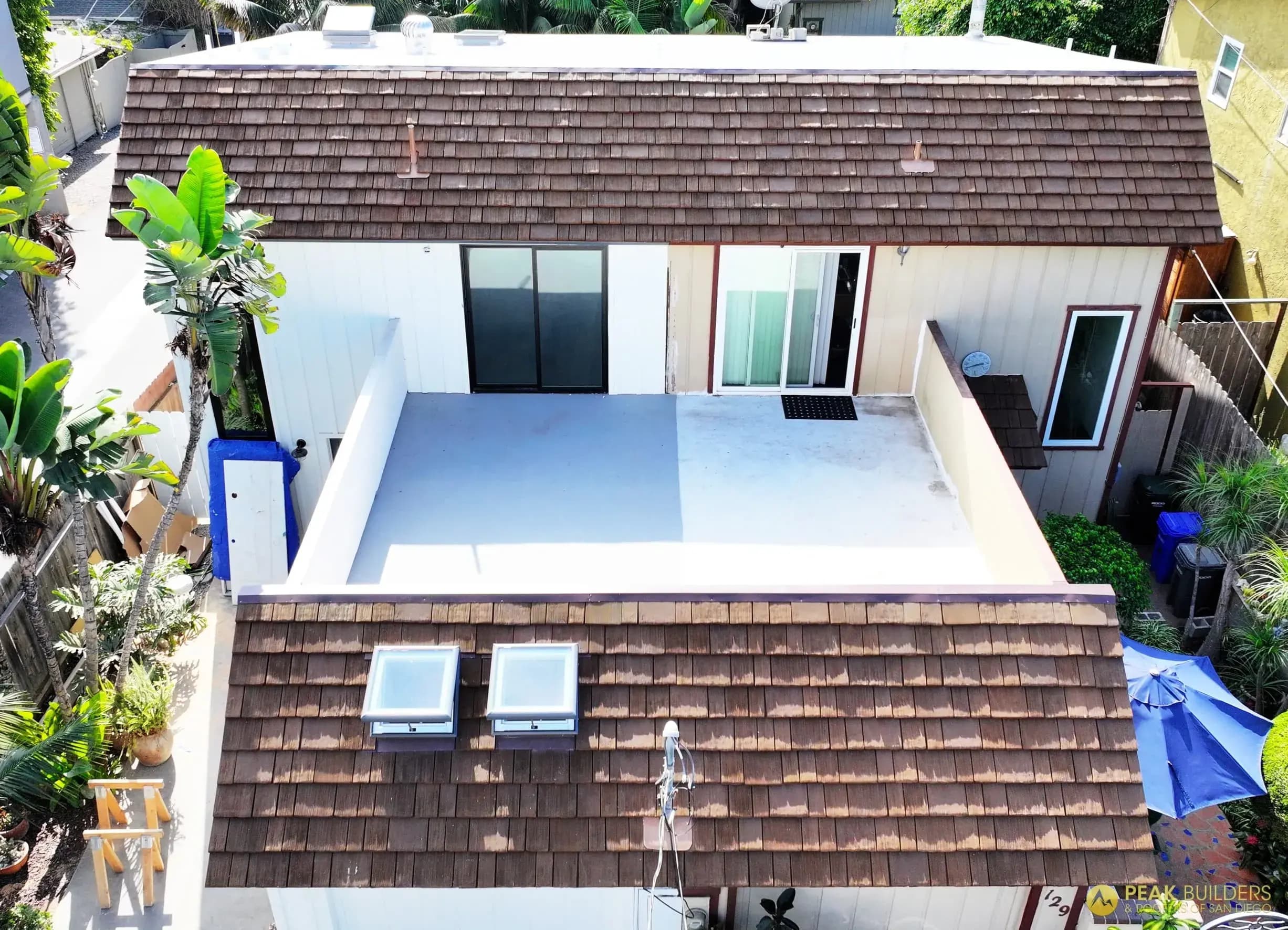
This is the San Diego leak. Most of our housing stock — the Spanish and Mediterranean homes across La Jolla, Point Loma, Del Mar, and Rancho Santa Fe — wears concrete or clay tile, and that tile genuinely lasts 50-plus years. But the underlayment beneath it does not. The felt or synthetic membrane that actually keeps water out fails at roughly 20 to 25 years. So we get calls where the tiles look immaculate but the roof is leaking in three rooms, and the homeowner can't understand how a "50-year roof" is failing at 22. The tiles are fine; the waterproofing under them is shot.
There is no DIY answer to a failed underlayment. The tiles have to be lifted and stacked, the old membrane stripped, new underlayment installed, and every tile re-laid — skilled work, because pulling one interlocked concrete tile without chipping its neighbors takes the right lift tools and a feel for where the foam or fasteners have fused over decades. That's the core of tile roofing repair, and the most common reason a "small leak" becomes a full re-lay or, on a roof past its second underlayment, a roof replacement. The deciding factors are condition and age: a 22-year-old tile roof leaking in multiple rooms has reached the end of its membrane's service life.
Flashing is behind most leaks — and the coast makes it worse
Flashing — the metal at chimneys, skylights, vent pipes, and wall-to-roof transitions — sits behind the large majority of residential leaks, and it's where DIY most reliably backfires. Done right, flashing weaves into the underlayment so water sheds over it; the typical homeowner attempt sits on top, and the next storm drives water underneath. Material matters too. Within a mile or two of the coast — Coronado, La Jolla, Encinitas, Oceanside — galvanized flashing corrodes fast in the salt air, and mixing dissimilar metals (galvanized against aluminum) sets off galvanic corrosion that eats the joint from the inside. We spec stainless or aluminum flashing on coastal jobs for exactly that reason: detailed right, the repair sheds water for decades; done wrong, it rusts through in a few seasons and the damage spreads into the sheathing below.
Walking the roof is its own hazard
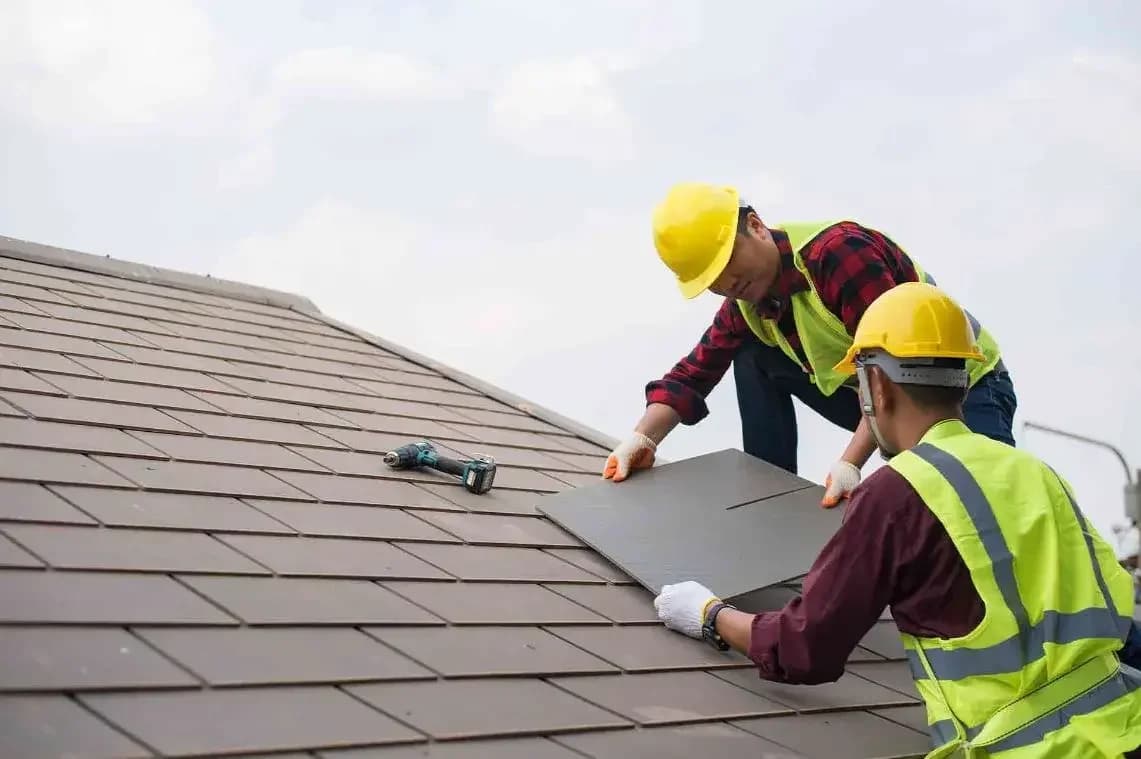
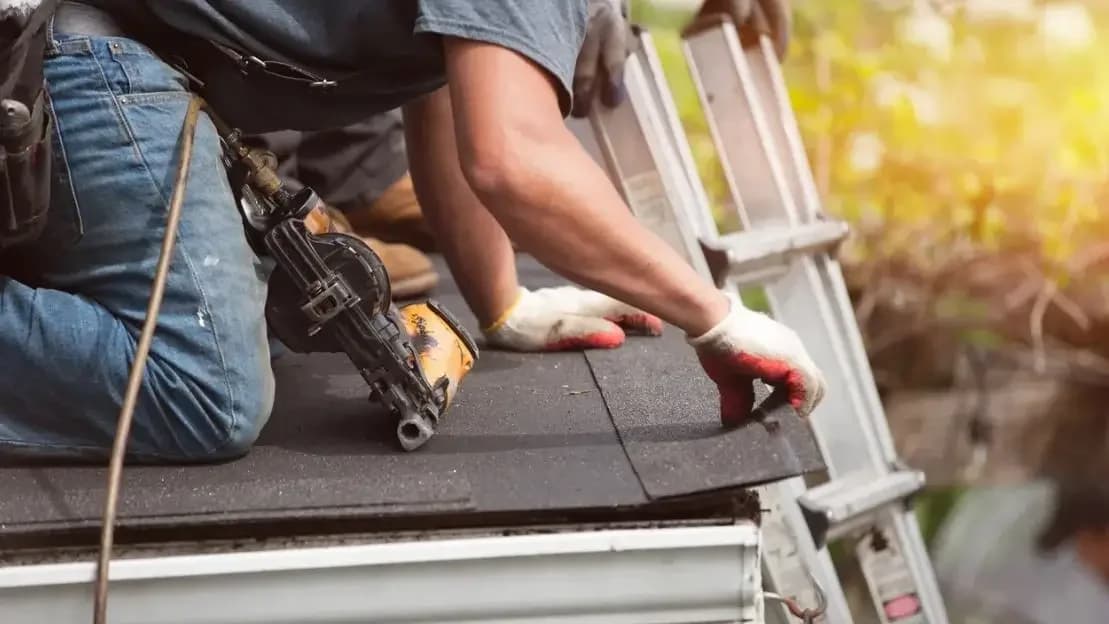
Even when the fix is simple, the access often isn't. Tile cracks underfoot unless you know where the rafters run; an aged composition roof loses its seal under foot traffic; and anything over a 6/12 pitch without a harness and anchor is genuinely dangerous. A licensed crew carries fall-protection training and, critically, workers'-comp and liability insurance — if someone gets hurt on your roof, that's their carrier, not your homeowner's policy.
San Diego specifics that change the repair — not just the risk
A few local realities mean even a "correct" patch can be the wrong long-term move:
- Marine-layer mold on north slopes. North-facing slopes in the coastal fog belt stay damp and grow algae and mold; a leak there often means the sheathing is already compromised and needs more than a surface fix.
- Title 24 cool-roof rules just expanded. San Diego sits in California Climate Zone 7, and the 2025 energy standards effective January 1, 2026 newly extend cool-roof requirements to steep-slope residential re-roofs. If a "repair" tips into a re-roof of enough area, the assembly may now have to meet cool-roof reflectivity — compliance no DIY patch accounts for.
- Fire zones (WUI). In the county's wildland-urban-interface zones, repairs should preserve the Class A fire assembly and ember-resistant vents. The wrong vent cap can quietly undo your ember protection before the next Santa Ana wind event.
- Permits and the Coastal Commission. Larger repairs and re-roofs pull permits through the City or County, and projects near the water can trigger Coastal Commission review. A roofer handles that paperwork; a weekend patch ignores it until it surfaces at resale.
Storm damage: tarp now, but don't climb
After an atmospheric-river storm or a Santa Ana wind event, missing shingles, displaced tiles, and dented gutters need tarping within 24 hours to stop interior damage — but climbing a wet, wind-damaged roof yourself is dangerous and can complicate an insurance claim, since many policies want professionally documented damage. Photograph everything from the ground, then arrange a same-day tarp and a written assessment. That's the heart of storm damage restoration, and it's insurance-friendly when documented correctly.
Repair or replace? Judge condition, not the calendar
Homeowners often ask whether a leak is "worth repairing." The honest answer comes from condition and age, not a hunch. A localized failure on a sound roof with years of service life left is a clean repair; underlayment past the 20-to-25-year mark, stains in multiple rooms, or north-slope sheathing soft with marine-layer rot point toward a re-lay or a roof replacement, because patching one corner of a membrane that's failing everywhere only moves the next leak a few feet over.
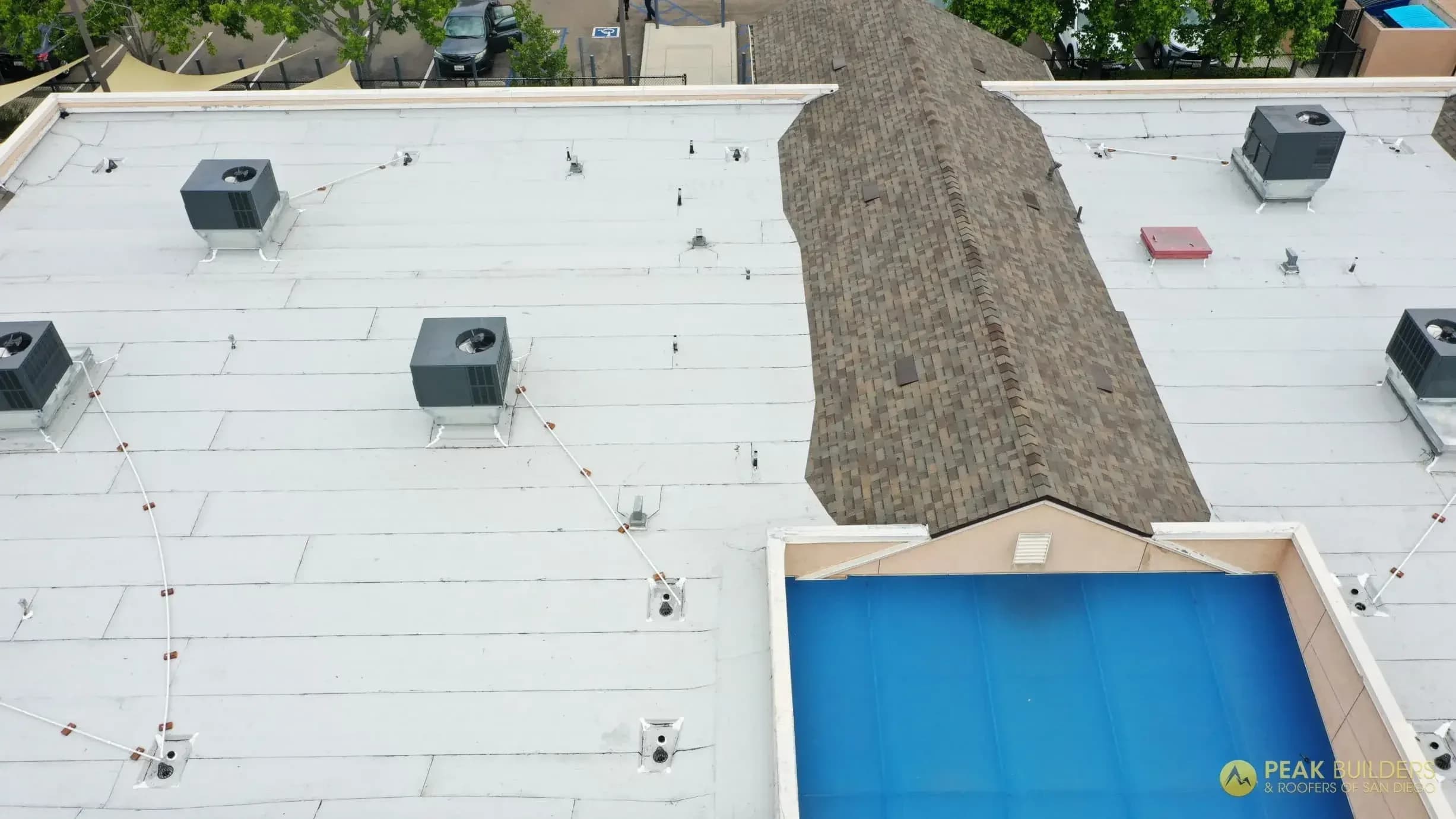
Condition steers the material choice too. Tile re-lays restore a 50-plus-year roof; asphalt systems like GAF Timberline HDZ, Owens Corning Duration, or CertainTeed Landmark carry long manufacturer-rated lifespans when installed by certified crews; and low-slope sections — patios, additions, commercial roofing — are better served by TPO, EPDM, or modified bitumen than a shingle never meant to lie flat. Where corrosion resistance and longevity matter most, metal roofing such as standing-seam earns its place.
What a straight inspection looks like
A legitimate inspection takes 45 to 90 minutes: an exterior walk-around (drone photos for the slopes a ladder can't see), a walk-on assessment when the roof and weather allow, an attic check for moisture and ventilation, and a written report with photos and prioritized issues. About a third of the inspections we run end with "you don't need work right now," and we put that in writing. You judge good roofing work by the details DIY skips — flashing woven into the underlayment, the right corrosion-resistant metal near the coast, venting that keeps the Class A and cool-roof assemblies intact, and a permit pulled when the scope calls for one. Those details decide whether a roof holds for two decades or springs the same leak next winter.
Peak Builders & Roofers of San Diego is licensed in California (CSLB #1008986), has worked here since 1999, holds GAF Master Elite and Owens Corning Platinum Preferred certifications, and carries a 4.9-star rating across 230-plus reviews with a BBB A+. See the full range of roofing services or talk to the San Diego roofers who handle these leaks every week. When you're ready, request a free, no-obligation inspection and quote or call (619) 330-8185.
Frequently Asked Questions
Can I just caulk a roof leak myself?
For a tiny gap around a pipe boot, a dab of roofing-grade silicone is a legitimate temporary hold — use silicone, not asphalt-based roof cement, which dries out and cracks in San Diego's UV within a few years. It buys time until a roofer finds the real entry point; it is not a repair, since the actual hole is usually feet from the visible drip.
Why is my tile roof leaking when the tiles look perfect?
Because the tile isn't what waterproofs the roof — the underlayment beneath it is, and that membrane fails at about 20 to 25 years even though concrete and clay tile last 50-plus. Pristine tiles over multiple leaks almost always means the underlayment is done and the tiles need to be lifted and re-laid over fresh membrane.
Does a roof repair near the coast need special materials?
Yes. Within a mile or two of the water — Coronado, La Jolla, Encinitas — salt air corrodes standard galvanized flashing quickly, and mixing it with aluminum causes galvanic corrosion. We spec stainless or aluminum flashing on coastal jobs so the repair lasts decades instead of rusting through in a few seasons.
Should I get on the roof after a storm to check for damage?
No. A wet, wind-damaged roof is where homeowners get hurt, and climbing it can also complicate an insurance claim that wants professionally documented damage. Photograph what you can see from the ground, arrange a same-day tarp if rain is coming, and have a roofer do the walk-on assessment.