Roof Repair in San Diego: What Every Homeowner Should Know
The hardest question in San Diego roof repair is rarely what is leaking — it is whether your roof needs a targeted repair at all, or whether you are about to patch a roof that is two years from a full re-roof. After repairing San Diego roofs since 1999, that judgment call is the part we take most seriously, because in this climate the answer is usually hiding under the tile or behind the flashing, not on the surface where it shows. Below is what San Diego homes actually need repaired, how to tell the difference between a repair and a replacement, and how to spot a contractor solving your problem instead of selling you a roof.
What Actually Fails on San Diego Roofs
Our climate is gentle in the ways people expect and brutal in the ways they don't. With no freeze-thaw cycle and almost no hail, roofs here rarely fail the way they do in the rest of the country. Instead they die slowly — from ultraviolet light, salt air, and the handful of violent days a year when the weather makes up for the other 350.
Flashing leaks are the single most common repair we run. Flashing is the metal that seals around chimneys, skylights, vent pipes, and the valleys where two roof planes meet. Old mastic dries and cracks, fasteners back out, and the metal itself corrodes — and near the water, that corrosion runs dramatically faster. On a home in Point Loma or La Jolla we will not reinstall galvanized flashing; the salt air eats it. Within a mile or two of the coast we spec stainless steel or aluminum, because galvanized metal there can rust through in a fraction of its inland lifespan. A flashing leak is also the sneakiest kind: water runs along a rafter and drips onto your ceiling ten feet from where it entered, which is why chasing the stain rarely finds the source. Diagnosing the true entry point is half the job, and it is what a proper roof inspection is built to do.
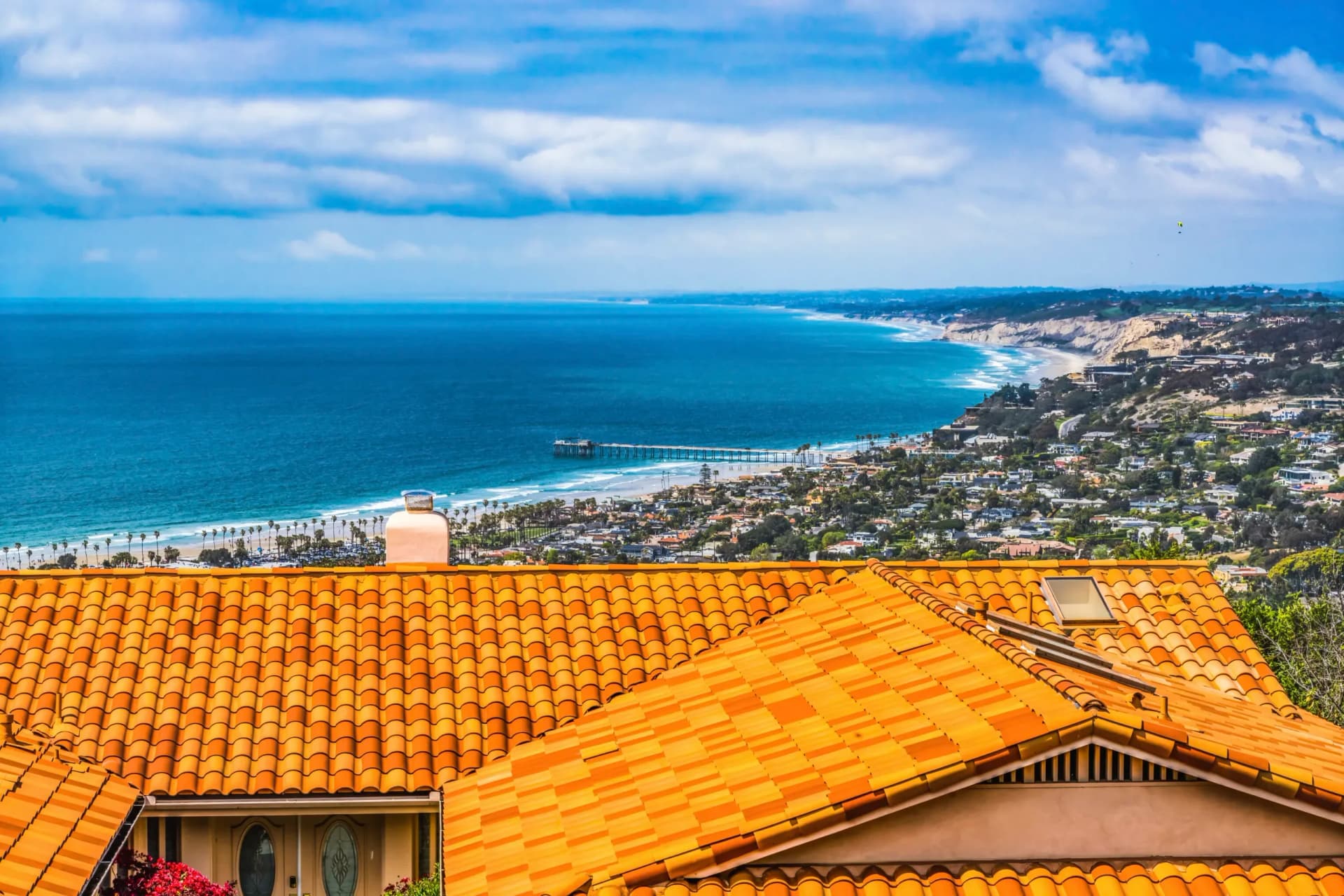
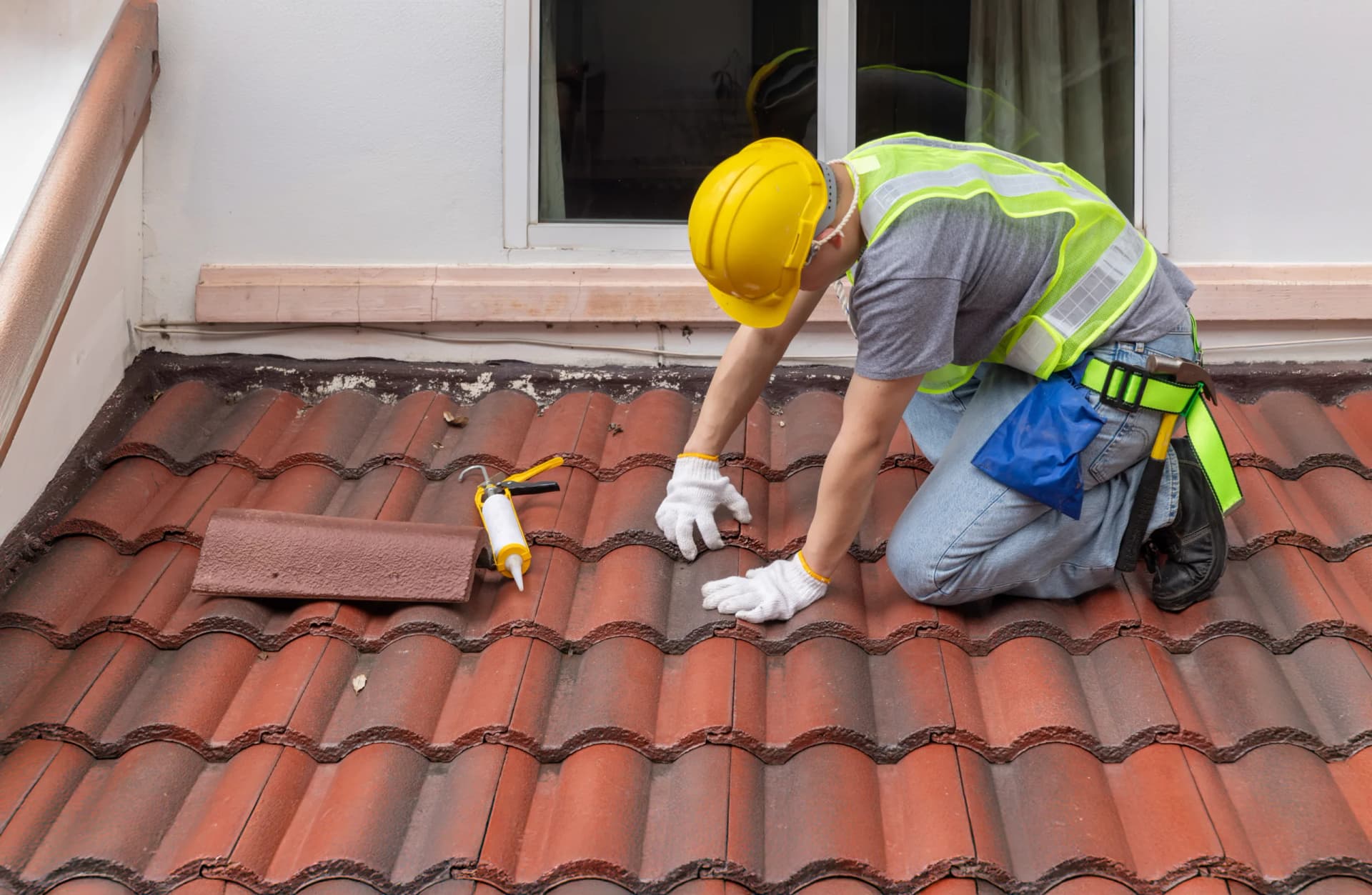
Tile underlayment failure is the defining San Diego repair, and the most misunderstood. So much of our Spanish and Mediterranean housing stock wears concrete or clay tile — Kensington, Mission Hills, Rancho Santa Fe, much of North County — and those tiles genuinely last 50 years or more. The felt paper underneath them does not. The underlayment is the actual waterproof layer; the tile is just the UV shield and the looks. In our climate that underlayment typically gives out at 20 to 25 years, which means a homeowner stands in the yard looking at a beautiful, intact tile roof that is leaking like a sieve. We pull tile in Scripps Ranch and El Cajon constantly and find brittle, cracked 1990s felt under perfectly good tile. The fix is a "lift and relay": carefully remove the tile, strip the dead felt, install fresh underlayment, and set the original tile back down. If your tile roof is leaking and someone insists on a full tile replacement, get a second opinion — you usually do not need new tile. Our tile roofing crews handle lift-and-relay work as a specialty for exactly this reason.
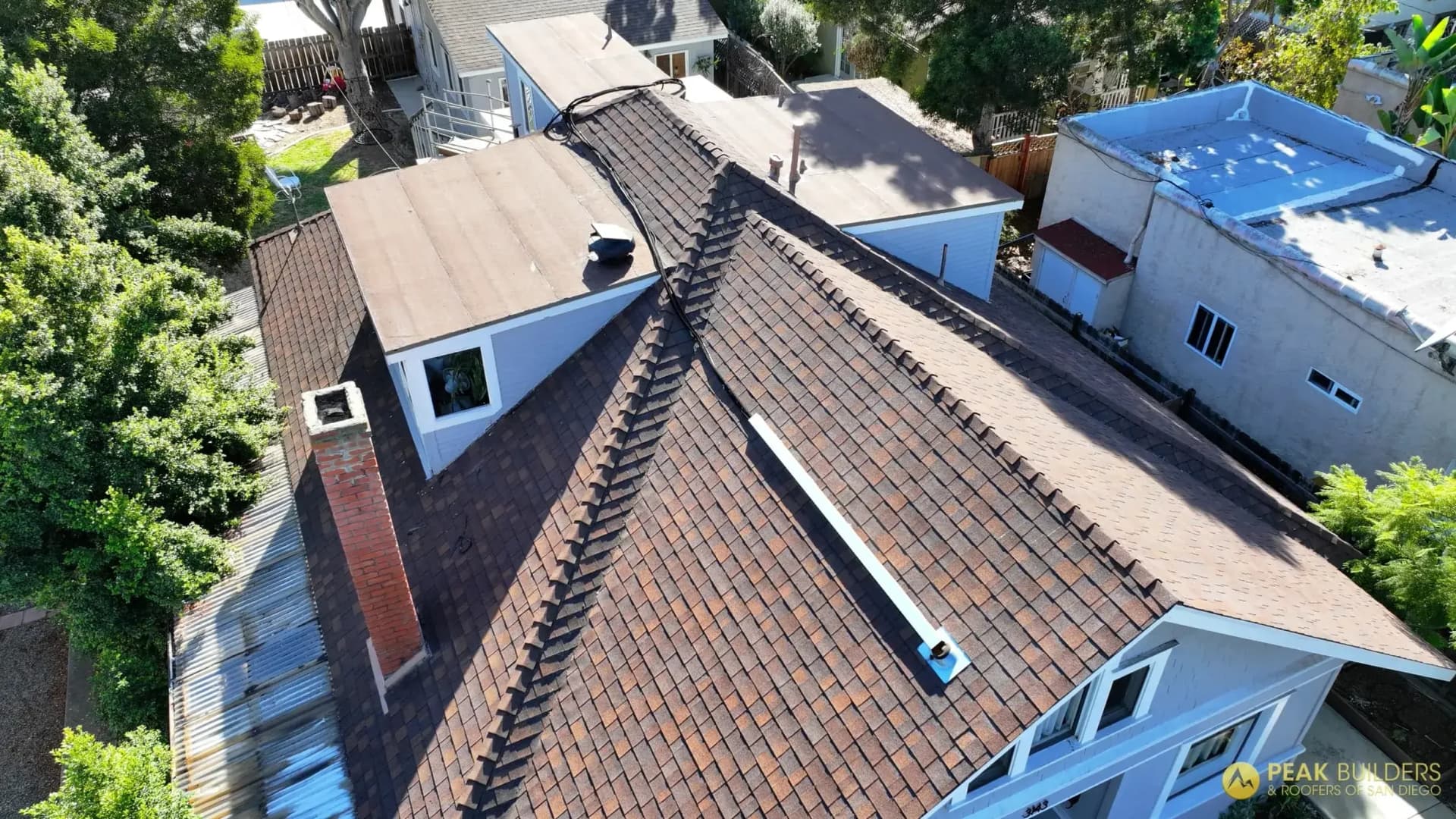
Sun-killed asphalt shingles show up as curling, cracking, and granule loss. San Diego's year-round UV bakes asphalt harder than most people realize, and a few wind-lifted shingles after a Santa Ana event expose underlayment that degrades within weeks. A small, contained shingle repair left alone becomes a far larger deck repair once the sun reaches the bare wood — which is why the early, easy-to-miss signs are the ones to act on.
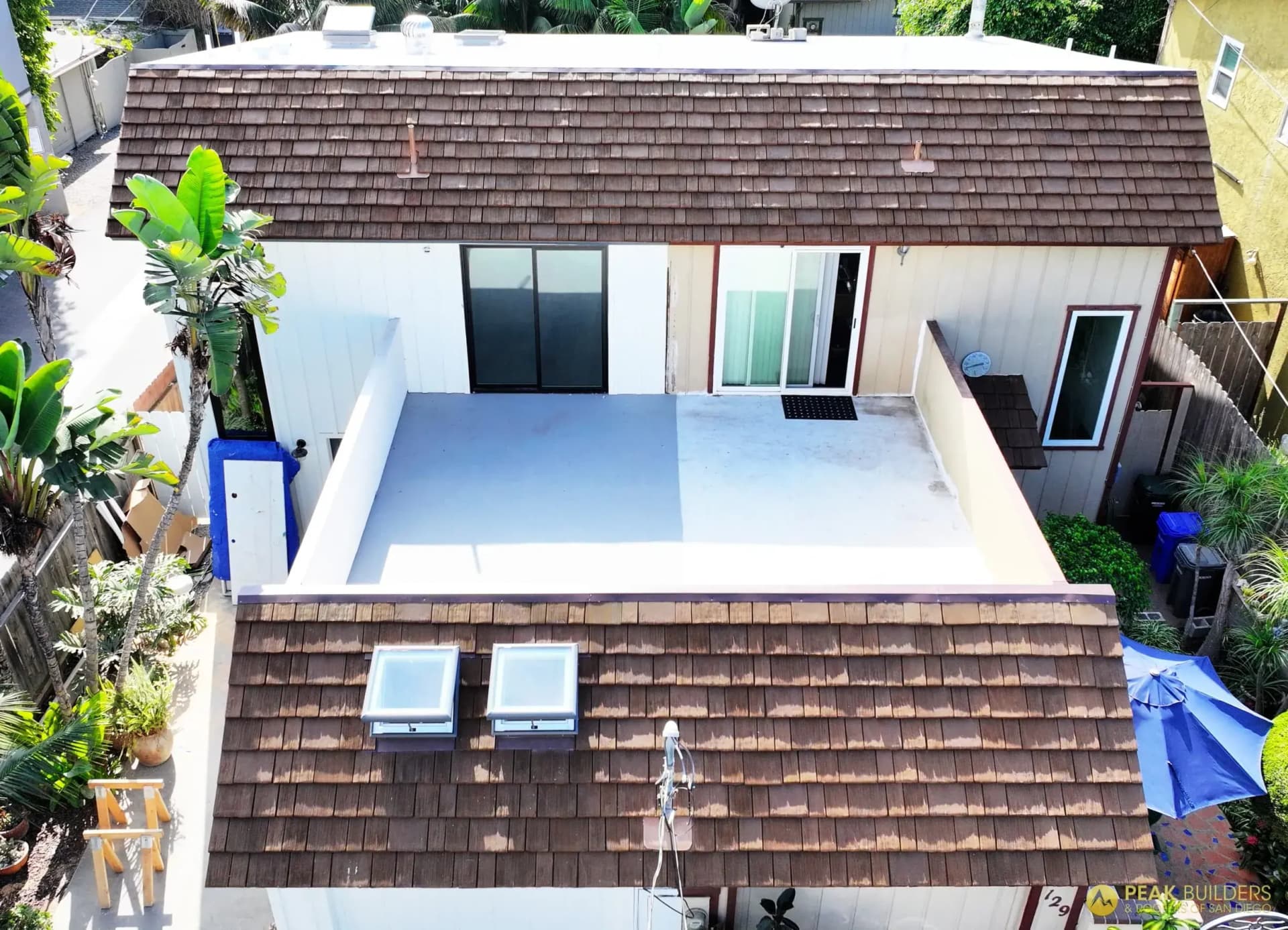
Flat-roof membrane failures plague the ADUs, garage conversions, and mid-century additions all over the county. TPO, EPDM, and modified bitumen expand and contract daily, and seals eventually open at seams and penetrations. Ponding water — anything standing more than 48 hours after rain — accelerates everything. That is the world of flat roofing, and the fix is usually a seam or penetration detail, not a whole new membrane.
Storm and wind damage is the spiky, unpredictable category. Santa Ana winds from October through March snap shingles and can drive embers into vents during fire events; the winter atmospheric rivers now dump two to three inches overnight onto drainage that was never sized for it. That work falls under storm damage restoration, and it is frequently covered by insurance.
There is also a quieter coastal-county problem: marine-layer mold and moss on north-facing slopes that never get enough sun to dry out. Left alone it holds moisture against the surface and shortens the life of shingle and underlayment alike, so we treat those slopes as part of the repair rather than just patching the leak that brought us out.
Repair or Replace? Judge Condition, Not the Calendar
This is where contractors earn or lose your trust, so here is the line we actually use — and notice that none of it turns on money. Repair when the roof is generally under 15 years old, the damage is isolated to one slope or one penetration, the deck underneath is sound, and the surrounding material still has years of life left. Replace when the roof is past 20 years, multiple areas are failing at once, the decking is widely soft or rotted, or a storm has compromised the assembly enough that piecemeal fixes would just relocate the next leak.
The uncomfortable truth on a lot of San Diego roofs over 20 years old: UV degradation is roof-wide, so patching one section simply moves the failure to the next-weakest spot. On a tile roof it is the opposite trap — people assume 25-year-old tile is "done" when a lift-and-relay saves the tile and resets the waterproofing for another two decades. Safety belongs in this decision too: a deck that flexes underfoot, daylight visible from the attic, or sagging between rafters pushes a job toward replacement regardless of age. That is why our assessments spell out both paths and the reasoning behind each. If replacement genuinely is the answer, our roof replacement team will put that in writing rather than selling you three repairs first.
Code, Coast, and Permits: What Changed
San Diego sits in California Title 24 Climate Zone 7, and the rules tightened on January 1, 2026: the cool-roof requirements that used to apply mainly to low-slope roofs now extend to steep-slope residential re-roofs as well. For most isolated repairs this is a non-issue, but once a job crosses into "re-roof" territory it can dictate the shingle or tile you are allowed to install — GAF Timberline HDZ, Owens Corning Duration, and CertainTeed Landmark all offer compliant cool-rated colors. In the WUI fire zones around the county, replacement assemblies need a Class A fire rating and ember-resistant vents, which matters most during Santa Ana season when wind-driven embers travel far ahead of any flame. And near the water you may need California Coastal Commission sign-off on top of City or County permits. A licensed contractor pulls all of these; a handyman working off the books does not, and an unpermitted re-roof becomes your problem at resale.
How San Diego Materials Earn Their Lifespan
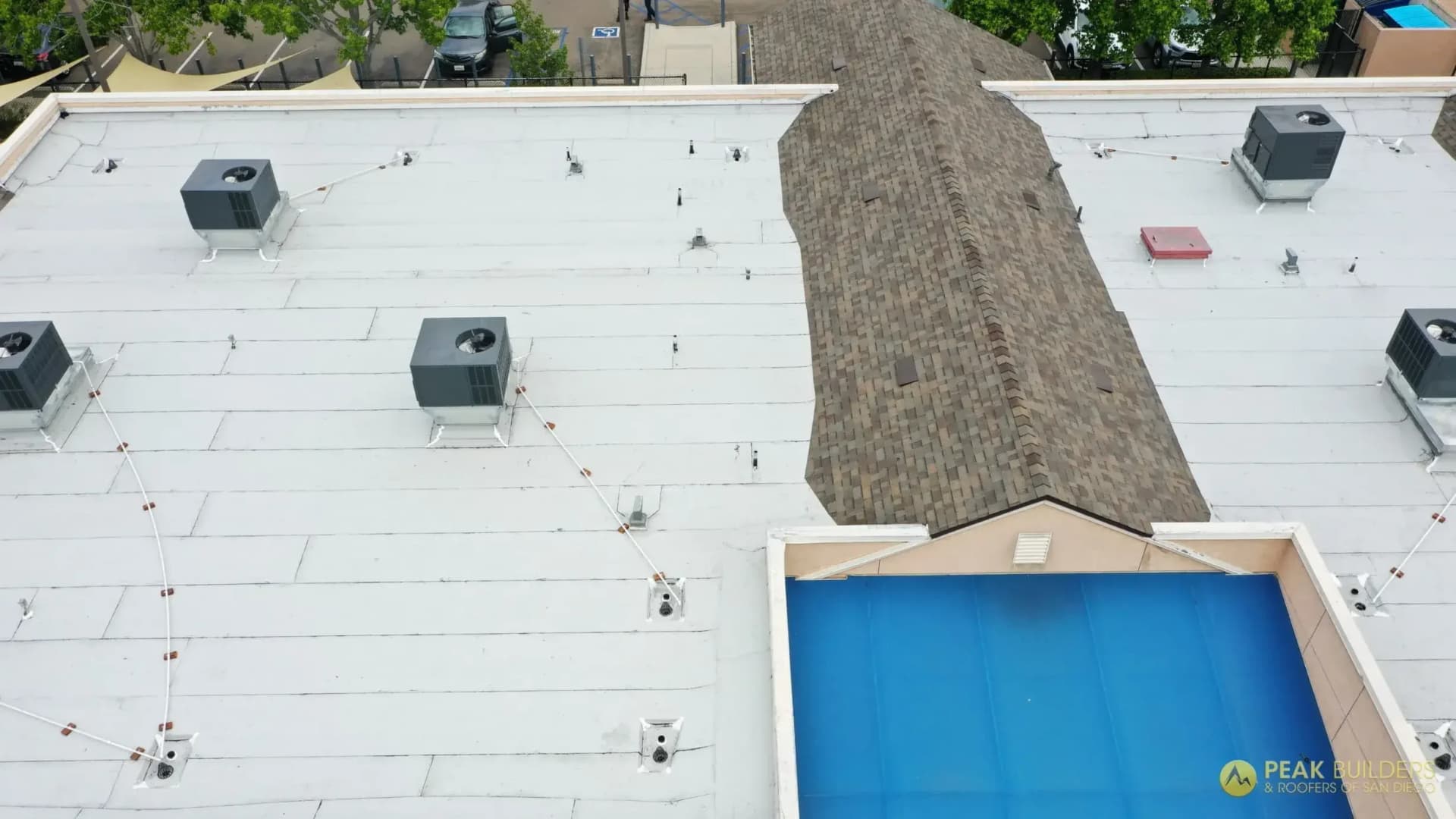
When repairs add up to a replacement, the right material is the one that protects the house longest in our climate. Architectural asphalt such as GAF Timberline HDZ or Owens Corning Duration carries long manufacturer warranties and, installed correctly, holds up well against our relentless UV load. Concrete and clay tile lasts 50-plus years on the surface; the discipline is re-felting the underlayment on schedule so the system never outlives its waterproof layer. Metal roofing — standing-seam in particular — shrugs off coastal salt corrosion and ember exposure and is increasingly chosen in fire-prone canyons. On low-slope and commercial roofing assemblies, TPO and EPDM membranes and modified bitumen perform reliably when seams and flashings are detailed properly.
How to Vet a San Diego Roofer
Substantial roofing work in California requires a C-39 license — verify it on the CSLB website before anyone climbs your roof. Peak Builders & Roofers of San Diego holds CSLB #1008986 and has worked here since 1999, across more than 5,000 San Diego roofs. Beyond the license, weigh manufacturer standing: we are a GAF Master Elite and Owens Corning Platinum Preferred contractor — certifications held by a small fraction of roofers and what backs the longest workmanship warranties. Then watch behavior. A roofer who pushes full replacement on a 12-year-old roof with one bad valley is reading their own incentives, not your roof. Everything — scope, exclusions, what happens if hidden rot turns up — belongs in writing. And hire local: storm chasers follow our atmospheric rivers in, tarp a few roofs, and vanish before any warranty matters. Our 4.9-star rating across 230-plus reviews and BBB A+ standing exist because we still answer in year three.
When you need eyes on a leak, start at roof repair — and because so many San Diego leaks involve overflow and backup, it is worth confirming your gutters are actually carrying water away from the roof edge before the next atmospheric river arrives. For the full picture, our roofing overview walks through every option we install countywide.
Frequently Asked Questions
My tile roof is leaking but the tiles look perfect. Why?
Because the tile is not your waterproofing — the underlayment beneath it is, and in San Diego that felt typically fails at 20 to 25 years while the tile itself lasts 50-plus. The repair is a "lift and relay": we remove the original tile, install fresh underlayment, and reset the same tile. You rarely need new tile, so be skeptical of anyone who leads with full tile replacement. To confirm what is actually failing, request a free, no-obligation inspection.
Should I repair or replace my roof?
Judge condition and safety, not the calendar alone. Repair if the roof is under roughly 15 years old, the damage is isolated, and the deck is solid. Replace if it is past 20 years with multiple failing areas, soft or rotted decking, or storm damage that compromised the whole assembly. On most San Diego roofs over 20, UV degradation is roof-wide, so patching one spot just moves the next leak down the slope.
Does coastal salt air really change the repair?
Yes. Within a mile or two of the coast — Coronado, Point Loma, La Jolla, Del Mar — galvanized flashing corrodes fast. We spec stainless steel or aluminum flashing there so the repair lasts, and we check vents and fasteners for salt-driven rust that inland roofs in Poway or Escondido never see.
Do I need a permit for a roof repair?
Small repairs usually do not, but anything reaching re-roof scope does — and that triggers California Title 24 cool-roof rules, which as of January 1, 2026 now reach steep-slope residential roofs too. Near the water you may also need Coastal Commission approval. A licensed contractor handles all of it; skipping permits becomes a serious problem when you sell.
How fast can you look at an active leak?
We respond within 2 to 4 hours during business hours and book same-week repairs from Oceanside and Carlsbad down through Chula Vista. Call (619) 330-8185 or request a free, no-obligation inspection and quote, and we will diagnose the true source before recommending any work.