
12 Signs You Need a New Roof (San Diego Homeowner Guide)
You usually need a new roof when it has crossed roughly 80% of its service life and is showing more than one of the symptoms below — granules collecting in the gutters, shingles curling or going bald, flashing pulling away, interior water stains, or daylight through the attic deck. In San Diego the trickier truth is that a roof can leak while looking perfectly intact from the street, because on our tile-heavy housing stock it is the hidden underlayment, not the tile, that wears out first. This guide walks through twelve signs every homeowner should know — about half visible from the ground, the rest needing an attic visit or a real inspection — so you can tell a roof that needs a targeted repair from one that is genuinely done.
After inspecting more than 5,000 San Diego roofs since 1999, the pattern we see most is homeowners waiting until water reaches the ceiling — by which point the damage has spread into drywall, insulation, and sometimes framing, turning a contained fix into a full roof replacement. Read these as a diagnostic, not a sales pitch; roughly three in ten of our inspections end with us telling the owner, in writing, that they do not need a new roof yet.
Signs You Can See From the Ground
1. Granules collecting in the gutters
Look inside your gutters and downspout splash zones. The coarse, dark sand there is the mineral granule layer that shields asphalt shingles from UV. A light shedding on a new roof is normal; gutters visibly lined with granules — especially below your oldest, most sun-exposed slopes — mean the shingles are going bald. San Diego's near-constant UV load accelerates this, and once the granules are gone the asphalt dries out and cracks within one to three years. Old gutters rarely outlive the roof above them, so plan gutter work into any re-roof.
2. Dark streaks, moss, or mildew on the north slopes
Black algae streaking is mostly cosmetic on a younger roof but signals moisture retention on an aging one. The bigger concern is San Diego's marine layer: north-facing slopes in Point Loma, Mission Hills, Kensington, and the coastal communities stay damp for hours after the rest of the roof has dried, and that lingering moisture grows moss and mildew that hold water against the surface and rot what is underneath. A small patch is manageable; moss spreading across a slope is an advanced-decay warning.
3. Shingles curling, cupping, or buckling
Stand across the street and sight up the slope. Shingles should lie dead flat. Edges curling upward, a concave "cupping" shape, or waves rippling across a course all mean the shingle's adhesion and mat are failing — a late-stage symptom, usually within two to five years of the end of service life. Premium architectural shingles like GAF Timberline HDZ or Owens Corning Duration show this much later than builder-grade three-tabs, but in our climate even good shingles get there.
4. Missing shingles or slipped tiles after wind
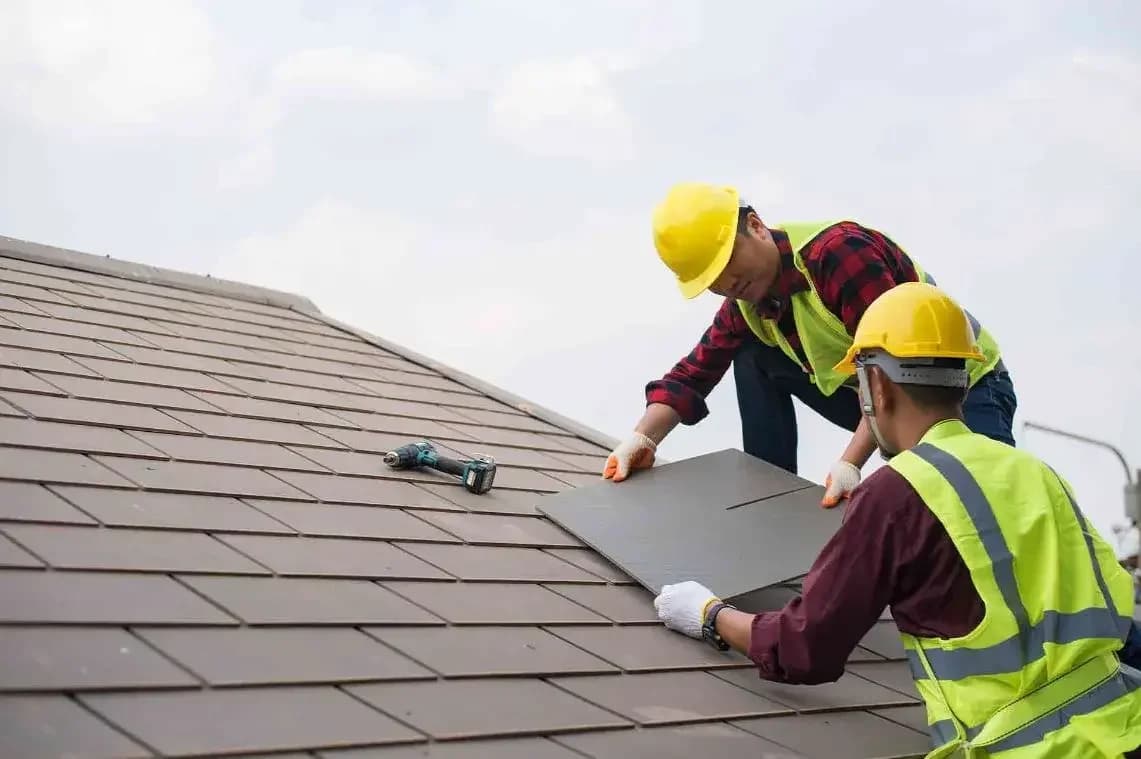
Santa Ana events routinely push 50–70 mph through East County and over 90 mph in the passes, and our atmospheric-river storms add saturated, gusty conditions. Shingles missing after a wind event are urgent because intrusion starts immediately, and patching the gaps often is not enough — the sealant strips on the surviving shingles are usually compromised too. On tile roofs, wind slides or cracks individual tiles, which should be reset before the exposed underlayment takes UV and rain. If a storm caused it, document everything for your insurer and start with storm damage restoration.
5. A sagging or wavy roofline
A ridge that dips, swells, or ripples instead of running straight points to trouble in the structure beneath — rafter rot, sheathing failure, or compromised trusses. This is the most serious sign on the list and almost never a simple re-roof; it calls for framing and deck repair alongside new roofing, and it needs attention quickly, since a sagging deck under heavy tile can become a genuine safety issue.
6. Rusted or pulled-away flashing
Check the metal at skylights, chimneys, vent pipes, and every wall-to-roof transition. Flashing is where most San Diego roofs actually leak, and near the coast it is where they fail first: ordinary galvanized steel corrodes in the salt air within years, which is why on homes in La Jolla, Del Mar, Coronado, Encinitas, and Point Loma we spec stainless or aluminum. Rust holes, lifted edges, or cracked sealant at these joints are imminent leak points and often signal that the rest of the roof is aging on the same timeline. Isolated flashing failures are a classic candidate for roof repair rather than replacement.
Signs That Take an Attic Visit or a Pro
7. Water stains on ceilings and walls
An active leak is obvious. The more telling sign is the dried brown halo — a stain from a past leak that may have quietly damaged insulation and framing. After the next rain, check the attic with a flashlight for damp insulation, wet rafters, or fresh discoloration on the sheathing. Stains that grow or multiply mean the roof, not a one-off flashing slip, is the problem.
8. Daylight through the roof deck
On a sunny day, turn off the attic lights and look up. Pinpoints or shafts of daylight through the sheathing mean there are holes where water gets in too — sometimes a single failed penetration, sometimes widespread deck rot. Either way it warrants a same-week roof inspection.
9. Sagging, damp, or musty attic insulation
Wet insulation has effectively zero R-value, so a leak quietly erodes your home's energy performance while it does structural damage. Insulation that sags, smells musty, or drips at the rafters — plus dark mildew on the underside of the deck — points to infiltration that has run longer than you think.
10. Upstairs rooms that run hot and an attic that won't cool
San Diego's intense UV does not just age shingles; it drives radiant heat straight through a compromised roof assembly. If the upstairs feels noticeably hotter than it used to, a failing roof and waterlogged insulation that no longer block the heat are common culprits. Note for any 2026 re-roof: California's updated Title 24 standards, effective January 1, 2026, extend cool-roof rules in our Climate Zone 7 to steep-slope residential re-roofs for the first time — so a replacement now also lifts the home's thermal performance.
11. A buckled or spongy roof deck
From inside the attic, look at the sheathing between rafters. Waves or buckles that do not line up with the framing mean the plywood or OSB has swelled from moisture and lost integrity. A deck that feels spongy underfoot has to be replaced, not roofed over — sheathing that has failed will not hold fasteners, and it is one of the most common conditions a tear-off uncovers.
12. Roof age — and the underlayment trap
The single most reliable sign is simply how old the roof is, and how it was built:
- Architectural asphalt shingle: 18–25 years under San Diego UV
- Premium shingle (GAF Timberline HDZ, Owens Corning Duration, CertainTeed Landmark): 25–30 years
- Concrete or clay tile: 50+ years for the tile, but the felt underlayment fails at roughly 20–25 years
- Standing-seam metal: 40–60 years
- Flat membranes (TPO, EPDM, modified bitumen): 15–30 years
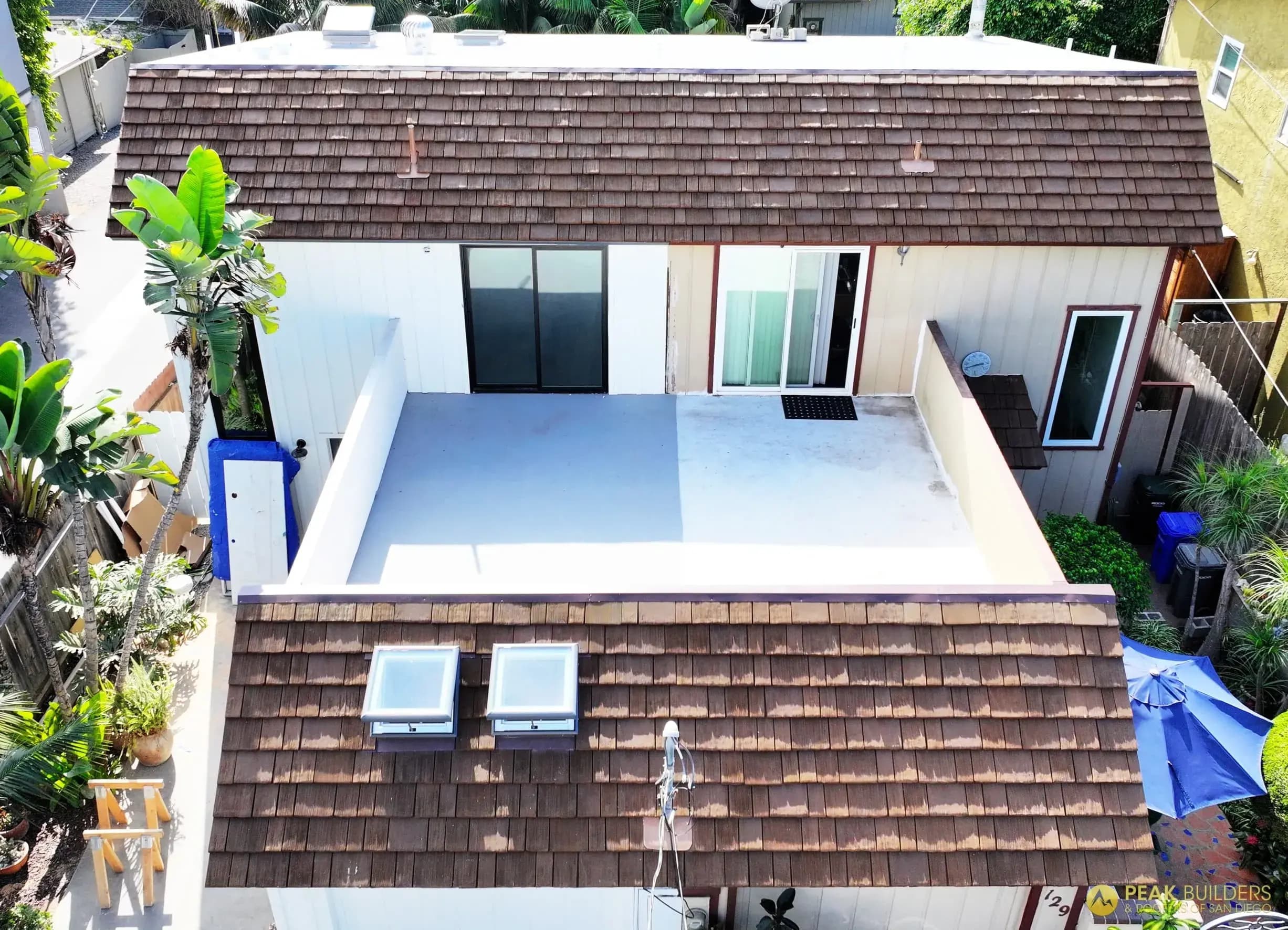
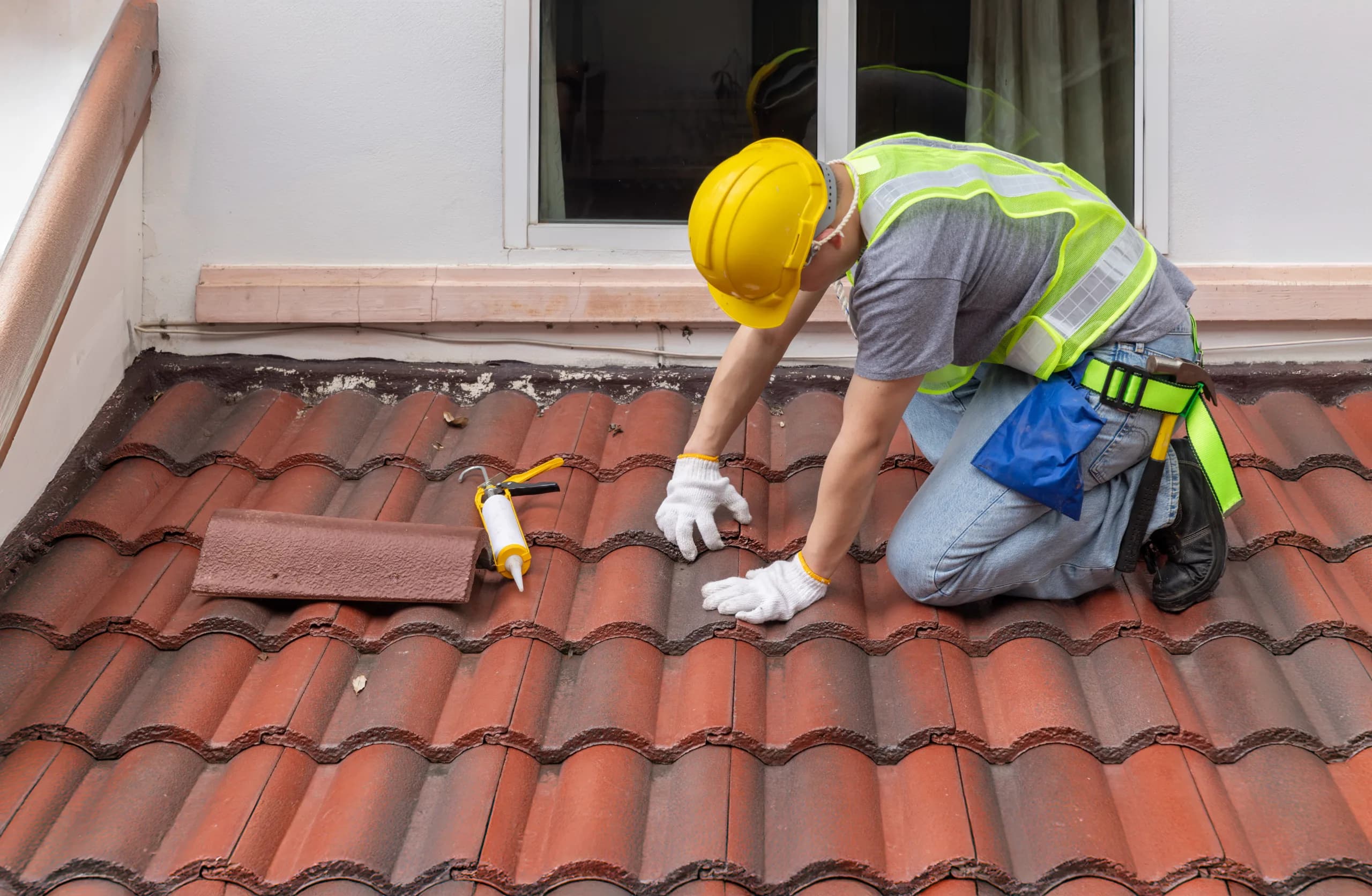
That tile line is where most San Diego homeowners get caught. On the Spanish and Mediterranean homes that fill our older neighborhoods — a 1920s clay-tile roof in Kensington, an '80s concrete-tile tract home in Scripps Ranch — the tiles look immortal while the waterproofing underneath has cooked through. The fix is a "lift and relay": remove the existing tile, replace the underlayment, reinstall the same tile. That is the heart of tile roofing work here, and why a roof can leak while the tiles look flawless. If your roof is past 80% of its expected life and shows any of signs 1–11, it is time.
Repair, Replace, or Lift-and-Relay — Judged by Condition
Not every problem means a full tear-off; the right call comes down to condition, age, and how far the damage has spread — never a guess. A targeted roof repair makes sense when the damage is isolated — one failed flashing, a few wind-slipped tiles, a single leak — and the roof still has a healthy share of its service life left. A tile roof with sound, unbroken tile over failed felt almost always wants a lift-and-relay rather than a brand-new roof, because the part that does the decades of work — the tile — is still good. Full replacement is the call when shingles are bald and curling across multiple slopes, the deck is rotting, a structural sag has set in, or you are chasing a third leak in two years; at that point patching only buys weeks.
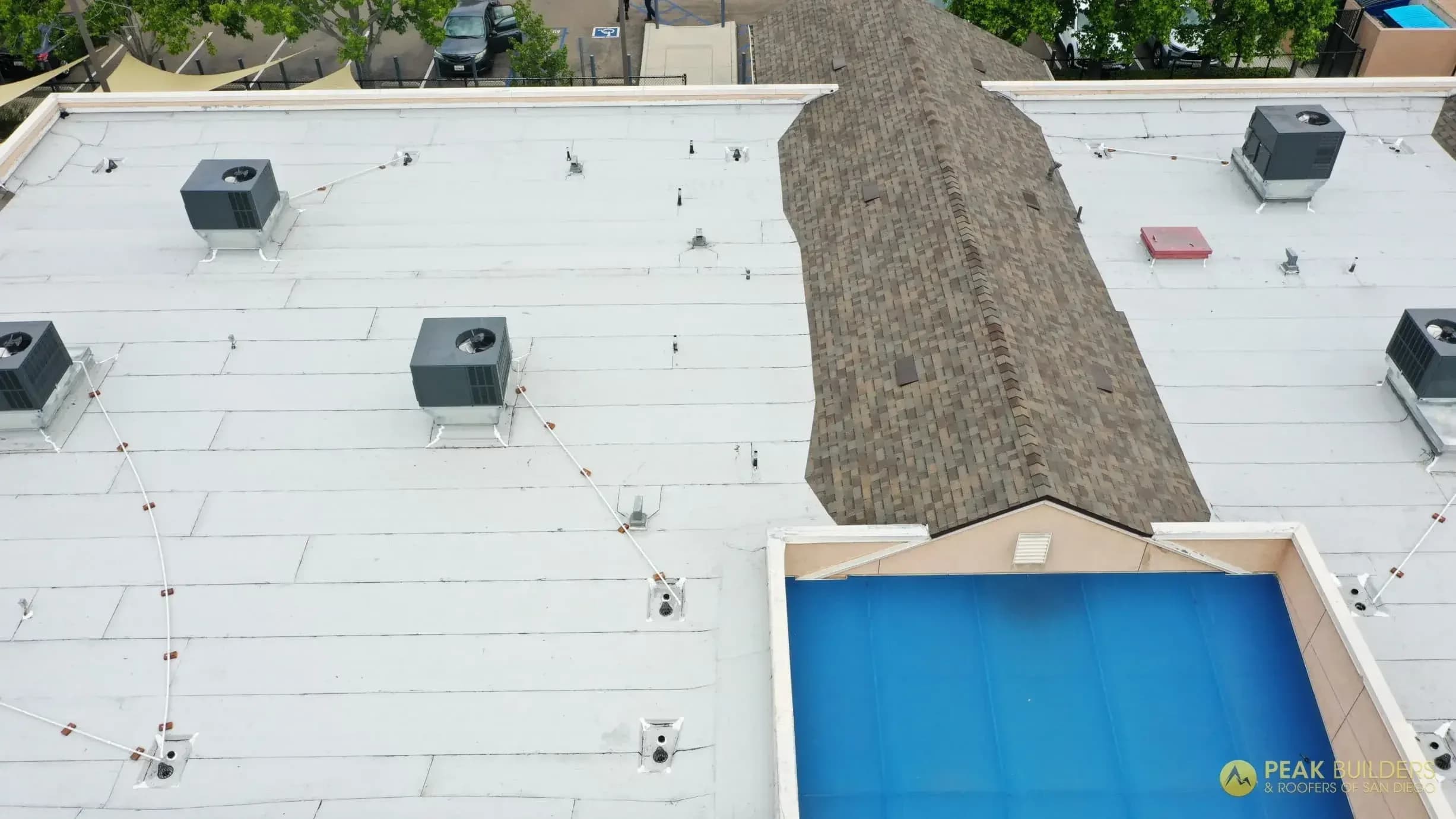
How a roof is replaced matters as much as whether it is. Good workmanship shows in the details you cannot see from the curb: a full tear-off to the deck rather than a layover, code-compliant synthetic underlayment, corrosion-resistant flashing at every penetration, balanced attic ventilation, and a manufacturer-backed warranty that only certified contractors can register. Standing-seam metal and coastal-grade systems carry the longest service lives in our salt-air zones, while flat-roof and commercial membrane assemblies — TPO, EPDM, modified bitumen — suit low-slope sections and are built for ponding resistance and UV stability.
What To Do Next
If you are seeing three or more signs, or even one from the serious category — missing shingles after a storm, a sagging roofline, daylight in the attic — get it looked at before the next rain. A real assessment from our San Diego roofers includes a walk-on and drone survey, photos of every penetration, a granule and adhesion check, an underlayment probe at the ridge or gable on tile roofs, and an attic moisture inspection, followed by a written report. We also pull and close the permits the work requires and build to current Title 24 energy and WUI fire-zone standards.
Peak Builders & Roofers of San Diego has held California license CSLB #1008986 since 1999, carries GAF Master Elite and Owens Corning Platinum Preferred certification, and holds a 4.9-star rating across 230+ reviews with a BBB A+ rating. We serve La Jolla, Carlsbad, Encinitas, Del Mar, Coronado, Chula Vista, Poway, Point Loma, Escondido, El Cajon, Oceanside, Rancho Santa Fe, Scripps Ranch, and Santee. Call (619) 330-8185 or request a free, no-obligation inspection and quote — and if your roof is fine, we will tell you so in writing.
Frequently Asked Questions
My tiles look perfect but the roof is leaking — why?
Because the tile is only the rain shield — the felt underlayment beneath it is the actual waterproofing, and that felt dries out and cracks at 20–25 years. Once it fails, water that gets past the tile reaches the deck. This is the most common San Diego roof leak we diagnose, and the fix is to lift the existing tile, install new underlayment, and relay the same tile.
Does coastal salt air really affect my roof?
Yes. Salt air corrodes ordinary galvanized steel flashing within a few years near the water, and flashing is where most roofs leak first. On homes in La Jolla, Coronado, Del Mar, Encinitas, and Point Loma we specify stainless or aluminum flashing and corrosion-resistant fasteners so the most failure-prone parts of the roof outlast the coastal exposure.
Do I need a permit to replace my roof in San Diego?
Yes. Re-roofs require a permit through the City of San Diego or the County, and coastal-zone homes may also need Coastal Commission review. New work must meet current Title 24 energy rules — which as of January 1, 2026 extend cool-roof requirements to steep-slope residential re-roofs — and WUI fire-zone homes need Class A assemblies with ember-resistant venting. A licensed contractor pulls and closes these permits as part of the job.
How long should a new San Diego roof last?
It depends on the system: architectural asphalt shingle runs 18–25 years under our UV, premium shingle 25–30, standing-seam metal 40–60, and tile 50+ years for the tile itself — though the underlayment beneath tile needs replacing around 20–25 years. Coastal salt air and intense sun shorten the low end, which is why material choice and proper flashing matter so much here.