Commercial Roofing in Southern California: What Property Owners Need to Know
Commercial roofing in Southern California comes down to three things most property owners underestimate: the membrane system has to survive relentless year-round UV and coastal salt air, the work has to satisfy California's Title 24 cool-roof code, and the job has to happen without shutting your building down. The right system for a San Diego commercial roof is the one matched to your slope, your exposure to the marine layer, and the chemical and fire conditions your building actually faces — not a one-size default. Below is what drives those decisions, and where San Diego's climate quietly changes the engineering.
Peak Builders & Roofers of San Diego has been roofing this county since 1999 — more than 5,000 roofs, a 4.9-star rating across 230-plus reviews, BBB A+, and CSLB license #1008986. We handle commercial flat roofs and steep-slope commercial properties alongside the residential work people know us for, and the same crews that service tile estates in Rancho Santa Fe also weld TPO on retail centers in Kearny Mesa.
The membrane systems we actually install here
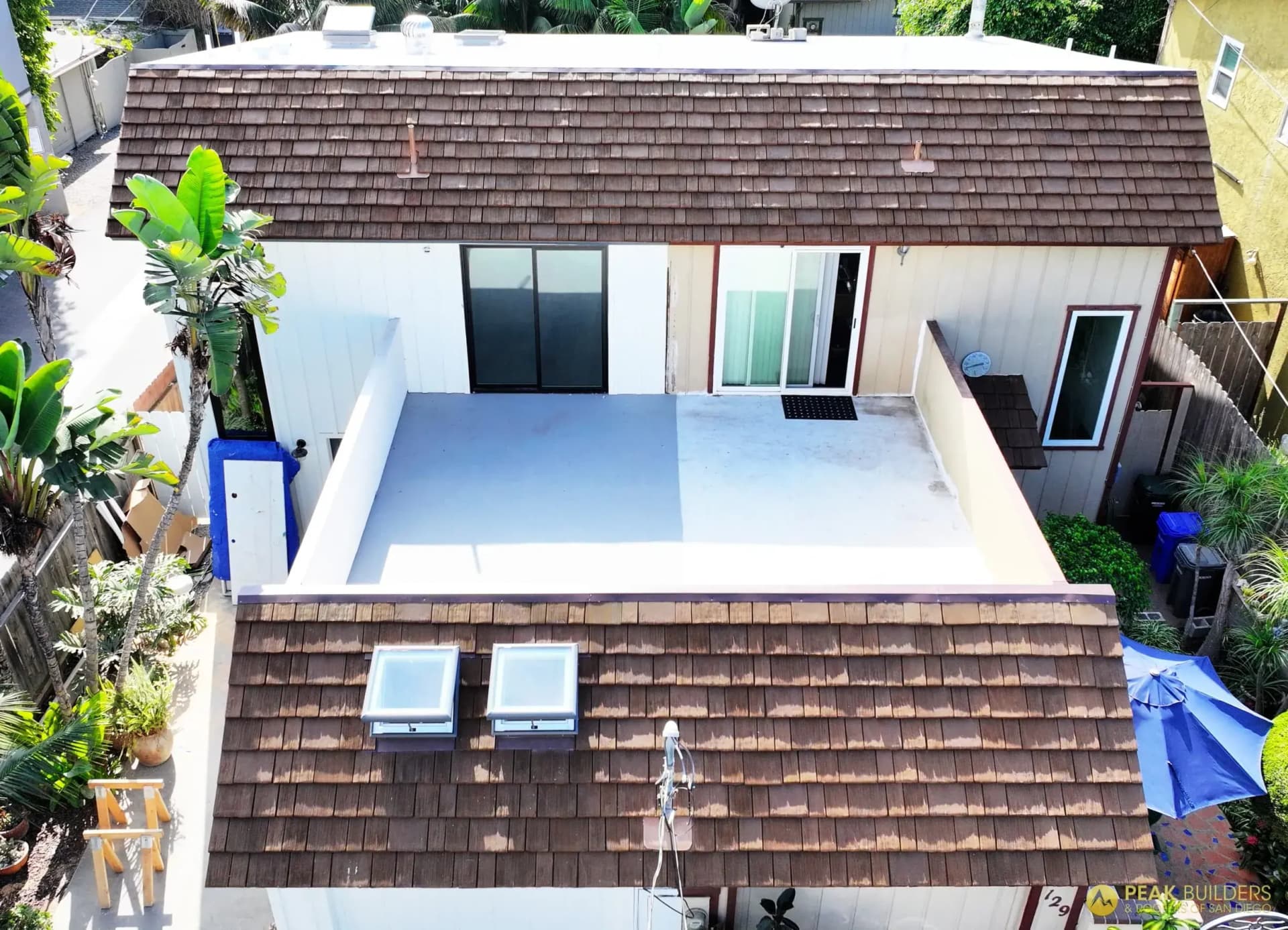
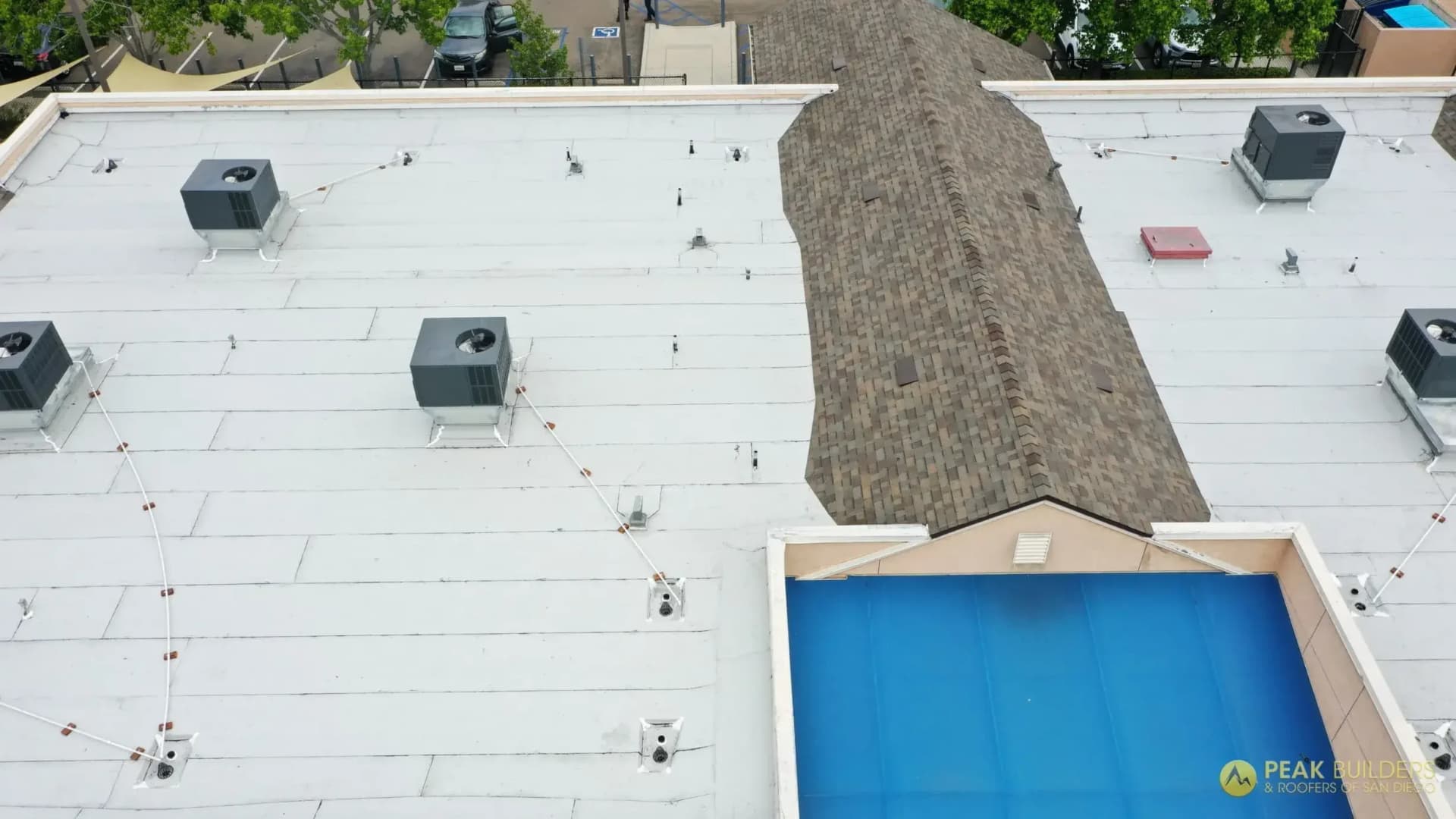
Most commercial buildings in San Diego carry a low-slope or flat roof, and the membrane is the entire waterproofing story. TPO (thermoplastic polyolefin) is the workhorse: a white single-ply sheet, heat-welded at the seams into one continuous waterproof skin, naturally reflective enough to satisfy Title 24 without an added coating. It's our default recommendation for office buildings, warehouses, and multi-unit residential because the welded seam is far more reliable than the glued or taped seams of older systems, and a properly installed TPO roof carries a 20-to-30-year service life. PVC is the close cousin we spec for restaurants and any roof exposed to grease, animal fats, or chemical exhaust, which degrade TPO over time.
Modified bitumen — the torch-down most San Diego property managers grew up with — is an asphalt membrane installed in two or three plies. It's durable and forgiving on irregular decks, typically lasting 15 to 25 years, and we still install SBS and APP systems where they make sense. A bare black bitumen roof no longer meets cool-roof code on its own, though, so it usually needs a reflective cap sheet or coating. EPDM, the black synthetic rubber found on a lot of 1990s-era buildings, we repair and replace in ballasted and fully adhered forms. And we still find genuine tar-and-gravel built-up roofs on older industrial stock; on those we'll often convert to single-ply at replacement rather than rebuild a system that's three times heavier and harder to inspect.
Then there's standing-seam metal, which we install on commercial steep-slope and architectural applications and which can run 40 to 50 years with minimal upkeep. When you compare systems, the trade-offs line up like this:
- TPO/PVC single-ply — roughly a 20-to-30-year service life, cool-roof compliant out of the box, best for most flat commercial buildings.
- Modified bitumen — 15 to 25 years, robust on irregular decks but usually needs a reflective surface to meet code.
- Standing-seam metal — 40 to 50 years, the long-horizon choice where slope and architecture allow.
- Restoration coating — adds 10 to 15 years over a sound existing membrane without a full tear-off.
That coating line deserves emphasis, because it's the most underused option in the county. A fluid-applied silicone or acrylic system over a watertight existing membrane reflects UV, seals minor seam fatigue, and resets the warranty clock. We won't coat a roof that's already leaking through the deck — that just hides the problem — but on a structurally sound roof with surface wear, it's the honest, less disruptive call. You can see the full scope on our commercial roofing and flat roofing pages.
What San Diego's climate does to a commercial roof
The biggest hidden risk on coastal commercial buildings is corrosion. Salt-laden marine air eats galvanized steel — fasteners, flashing, drain bowls, parapet caps — far faster than inland, and we've opened up roofs in Point Loma, Coronado, and La Jolla where the membrane was fine but the rusted edge metal was the leak. On any project within a couple miles of the water we spec stainless or aluminum flashing and fasteners, not galvanized. It is the single detail that most often separates a roof that lasts its full service life from one that calls you back two winters later.
UV is the other constant. San Diego gets intense sun nearly every day of the year, and a dark or unprotected membrane bakes — seams shrink, plasticizers migrate out, and the surface chalks. A reflective white membrane or coating isn't just a code box to check; it's what keeps the roof, and your cooling load, from aging prematurely. On north-facing slopes and shaded HVAC wells the opposite problem shows up: the marine layer keeps surfaces damp into late morning, and we find mold and ponding-related deterioration where water never gets the chance to dry. Proper slope-to-drain and tapered insulation matter more here than in a desert climate.
Two seasonal events round out the picture. Santa Ana wind and ember events test every edge detail and rooftop penetration, and buildings in WUI fire zones need Class A fire assemblies and ember-resistant detailing — including ember-resistant vents — to keep wind-driven embers from finding a way in. And the atmospheric-river storms that now define our winters dump months of rain in days — exactly when undersized drains, clogged scuppers, and tired seams turn into interior damage. If your building took on water last winter, that's the season to book a roof inspection before the next one, and to keep storm-damage restoration on speed dial.
Tile-roofed commercial and mixed-use buildings
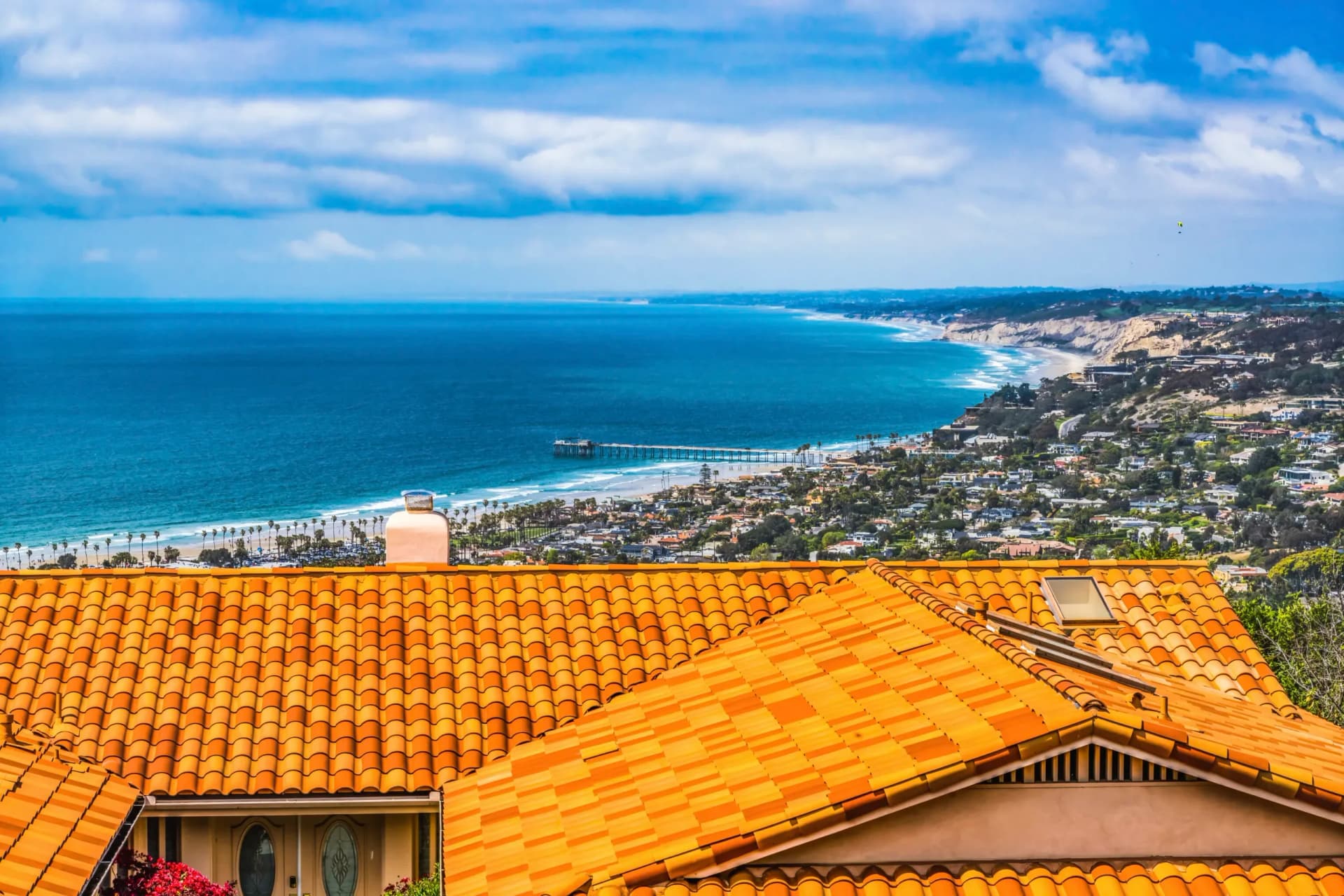
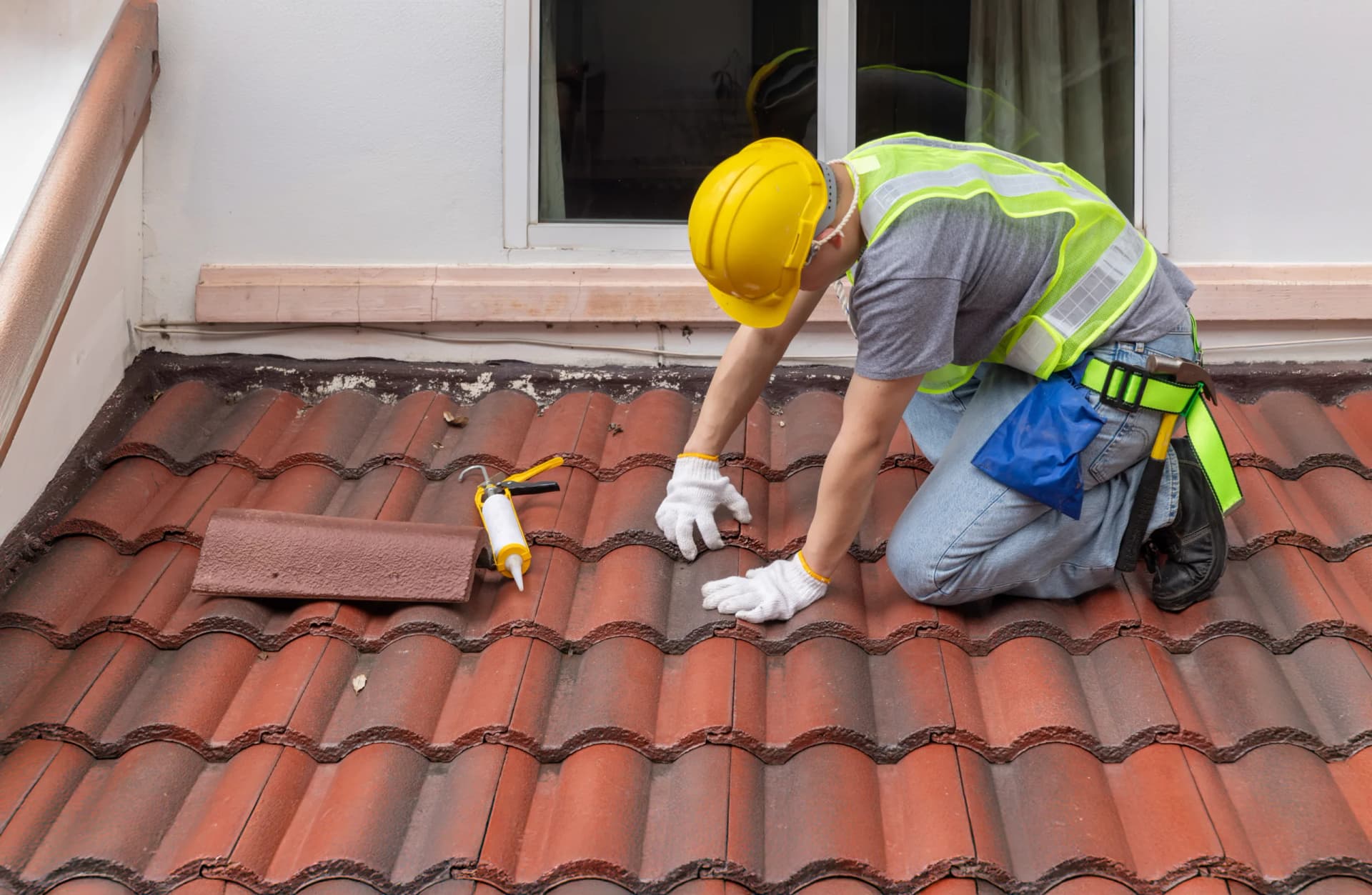
San Diego's Spanish and Mediterranean building stock means a real share of commercial and mixed-use properties — hotels, plazas, multi-family — carry clay or concrete tile. Here's the truth we explain on almost every tile walk-through: the tile is not the roof. Clay tile lasts 50 years and longer, but the underlayment beneath it fails at 20 to 25 years, and that membrane is what actually keeps water out. So a building can have beautiful, intact-looking tile and still be leaking into the units below because the felt underneath has gone brittle. The fix is a lift-and-relay — carefully removing the tile, replacing the underlayment with a modern self-adhered membrane, and reinstalling the original tile. Our tile roofing crews do this constantly, and it's why a tile property's maintenance plan should be built around underlayment age, not the tiles you can see.
Title 24, permits, and the 2026 code change
California's energy code requires cool-roof products on most San Diego commercial re-roofs — minimum solar-reflectance values, products listed with the Cool Roof Rating Council, and compliance documentation submitted to the building department. We're in Climate Zone 7, and white TPO and PVC generally satisfy the requirement as installed.
One change worth flagging for owners with mixed residential portfolios: the 2025 Title 24 standards, effective January 1, 2026, newly extend cool-roof rules to steep-slope residential re-roofs. If you own multi-family or live-work buildings, re-roofing those pitched sections now carries reflectance requirements they didn't before. We pull all permits — City of San Diego, County, and Coastal Commission review for properties near the water — and handle the compliance paperwork so the project passes inspection the first time.
How to judge a commercial roofer
A commercial roof failure isn't a home repair — it's tenant disruption, liability, and lost business days. So vet on substance: an active CSLB license (ours is #1008986), C-39 roofing classification, current general liability and workers' comp with certificates available on request, and manufacturer credentials that mean something. We're a GAF Master Elite contractor and Owens Corning Platinum Preferred — designations held by a small fraction of roofers nationally and the prerequisite for the strongest system warranties on products like GAF Timberline HDZ, Owens Corning Duration, and CertainTeed Landmark on the steep-slope side, alongside TPO, EPDM, and modified-bitumen systems on the flat side. Ask any bidder for a written scope, a phasing plan that protects your operations, evidence of those reflectance and fire ratings, and references on buildings like yours. Good commercial work shows in the details — tight welded seams, properly sealed penetrations, corrosion-resistant edge metal, and clean slope-to-drain — and those are the things to look for on any reference roof you visit.
Whether you need a full roof replacement, a targeted roof repair before the rains, metal roofing on a new build, or gutter and drainage work to handle atmospheric-river runoff, the San Diego roofing team at Peak Builders scopes commercial work on-site and in writing. We serve La Jolla, Carlsbad, Encinitas, Del Mar, Coronado, Chula Vista, Poway, Point Loma, Escondido, El Cajon, Oceanside, Rancho Santa Fe, Scripps Ranch, and Santee.
Frequently Asked Questions
Which commercial roof system lasts the longest in San Diego?
Standing-seam metal has the longest horizon — 40 to 50 years — where slope and architecture allow it. Single-ply TPO and PVC deliver a 20-to-30-year service life and meet cool-roof code as installed, which makes them the right call on most flat buildings. Modified bitumen runs 15 to 25 years. The longest-lasting system is the one matched to your slope, salt exposure, and rooftop chemistry, which is what an on-site assessment sorts out.
Can you re-roof my building without shutting it down?
Yes. We phase commercial work to keep your building operating — sequencing by section, coordinating roof access and HVAC shutdowns with your property manager, and protecting interiors and equipment as we go. You'll get a written schedule and access plan before we start, so tenants and staff know what to expect each day.
Should I coat my existing roof or fully replace it?
It depends on condition, not anything else. On a structurally sound membrane with surface wear, a coating adds 10 to 15 years and meets cool-roof code without a tear-off. On a roof that's already leaking into the deck or has saturated insulation, coating only buries the problem and traps moisture. We inspect first and tell you honestly which situation you're in. To find out where your roof stands, request a free, no-obligation inspection and quote.
My tile roof looks perfect but the building is leaking — why?
Because the tile and the waterproofing are two different things. Clay and concrete tile last 50-plus years, but the underlayment beneath it fails at 20 to 25 years, and that membrane is what stops water. Intact tile over dead underlayment leaks into the units below. The repair is a lift-and-relay: pull the tile, replace the underlayment with a modern self-adhered membrane, and reinstall the original tile.
Do you handle the Title 24 cool-roof paperwork?
Yes. We spec Cool Roof Rating Council-listed products, install Title 24-compliant systems for Climate Zone 7, and submit the compliance documentation with the permit package. Note that as of January 1, 2026, cool-roof rules now also apply to steep-slope residential re-roofs, which affects multi-family and mixed-use owners. Call (619) 330-8185 or reach us through our contact page to schedule an on-site commercial assessment.