How a New Asphalt Roof Protects and Improves Your San Diego Home
A new asphalt shingle roof protects a San Diego home by replacing the one part of the structure that quietly fails first: the waterproofing layer. The shingles you see are only half the system — the underlayment, flashing, ventilation, and decking beneath them are what actually keep water, salt air, UV, and embers out of your framing. Below is what a re-roof actually involves in this market, where tile dominates the housing stock and the coast, the marine layer, and California's energy code all shape how the job should be built.
What a new roof actually protects
It helps to think of a roof as an assembly, not a surface. Architectural (dimensional) shingles like GAF Timberline HDZ, Owens Corning Duration, and CertainTeed Landmark are the visible weather layer, but they sit on a sequence of components that each do real work: ice-and-water shield and synthetic underlayment as the secondary moisture barrier, metal flashing at every penetration and transition, a ventilation path from soffit to ridge, and sound decking to nail into. When any one of those fails, the roof leaks even if the shingles look new from the curb.
That is why we no longer specify basic 3-tab shingles on San Diego homes. The dimensional products carry stronger wind and UV ratings, lay flatter and cleaner, and qualify for the enhanced manufacturer warranties that follow the house — protection a thin builder-grade shingle simply can't match. A correctly built asphalt system on a typical San Diego home delivers 25 to 30 years of weather protection, and the warranty only holds if the ventilation and flashing details are done right underneath.
The San Diego tile trap — why "good" tile roofs leak
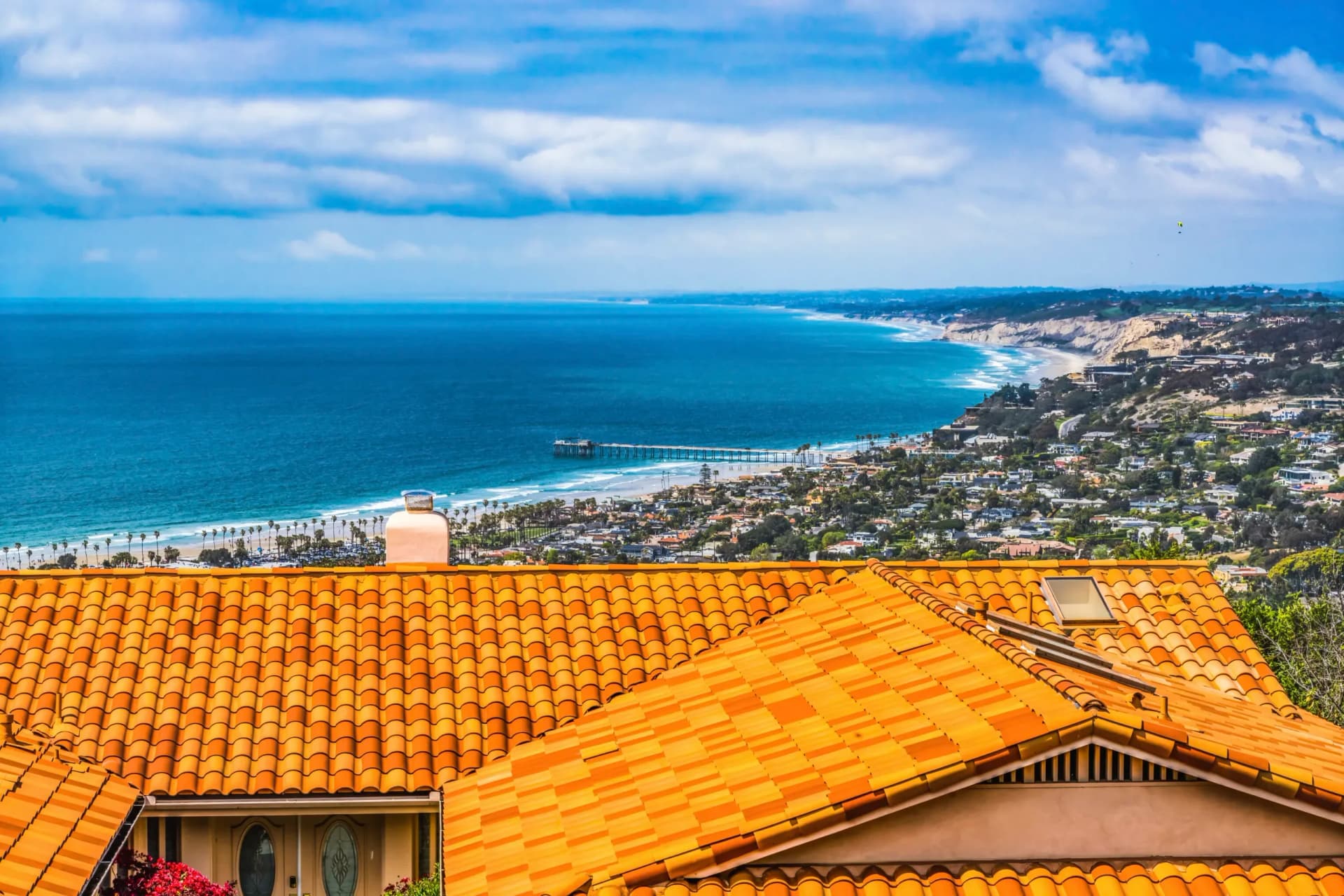
So much of San Diego's Spanish and Mediterranean stock wears clay or concrete tile, and there's a persistent myth that those roofs are immortal. The tiles are — the underlayment isn't. Tile commonly outlasts 50 years, but the felt or synthetic membrane beneath it fails at roughly 20 to 25 years. That's the disconnect we see constantly: a roof that looks flawless from the street is quietly leaking because the waterproofing layer under perfect-looking tile has gone brittle and cracked.
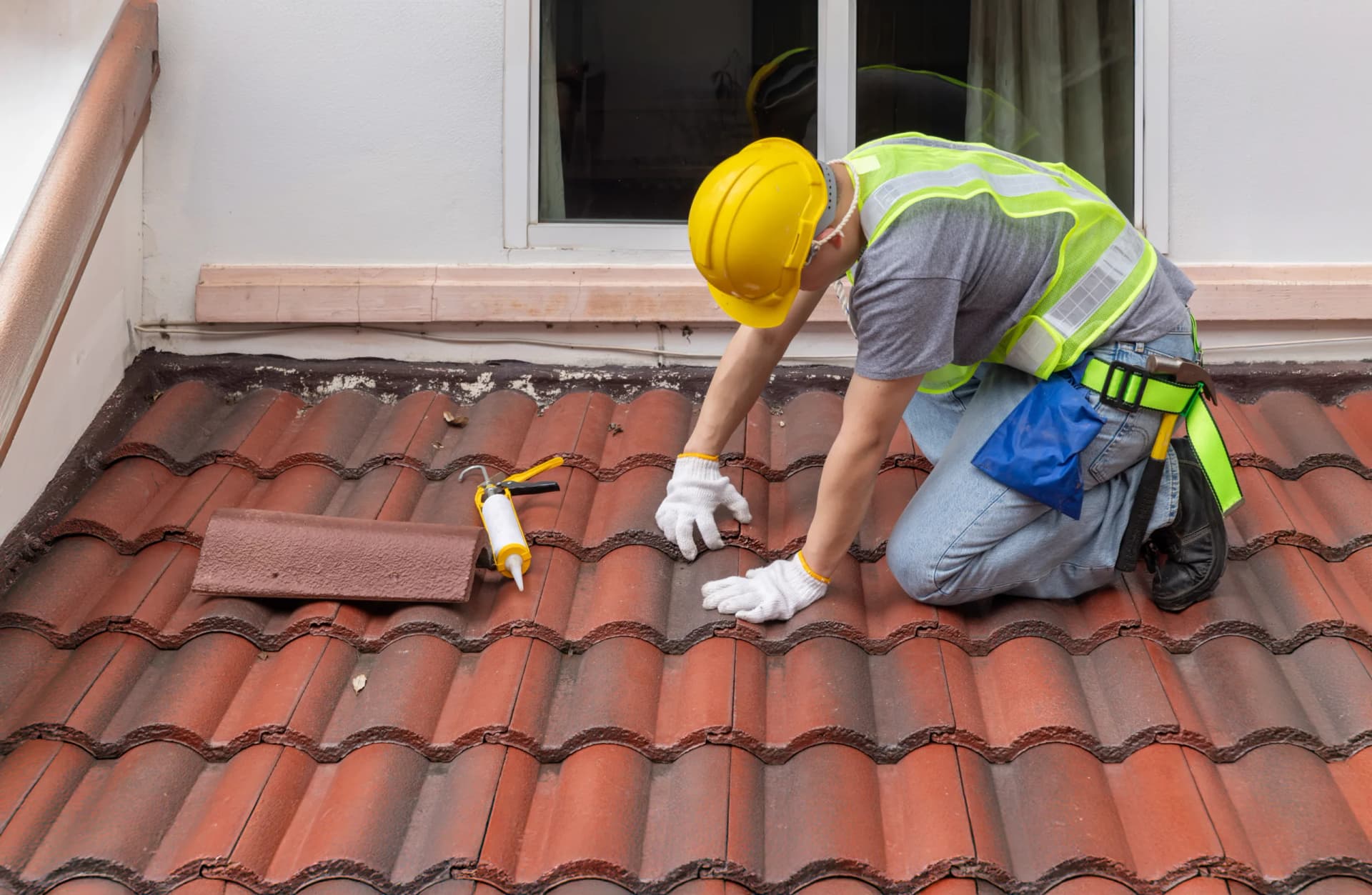
On many tile homes the right move is a "lift and relay" — salvage and reset the tile over fresh underlayment. Where the tile is degraded, broken, or mismatched, converting to a heavy architectural shingle delivers a clean, warrantied, code-current roof. Either way, the lesson is the same: don't let tile's looks lull you, because by the time stains appear on the ceiling the leak has usually been running for months. If you're weighing the two paths, our team will scope both on a roof replacement assessment, and you can read more about the tile-specific options under tile roofing.
Replace or repair? Judge by condition, not the calendar
Whether a roof needs full replacement is a question of condition, age, and how far the damage has spread — not a guess. The warning signs we look for on a San Diego roof:
- Granule loss — bald patches on shingles and granules collecting in gutters mean the UV-protective surface is wearing off.
- Curling, cupping, or cracked shingles — a sign the asphalt has dried out and lost flexibility, common after years of intense sun.
- Damaged or rusted flashing at chimneys, skylights, valleys, and walls — often the true leak source long before the field shingles fail.
- Moss or algae streaking on shaded north slopes, which holds moisture against the surface.
- Daylight or moisture in the attic, sagging decking, or stained sheathing — evidence water has already gotten past the membrane.
- Age — a roof at or past 20 to 25 years, especially with any of the above, is at the end of its service life.
Smaller, isolated problems — a few cracked shingles, a failed pipe boot, one leaking valley — often don't warrant a full replacement at all; a targeted roof repair can buy years of life. The honest way to know where your roof stands is a documented roof inspection that reports remaining service life. Replacing on your own schedule — rather than during a January atmospheric-river storm — also means the work happens in dry weather, with the deck open and inspectable, instead of as an emergency.
Spec for the microclimate — coast, marine layer, sun, wind, and fire
A roof only protects a home if it's built for your slice of San Diego County, and the county has several distinct ones.
Near the water — Coronado, Point Loma, La Jolla, Del Mar, Encinitas, Carlsbad, Oceanside — salt air corrodes galvanized steel fast. We spec stainless or aluminum flashing, drip edge, and fasteners on coastal jobs. Galvanized metal in that environment rusts through and stains, and corroded flashing becomes a leak source long before the field shingles wear out.
North-facing slopes that sit under the marine layer stay damp and grow moss and algae. Algae-resistant shingles (the "AR"/StainGuard lines) combined with good soffit-to-ridge airflow keep them from streaking and holding moisture. Intense year-round UV is the slow killer everywhere inland — it dries asphalt and strips granules, which is exactly why a dimensional shingle with a strong UV and wind warranty outlasts a thin 3-tab.
Santa Ana winds and ember events, plus the county's wildland-urban interface (WUI) zones, make fire assembly critical. In fire-prone areas we build Class A fire-rated assemblies with ember-resistant vents, because in a wind-driven ember event the vents are often where fire enters the attic. Pairing that with Class 4 impact-resistant shingles also improves how the roof stands up to wind-driven debris. Our storm damage restoration crews see firsthand what embers and atmospheric-river storms do to under-spec'd roofs.
Title 24 cool-roof: the 2026 rules you can't skip
California's Title 24 energy code places San Diego in Climate Zone 7, and the standards effective January 1, 2026 newly extend cool-roof requirements to steep-slope residential re-roofs — not just the low-slope and commercial work covered before. In practice, most asphalt re-roofs now need a shingle that meets minimum solar-reflectance and thermal-emittance values. The major manufacturers all offer compliant "cool" colors, so this rarely limits your aesthetics.
The benefit is real and measurable: a cool roof drops attic temperatures and eases the air-conditioning load through San Diego's long warm season. Bundle it with proper attic ventilation and fresh underlayment and the whole assembly performs as a system rather than a stack of parts. While the crew is already up there, it's also the natural moment to address gutter installation so winter runoff is carried away from the fascia and foundation.
What to expect during the project
A well-run re-roof follows a clear sequence, and knowing it helps you judge whether the work is being done right:
- Inspection and scope — the roof is assessed, the underlying problem identified, and the system specified for your microclimate and slope.
- Permitting — depending on location, the job is permitted through the City of San Diego, the County, or, near the water, with Coastal Commission review. A permitted roof is one an inspector signs off on.
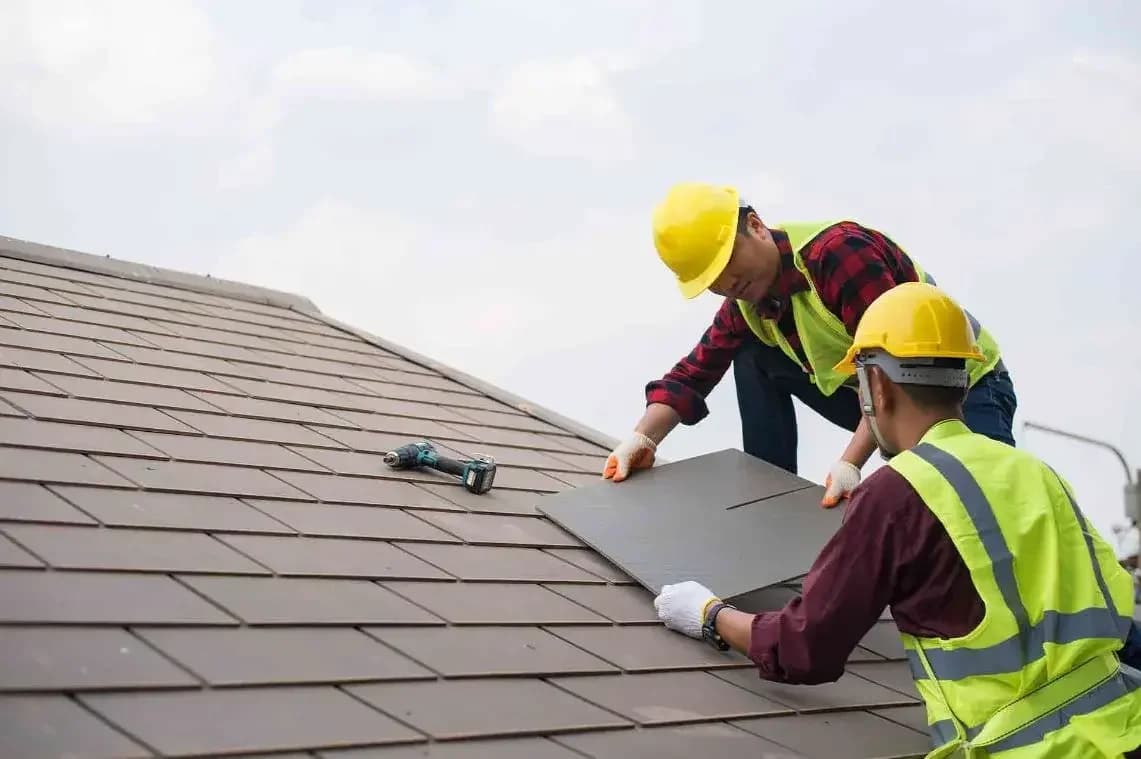
- Tear-off — old layers are removed down to the decking, which is the only way to see the true condition of the wood underneath.
- Deck repair — any soft, rotted, or delaminated plywood is replaced before anything goes back down. Skipping this is the most common hidden defect we find on other contractors' work.
- Dry-in — underlayment and ice-and-water shield go down, creating the secondary moisture barrier.
- Flashing and ventilation — new metal at every penetration and transition, plus a balanced intake-and-exhaust ventilation path.
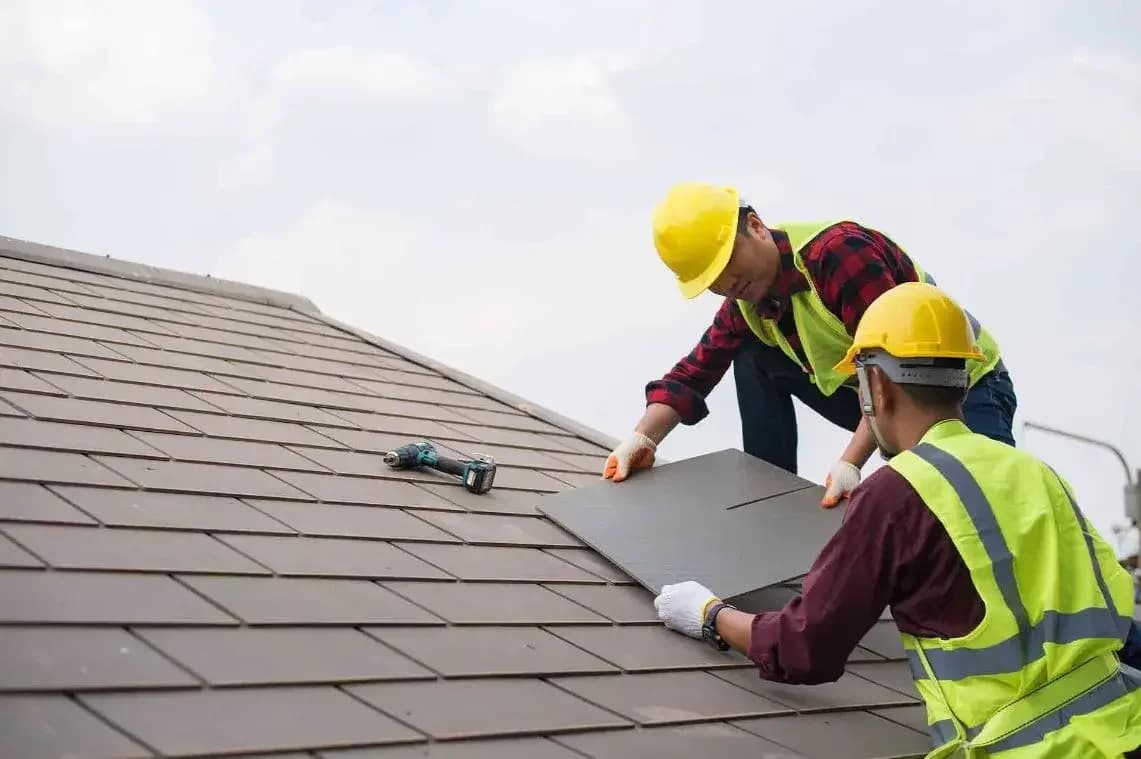
- Shingles and final inspection — the field is installed to manufacturer spec, the site is cleaned and magnet-swept for nails, and the work is inspected.
Flat sections, detached structures, and metal
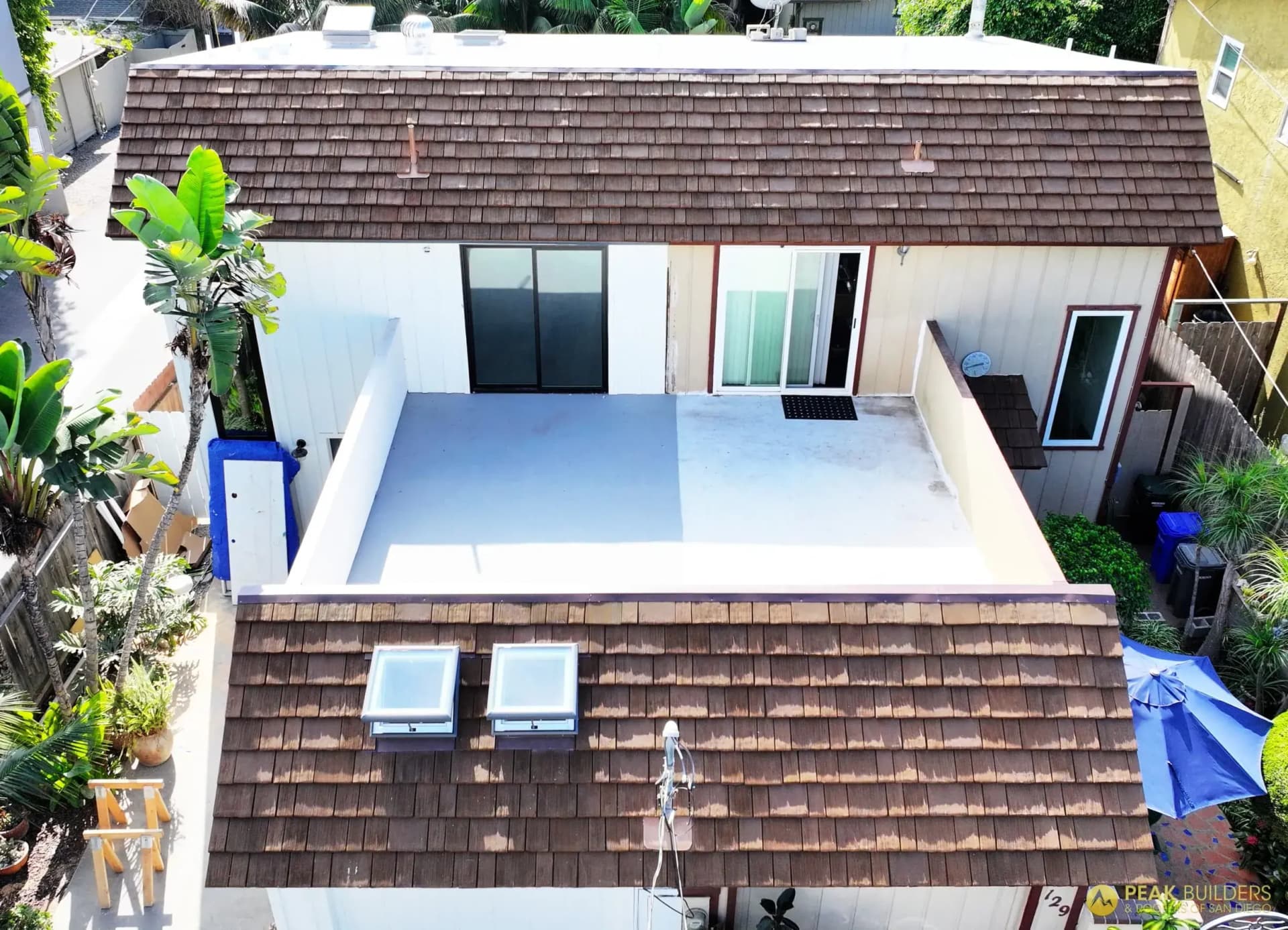
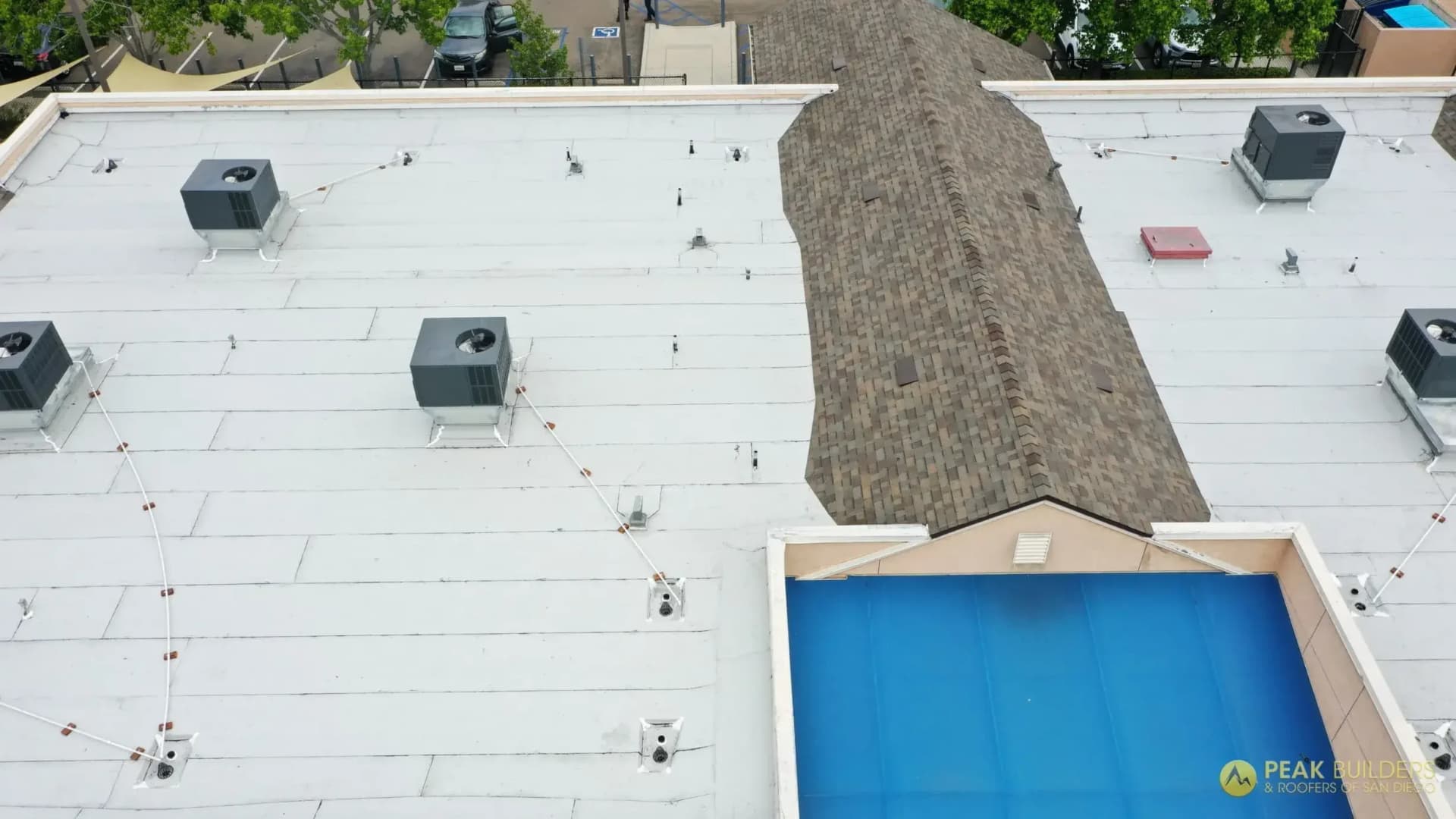
Plenty of San Diego homes mix a sloped main roof with flat areas over additions, garages, or mid-century sections. Shingles don't belong on low slopes; those areas need TPO, EPDM, or modified bitumen membranes, and standing-seam metal is worth considering on transitional pitches and for long-term coastal durability. We cover those under flat roofing and metal roofing, and we detail the tie-ins carefully so the seams between two different systems don't become the leak. Commercial property owners can start with commercial roofing.
Why the installer matters as much as the shingle
The same shingle installed two different ways produces two different roofs. The flashing details, the ventilation balance, the deck prep, and the nailing pattern are where a roof is won or lost — and none of them show in a photograph. Peak Builders & Roofers of San Diego has been re-roofing the county since 1999, has completed 5,000+ San Diego roofs, and holds a 4.9-star rating across 230+ reviews plus a BBB A+. We're licensed in California (CSLB #1008986) and certified GAF Master Elite and Owens Corning Platinum Preferred — credentials only a small fraction of contractors hold, and the certification that unlocks the enhanced, transferable manufacturer warranties. We serve La Jolla, Carlsbad, Encinitas, Del Mar, Coronado, Chula Vista, Poway, Point Loma, Escondido, El Cajon, Oceanside, Rancho Santa Fe, Scripps Ranch, and Santee.
To find out exactly what your roof needs, request a free, no-obligation inspection and quote — call (619) 330-8185 or reach us through our contact page. You can also see the full range of our roofing services or learn more about our San Diego roofing crews.
Frequently Asked Questions
How long does a new asphalt roof last in San Diego?
A correctly installed architectural shingle system delivers about 25 to 30 years of protection in San Diego's climate. Sun exposure, slope, ventilation quality, and installation details all affect where in that range a given roof lands — which is why the flashing and ventilation work beneath the shingles matters as much as the shingle itself.
Is an asphalt roof a step down from tile?
Not necessarily. Tile suits Spanish and Mediterranean homes and the tiles can last 50-plus years, but the underlayment beneath them fails at 20 to 25 years, which is why "perfect" tile roofs leak. A new, manufacturer-certified architectural shingle roof gives you a clean, warrantied, code-current system — often the smarter choice where existing tile is already degraded.
How do I know whether I need a repair or a full replacement?
It comes down to condition, age, and how far damage has spread — not the calendar alone. Isolated issues like a cracked shingle or failed pipe boot are usually a roof repair. Widespread granule loss, curling, rusted flashing, attic moisture, or a roof past 20 to 25 years point toward replacement. A documented roof inspection settles the question objectively.
Does the 2026 Title 24 cool-roof rule apply to my re-roof?
For most San Diego steep-slope residential re-roofs permitted on or after January 1, 2026, yes. The updated Climate Zone 7 standards extend cool-roof reflectance requirements to pitched residential roofs. Major shingle lines offer compliant "cool" colors, so it rarely limits your aesthetics, and it lowers summer cooling load.
Can a new roof help with insurance and wildfire safety?
A Class A fire-rated assembly with ember-resistant vents is important in San Diego's wildfire and WUI zones, and Class 4 impact-resistant shingles stand up better to wind-driven debris. A recently replaced, properly rated roof also improves overall insurability — worth a conversation with your carrier after installation.