Metal Roofing in San Diego: What You Should Know
Metal is one of the longest-lived roofs you can put on a San Diego home — a correctly installed standing-seam system routinely lasts 40 to 60 years, often outliving two asphalt roofs over the same span. Whether it's the right call for your specific house depends on where you live in the county, how long you plan to stay, and what condition the deck and underlayment are in once the old roof comes off. Below is what we've learned installing roofs across San Diego since 1999 — the details that actually determine whether a metal roof lasts its full life.
Why metal performs well in San Diego's climate
San Diego sees well over 250 sunny days a year, and that relentless UV is hard on roofing. Asphalt shingles bake, shed granules, and curl; metal reflects most of that radiation and doesn't degrade the same way. A reflective, properly ventilated metal roof cuts summer attic heat gain meaningfully — which matters more than ever now that Title 24's 2025 energy standards (effective January 1, 2026) extend cool-roof requirements to steep-slope residential re-roofs in Climate Zone 7, the coastal/inland zone most of the county falls in. Many factory-applied metal finishes already hit the required solar reflectance and thermal emittance values, so metal is one of the simpler ways to comply on a sloped roof. If you're weighing a full roof replacement, raise this with your contractor early, because the cool-roof rule now applies whether you choose metal, tile, or shingle.
Metal also earns its keep in our fire and wind exposure. It carries a Class A fire rating — the highest there is — and in the wildland-urban interface communities like Poway, Scripps Ranch, Santee, El Cajon, and the eastern edges of Escondido, that rating combined with ember-resistant vents is the WUI assembly the county increasingly wants to see in storm- and fire-damage rebuilds. During Santa Ana ember events, a metal panel won't ignite the way an aging wood shake or brittle asphalt roof can. And because standing-seam panels clip to the deck with concealed fasteners instead of exposed screws, a correctly installed system handles the high winds of a Santa Ana or an atmospheric-river storm front without the fastener back-out that plagues exposed-fastener panels over time.
The coastal corrosion issue most homeowners miss
Here's the part that separates a metal roof that lasts half a century from one that streaks with rust in eight years. Within roughly 10 to 15 miles of the ocean — and certainly in La Jolla, Coronado, Point Loma, Del Mar, Encinitas, Carlsbad, and Oceanside — salt-laden marine air corrodes ordinary steel and, critically, ordinary galvanized flashing far faster than it does inland. On coastal jobs we spec aluminum panels rather than steel, because aluminum forms its own protective oxide layer and shrugs off salt air. That material choice is what stands between a coastal roof that lasts its full life and one that fails a decade early.
Just as important: the flashing, fasteners, and clips must match the panel. We've been called to roofs in beach neighborhoods where someone installed a respectable aluminum panel but used galvanized flashing and standard screws — and the corrosion started at exactly those mismatched points. Near the water, flashing should be stainless steel or aluminum, never plain galvanized. North-facing slopes that sit in the marine layer and stay damp also benefit from metal: there are no granules and no porous surface for the mold and algae we routinely find on shaded tile and asphalt to take hold of.
Metal versus tile: an honest, condition-based comparison
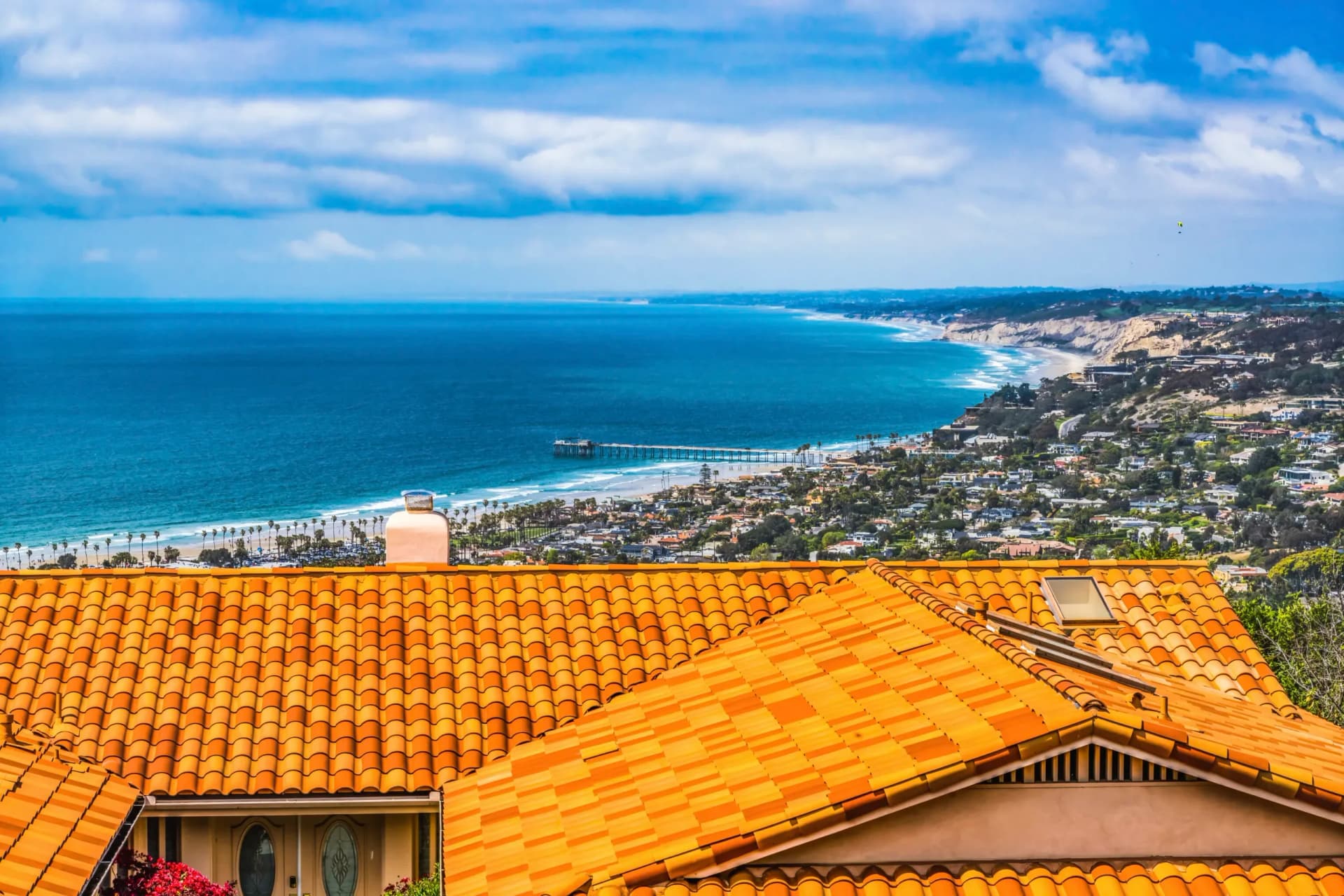
Most San Diego homes — especially the Spanish and Mediterranean stock — wear concrete or clay tile, and there's a truth about tile that drives a lot of "should I switch to metal?" calls. The tiles themselves last 50-plus years, but the underlayment beneath them fails at about 20 to 25 years. That's why we see tile roofs leaking while the tiles on top still look perfect. On a 1920s tile roof in Kensington or Mission Hills, the fix is usually not new tile at all — it's a tear-off-and-relay with fresh underlayment. So before you commit to a metal conversion, get an honest roof inspection; if your tiles are sound, re-felting the existing tile roof may be the smarter path.
Where metal wins outright is raw longevity, weight (it's a fraction of tile, useful on older framing), and fire and wind performance. Where tile wins is matching the architectural character many San Diego HOAs require and the look buyers expect in certain neighborhoods. If your HOA mandates a tile appearance, stone-coated steel and metal tile profiles give you metal's durability inside an approved aesthetic — we can pull your CC&Rs and prep the architectural-review packet if that's the hurdle. The right answer comes down to condition and goals: the age of your current roof, how much of the deck is sound, what your framing can carry, and how long you intend to own the home.
Types of metal roofing, and where each fits
A quick orientation to the systems we install across the county:
- Standing seam — vertical panels with concealed clips and no exposed fasteners; the longest-lived option, appropriate for pitches of 3:12 and up. This is what most homeowners picture and what we recommend for a primary residence.
- Stone-coated / metal shingle — stamped panels that read as tile, shake, or slate from the street; ideal for HOA-governed communities and for matching neighboring rooflines.
- Exposed-fastener panels (corrugated, R-panel) — fast and durable on garages, ADUs, and low-slope outbuildings; the rubber-washered screws do need periodic inspection as they age, since the washers are the first component to dry out.
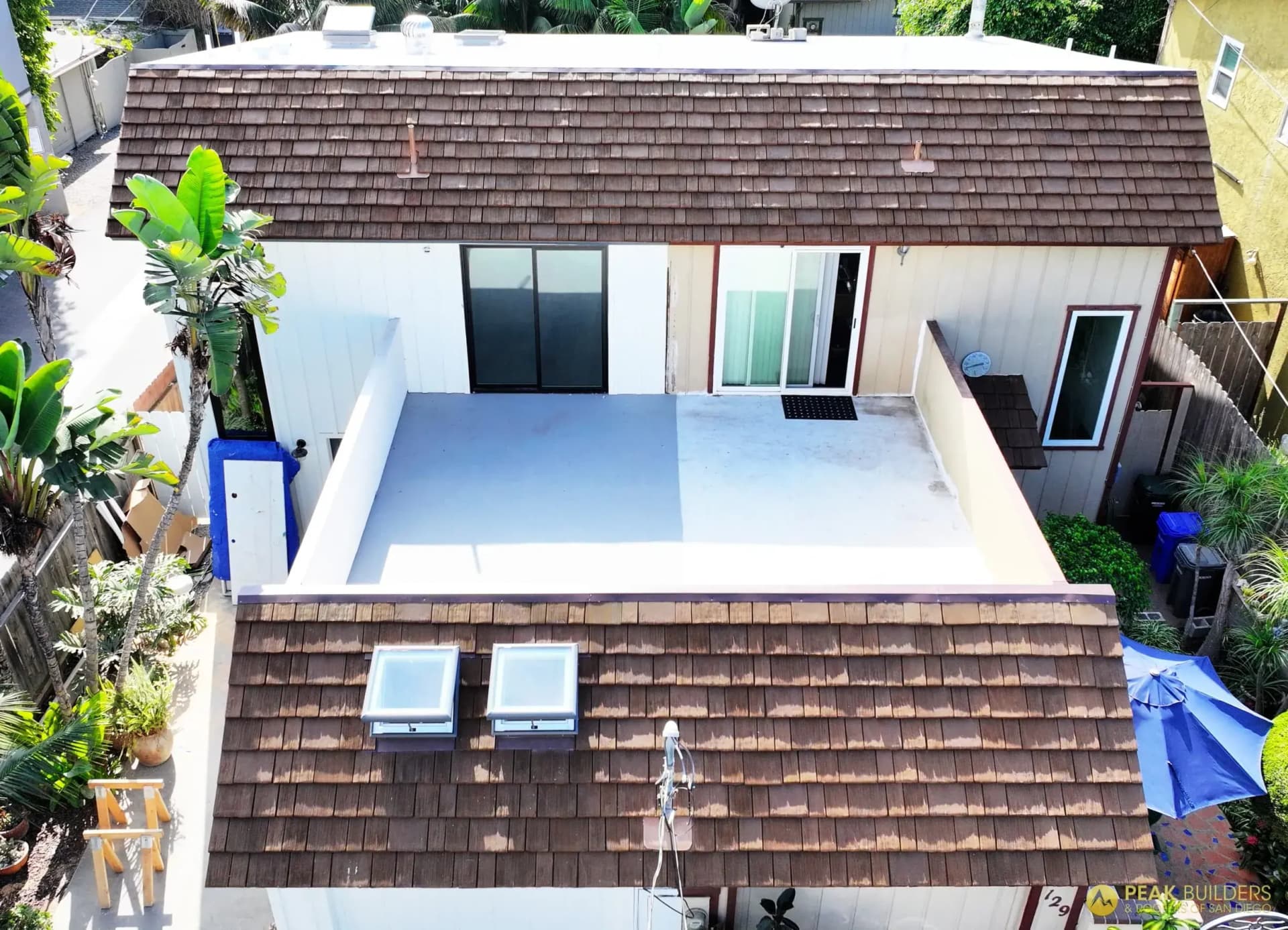
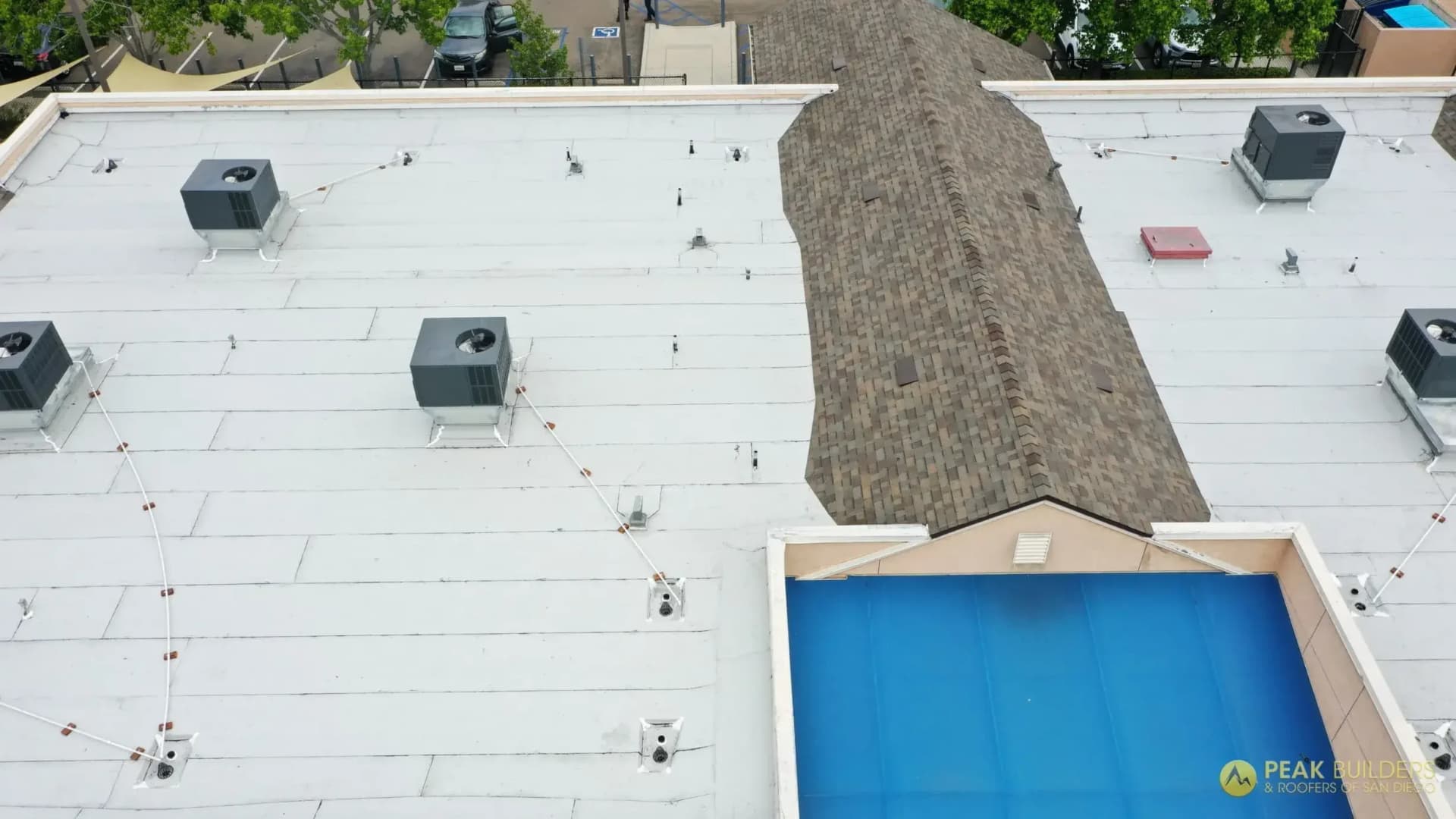
Many San Diego homes are mixed-roof situations — a sloped main house with a flat section over an addition, garage, or ADU. We'll often run standing seam on the pitched areas and a flat-roof membrane like TPO, EPDM, or modified bitumen on the low-slope zones, detailing the transition so it drains cleanly. On larger buildings the same logic carries into our commercial roofing work, where standing-seam and single-ply membranes are often combined on one structure.
Permits, and what good installation actually requires
Metal re-roofs in the city pull a permit through the City of San Diego (or the County in unincorporated areas), and homes in the coastal zone may also trigger California Coastal Commission review — something to plan time for in beach neighborhoods. Beyond paperwork, metal is simply more demanding to install than asphalt: not every roofer keeps a crew trained on panel forming, concealed-clip layout, and the dozens of custom flashing details a metal roof needs at hips, valleys, and penetrations.
When you're vetting a metal roofing contractor, here's how to judge the work before it starts. Ask how many standing-seam jobs they completed in the last year. Ask whether panels are factory-formed or field-formed, and how they detail valleys, sidewall flashing, and pipe penetrations. Near the coast, ask specifically what flashing metal they'll use — the right answer is stainless or aluminum, not galvanized. Insist on all three warranties in writing: panel/coating, underlayment, and labor. And confirm the finished assembly meets the cool-roof requirement for your climate zone. A clean install is also the right moment to upgrade gutters to a corrosion-matched material so they age with the roof rather than against it.
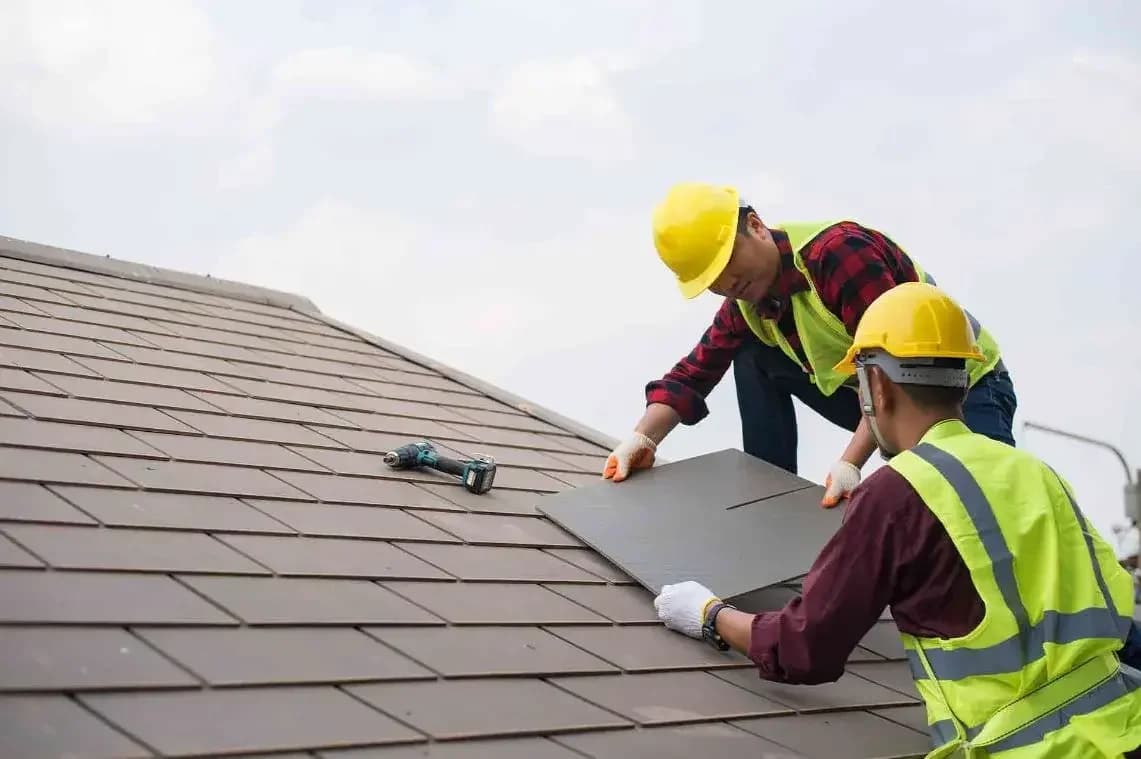
Once the old roof is off, good crews don't just lay new panels over whatever they find. They inspect the plywood deck for soft or delaminated sheathing, replace what's failed, and only then install fresh underlayment and panels over a sound substrate. That deck check is where a lot of the long-term durability is won or lost, and it's worth asking a contractor how they handle it.
How to tell your roof is ready for attention
Whether the eventual answer is metal, tile, or a membrane, the signs that a roof needs a professional eye are about condition, not the calendar alone: interior ceiling stains or active drips, daylight or moisture in the attic, rust streaks at flashing and fasteners, panels or tiles that have shifted or lifted after a wind event, and granule or sealant breakdown around penetrations. If your current roof is leaking or showing any of these, start with an inspection or targeted repair before assuming a full conversion is the answer — sometimes the right fix is smaller than people expect, and sometimes a quick patch is only buying time on a deck that's already compromised. An inspection sorts which it is.
Peak Builders & Roofers of San Diego has installed more than 5,000 roofs across the county since 1999, holds CSLB license #1008986, and carries a 4.9-star rating across 230-plus reviews along with GAF Master Elite and Owens Corning Platinum Preferred credentials and a BBB A+ rating. For metal specifically, that experience matters most in the details — the coastal flashing call, the cool-roof compliance, the honest tile-versus-metal read — that determine whether the roof lasts its full life. We serve La Jolla, Carlsbad, Encinitas, Del Mar, Coronado, Chula Vista, Poway, Point Loma, Escondido, El Cajon, Oceanside, Rancho Santa Fe, Scripps Ranch, and Santee.
Frequently Asked Questions
How long does a metal roof last in San Diego?
A properly installed standing-seam metal roof lasts 40 to 60 years, often outliving two asphalt-shingle roofs over the same period. Longevity depends on correct coastal material selection, quality flashing, and adequate ventilation — which is why installer experience matters as much as the panel itself.
Is metal or tile better for a San Diego home?
It depends on condition and goals. Tile suits the Spanish and Mediterranean look many neighborhoods and HOAs require, and if your existing tiles are sound, re-felting the underlayment is often the smarter move. Metal wins on lifespan, low weight, and fire and wind performance. We'll tell you honestly which makes sense for your house after an inspection.
Will a metal roof rust near the ocean?
Not if it's specified correctly. Within about 10 to 15 miles of the coast we use aluminum panels with stainless or aluminum flashing, never plain galvanized, because salt air corrodes ordinary steel and galvanized flashing quickly. Matching every component — panel, flashing, fasteners, and clips — is what keeps a coastal metal roof lasting decades.
Does a new metal roof have to meet Title 24 cool-roof rules?
For most San Diego homes in Climate Zone 7, yes. The 2025 Title 24 standards effective January 1, 2026 extend cool-roof requirements to steep-slope residential re-roofs. Many factory-finished metal panels already meet the reflectance and emittance thresholds, making metal a straightforward way to comply.
How do I get a metal roof evaluated for my home?
Call (619) 330-8185 or request a free, no-obligation inspection and quote. We'll measure your roof, check the deck and existing underlayment, confirm the coastal and cool-roof requirements for your address, and give you a straight recommendation on whether metal, tile, or a repair is the right path for your home.