
Missing Shingles on Your Roof: How Serious Is It?
A few missing shingles are more serious than they look. The shingle layer is your roof's first defense against San Diego's UV, wind-driven rain, and salt air, and every bare patch exposes the felt or synthetic underlayment underneath to weather it was never built to survive on its own. If you can see bare underlayment or wood decking from the ground or a window, you have a real problem that needs attention before the next atmospheric-river storm, not after. Below is how we read missing shingles after 25 years and more than 5,000 roofs across the county, what they mean for the layers you can't see, and what to do next.
Why Shingles Go Missing in San Diego
Shingles don't leave a healthy, correctly installed roof on their own. The cause of a bare patch is almost always one of a handful of things, and it matters — it tells you whether you're facing an isolated fix or a roof failing everywhere at once.
Wind uplift is the most common trigger here. Santa Ana events routinely push 40-60 mph gusts through the inland valleys and foothills — Scripps Ranch, Poway, Escondido, and El Cajon all feel it — and older asphalt shingles whose self-seal strip has dried out simply let go. The tab catches the wind like a sail and tears off at the nail line, usually on the windward south and west slopes.
Age and UV embrittlement is the slow killer. San Diego gets intense, near-year-round ultraviolet exposure, and over 15 to 20 years that bakes the asphalt, drives off the oils that keep a shingle flexible, and sheds the protective granules. A brittle shingle that held fine in summer will crack and detach with the first cool snap of fall. If you're finding granule piles in your gutters along with missing tabs, the whole field is aging — granule loss is one of the clearest signals a roof is nearing the end of its service life.
Improper installation shows up on roofs that were rushed. Shingles nailed too high (above the nail zone), over-driven through the mat, or under-nailed — four fasteners where the wind zone called for six — never develop full uplift resistance. It's why we verify the nailing pattern before we touch a roof, and why an unlicensed handyman patch often blows off in the next wind event.
Impact from hail in the East County foothills or a falling eucalyptus limb will crack and dislodge shingles outright. And failed prior repairs — a DIY patch glued down with the wrong product — frequently peel up and take the neighboring shingles with them.
What a Missing Shingle Actually Does to the Layers You Can't See
A shingle roof is a system, not a single skin. Below the shingles sits the underlayment (felt or synthetic), and below that the structural decking — usually plywood or OSB. When a shingle goes missing, that defense unravels from the top down. The underlayment, built to be covered within days rather than weather months of San Diego UV, chalks and splits (synthetic) or curls and cracks (felt). Wind-driven rain — the kind our winter storms deliver sideways — works under the surrounding shingle edges and into the underlayment laps. Once that secondary layer is compromised, water reaches the decking, which absorbs moisture, swells, delaminates, and eventually rots — into the attic, the insulation, and finally a brown ceiling stain that tells you the leak has been running for weeks.
The timeline is faster than most homeowners expect. On a north-facing slope, where the coastal marine layer keeps things damp and slow to dry, we routinely find mold and soft decking under a bare patch open only a single wet season. Coastal homes in La Jolla, Del Mar, Coronado, and Point Loma face an extra enemy: salt-air corrosion eats the nails and any galvanized flashing near an exposed area. Near the water we spec stainless or aluminum flashing instead — the difference between flashing that lasts the life of the roof and flashing that rusts through in a decade.
Tile Roofs: When the Tiles Aren't the Problem
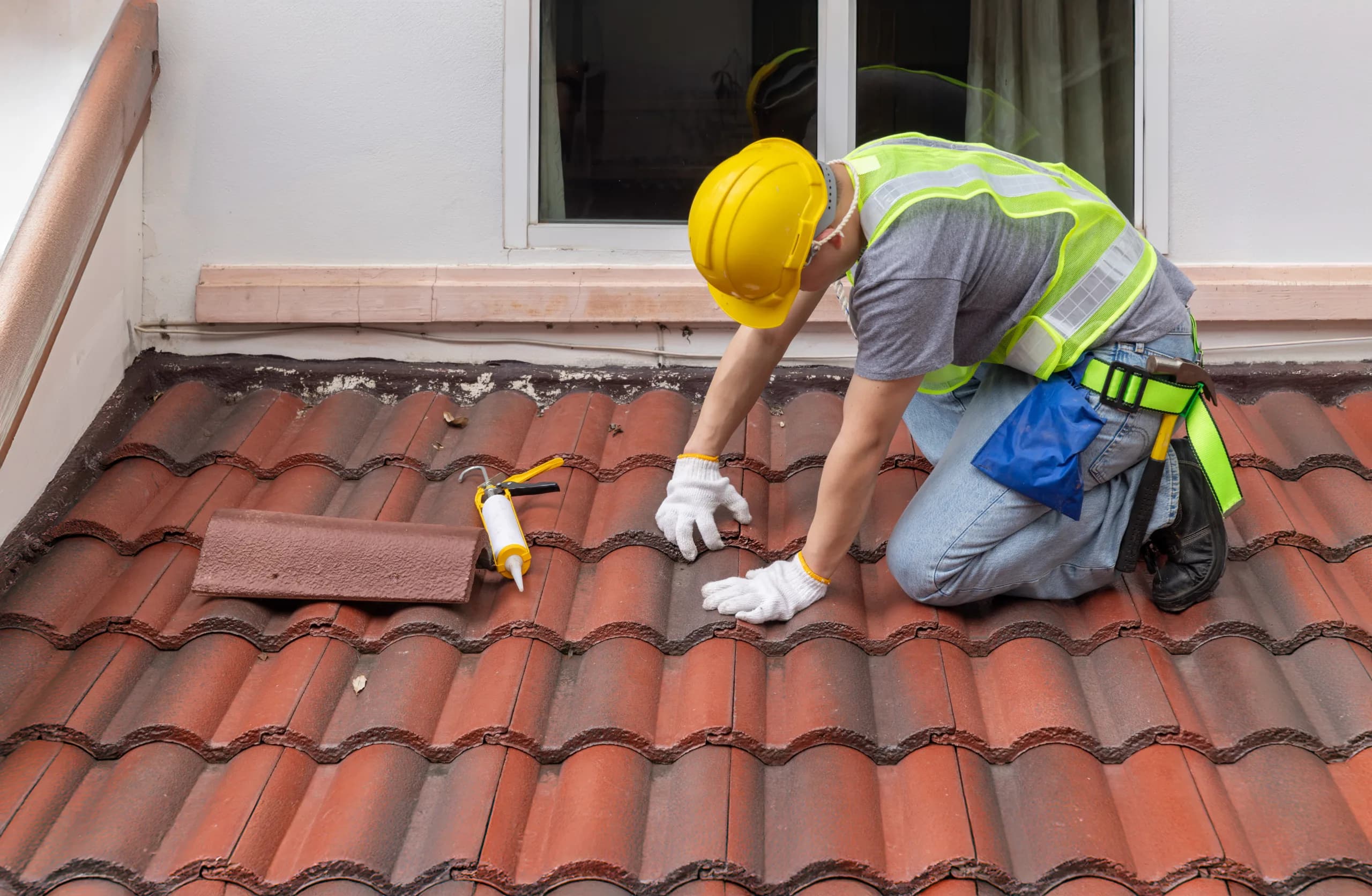
San Diego's Spanish and Mediterranean housing stock is full of clay and concrete tile, and tile changes the conversation entirely. A genuinely missing tile — slid out of place after wind or foot traffic — is important to replace, because the exposed underlayment is the actual waterproof membrane on a tile roof. But the sneakier truth is this: the tile itself lasts 50 years or more, while the underlayment beneath it fails at roughly 20 to 25 years. That's why so many tile roofs in Kensington, Mission Hills, and older La Mesa start leaking while every tile still looks perfect from the curb. If your home is in that age window and you're seeing interior stains without obvious missing tile, the fix is a tear-off and re-felt — lift the tiles, replace the underlayment, relay the same tiles. Our tile roofing work is built around that procedure, which buys two more decades of waterproofing under tiles that may outlive the house.
What To Do Next (and What To Do Tonight If Rain Is Coming)
If you've spotted missing shingles, the sequence is straightforward.
- Document it. Photograph the area from the ground with a zoom — never climb a wet or steep roof yourself. Note the date and any recent storm, which matters if you end up filing a claim.
- Protect it temporarily if a storm is imminent. A properly secured tarp, or roof cement dabbed onto bare underlayment, will buy you through one rain event. These are stopgaps, not repairs — they don't address the cause and won't hold a season.
- Get a professional inspection. A real assessment looks past the missing shingles to the underlayment and decking beneath, checks the surrounding tabs for lifting seals, and tells you whether this is an isolated fix or a sign the roof is done. Book a roof inspection for an honest read on condition, not a guess from the ground.
Don't leave a bare spot open through even one moderate San Diego rainstorm. A temporary tarp takes minutes; the rotted decking and interior repair it prevents take weeks and reach into the home's structure.
The Repair Itself
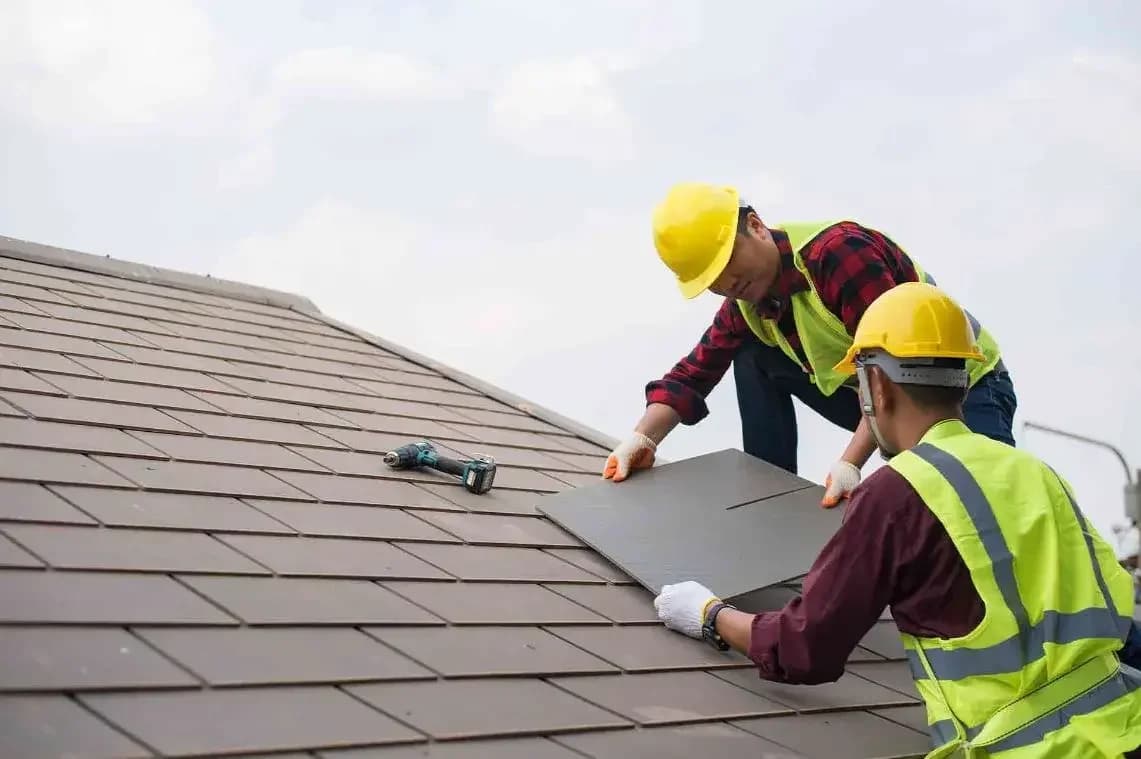
For a qualified contractor, replacing missing shingles is a clean job when caught early. We match the existing shingle by profile and color — GAF Timberline HDZ, Owens Corning Duration, and CertainTeed Landmark are the common architectural lines on local roofs — re-secure the surrounding shingles whose seals have broken, replace any torn or saturated underlayment, and nail the new shingles in the nail zone with the fastener count the wind exposure calls for. If the decking is soft, that section comes out before anything else goes back on — patching over rot just buries the problem. This is bread-and-butter roof repair, and doing it correctly is the difference between a fix that lasts and one that blows off next October.
How do you judge whether the work was done right? Look for shingles seated flat with no lifted corners, fasteners hidden under the course above (never face-nailed and exposed), a color that blends into the field, and flashing that's been re-set rather than smeared with sealant. A crew that keeps the manufacturer's nailing pattern intact also keeps your shingle warranty valid.
One San Diego note: California's updated Title 24 standards, effective January 1, 2026, extend cool-roof requirements to steep-slope residential re-roofs in our Climate Zone 7. A handful of swapped shingles isn't affected, but if a small fix turns into a re-roof of a slope, the new material has to meet cool-roof reflectance rules. In the Wildland-Urban Interface zones across East and North County, you're also held to Class A fire-rated assemblies and ember-resistant attic vents — one more reason to use a licensed roofer who pulls the proper City, County, or Coastal Commission permit.
When Missing Shingles Mean It's Time to Replace
The decision to repair or replace should turn on condition, age, and how widespread the damage is — nothing else. Spot repairs stop making sense when the whole field is failing: a roof 20-plus years old, shingles disappearing from several slopes in one season, gutters full of granules, or an area already patched twice all signal a roof at the end of its life. At that point a full roof replacement — or a switch to metal and standing-seam, which routinely lasts 40 to 50 years and shrugs off ember events, or a properly detailed flat-roof membrane (TPO, EPDM, or modified bitumen) on low-slope sections — protects the home for decades rather than another round of patches. After a major wind or hail event our storm-damage restoration team documents everything for an insurance claim, and it's the right moment to address tired gutters or, on commercial buildings, the full commercial roofing assembly.
Peak Builders & Roofers of San Diego has worked on roofs across the county since 1999 — CSLB #1008986, GAF Master Elite and Owens Corning Platinum Preferred certified, BBB A+, 4.9 stars across 230-plus reviews — from La Jolla, Del Mar, and Coronado on the coast to Poway, Escondido, El Cajon, and Santee inland. If you've got a bare patch up there, call (619) 330-8185 or request a free, no-obligation inspection and quote before the next storm finds it first.
Frequently Asked Questions
How long can a roof go with missing shingles before it leaks?
Less time than most people think. In dry summer weather you might have weeks before sun degrades the exposed underlayment, but a single winter rainstorm with wind can saturate that bare spot in hours and start soaking the decking. On damp, north-facing slopes shaded under the marine layer, we find mold and soft wood under openings bare only one wet season. Treat any missing shingle as something to address before the next rain.
Will my homeowner's insurance cover missing shingles?
It depends on the cause. Sudden, documented events — a Santa Ana windstorm, hail, a fallen branch — are often covered, while gradual wear, age, and poor maintenance generally are not. Photograph the damage, note the storm date, and have a licensed roofer document the underlayment and decking condition. That report makes or breaks a claim, which is why we handle storm assessments and work directly with adjusters.
My tiles all look fine but my ceiling is staining — why?
On a tile roof the waterproofing is the underlayment beneath the tiles, not the tiles themselves. Clay and concrete tile last 50-plus years, but the felt under it fails at around 20 to 25 — so a 1980s tile roof in Mission Hills can leak steadily while every tile looks perfect. The fix isn't new tile; it's lifting the existing tile, replacing the underlayment, and relaying it.
Should I repair or replace a roof that's losing shingles?
Judge it by condition and age, not by the number of missing shingles alone. One isolated bare patch on a sound, well-installed roof under 15 years old is a repair. But widespread granule loss, shingles letting go on multiple slopes, a roof past the two-decade mark, or an area patched twice already all point toward replacement. The reliable way to know is an inspection that checks the underlayment and decking, not just the surface. To talk it through with a crew that has seen more than 5,000 local roofs, call (619) 330-8185.